Dumbbell vs Barbell Overhead Press for Shoulder Growth
2026-08-03
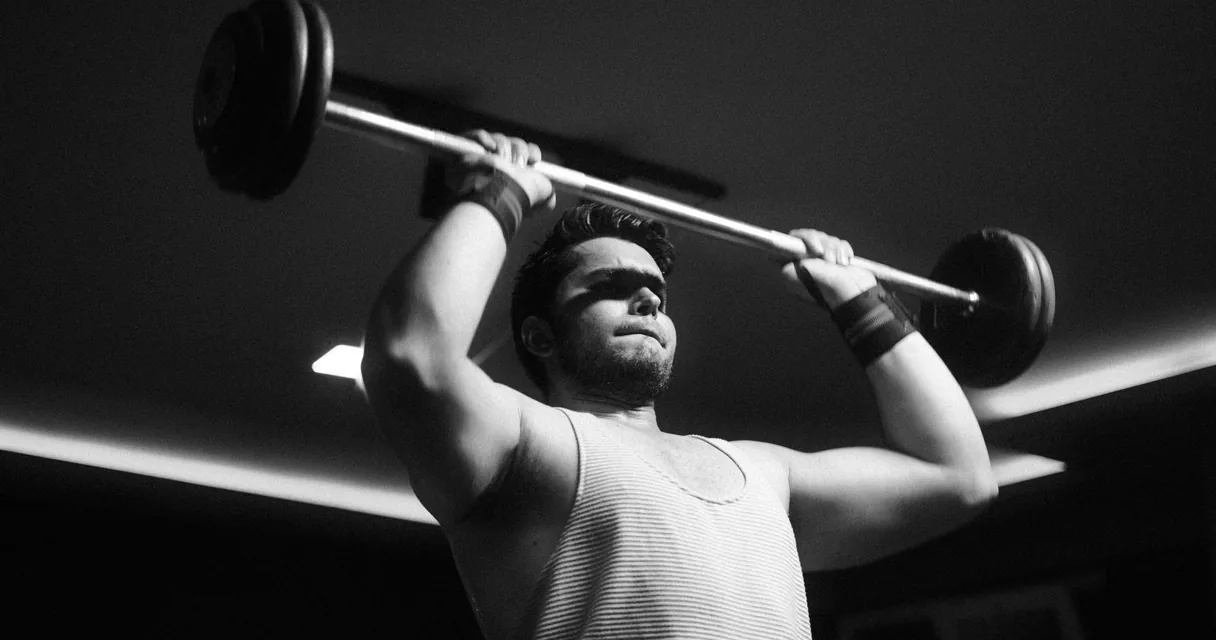
Dumbbell versus barbell overhead press is not a contest between a serious lift and a lesser alternative. Both can train the front deltoids, triceps, upper chest, and the muscles that keep the shoulder blade controlled. The productive choice is the variation that matches your goal, your available equipment, and the shoulder path you can repeat without compensation.
A barbell usually makes load progression simple. Dumbbells give each arm its own handle and often feel more adaptable through the range of motion. Neither feature guarantees shoulder growth on its own. Consistent hard sets, sensible technique, and patient progression do.
The short answer: use the press that solves your current problem
Choose a barbell overhead press when your priority is a clear strength skill, a stable loading pattern, and straightforward small increases. It is especially useful if you enjoy standing presses and can keep the bar close while avoiding an excessive backward lean.
Choose a dumbbell overhead press when one arm needs its own path, when a neutral or slightly angled grip feels better, or when you want a seated setup that limits balance demands. Dumbbells also make it obvious when one side finishes much earlier than the other.
| Your priority | Best starting option | Why |
|---|---|---|
| Build a measurable overhead strength skill | Standing barbell press | The bar and plates make consistent loading easy |
| Build shoulder volume with a comfortable arm path | Seated dumbbell press | Each arm can follow a natural path with back support |
| Notice a clear left to right difference | Dumbbell press | Both arms must contribute independently |
| Need a compact home setup | Dumbbell press | Adjustable dumbbells take little space |
| Want to train trunk control with pressing | Standing barbell press | The body must organize the load from feet to hands |
| Train late in a tiring upper session | Seated dumbbell press | The setup can reduce balance and lower body limitations |
What really changes between dumbbells and a barbell
Load stability and progression
A barbell joins both hands to one implement. That stability can let you focus on producing force and makes your logbook easy to read: add one repetition, then add the smallest available plate increase. It also demands that both shoulders accept the same bar path. If one arm is weaker, the stronger side can hide part of the difference.
Dumbbells ask each arm to stabilize separately. The total load may be lower, but lower load does not make a set unproductive. If the deltoids and triceps approach failure with a controlled range, the set can contribute to hypertrophy. Record the weight per hand, repetitions, and effort so progress remains visible.
The comparison is a reminder that a higher muscle activation reading is not a complete hypertrophy verdict. A variation only earns its place when you can add quality work over time. Use the progressive overload guide to decide when a repetition, load increase, or cleaner range is a real improvement.
Range of motion and shoulder comfort
With dumbbells, your hands are not fixed to a straight bar. You can usually begin with the elbows slightly in front of the torso and press on a path that feels natural for your shoulder structure. A neutral grip is another option when it is comfortable. Do not force dumbbells deeper just because more range sounds better. Stop at the deepest position you can control without pain or a loss of shoulder position.
A barbell encourages one shared trajectory. Start with the bar over the upper chest, press it close to the face, then finish with the load over the middle of the foot. At lockout, let the head move through rather than pushing the bar far in front. If the bar must travel around a large backward lean, reduce the load and rebuild the pattern.
Pain is not a form cue to ignore. Persistent or sharp shoulder pain merits an assessment by a qualified clinician. For training decisions, use a pain free range that remains stable from one session to the next.
Standing and seated are separate decisions
Many comparisons confuse the implement with the position. A standing dumbbell press and a seated barbell press do not ask the body to solve the same problem. Standing work requires more balance and trunk organization. Seated work can make it easier to direct effort toward the pressing muscles, but only if the bench and back position do not force an uncomfortable path.
Pick one primary setup long enough to learn it. Changing dumbbells, barbell, bench angle, grip, and repetitions every week makes it hard to identify why performance changed.
Technique cues that transfer to either variation
Build a stable starting position
For a standing press, place the feet about hip width, squeeze the glutes lightly, and keep the rib cage stacked over the pelvis. For a seated press, set the bench high enough to support you without turning the movement into a steep incline chest press. Keep both feet planted.
Begin each repetition with the wrists stacked over the forearms. Keep the elbows slightly forward of the body instead of flaring them directly sideways. Press smoothly and finish with the weight balanced above the shoulder, not far in front of it.
Use a range you can own
Lower with control until the upper arms reach a comfortable depth. Avoid bouncing the dumbbells or bar from the bottom position. Then press with intent while keeping the torso position similar to the start. A small natural lean is different from turning every repetition into a standing incline press.
If your front delts always fail before your chest work, check your weekly exercise order and bench angle. The incline dumbbell press guide explains why an overly steep incline can become more of a shoulder press than a chest movement.
Programming for strength and shoulder hypertrophy
A press is only one part of complete shoulder training. It heavily involves the front delts, but lateral raises, rear delt work, rows, and pressing volume across the week all influence the plan. The shoulder exercise guide can help you choose useful assistance work rather than adding random sets.
| Goal | Main press | Sets and repetitions | Secondary work |
|---|---|---|---|
| Beginner skill | Standing barbell press | 3 × 5 to 8 | Lateral raise, 2 to 3 × 12 to 20 |
| General shoulder growth | Seated dumbbell press | 3 to 4 × 8 to 12 | Lateral and rear delt work |
| Strength focused block | Standing barbell press | 3 to 5 × 3 to 6 | Dumbbell press, 2 × 8 to 10 if recovery allows |
| One side feels less coordinated | Dumbbell press | 3 × 8 to 12 | Keep the stronger side to the weaker side repetitions |
Start with roughly one to three repetitions in reserve on most working sets. When every set reaches the top of your chosen range with the same technique, make a small load increase. The RPE scale guide can make this effort target easier to track.
A simple two day shoulder emphasis could look like this:
- Day one: standing barbell press for 3 sets of 5 to 8, then lateral raises and triceps work.
- Day two: seated dumbbell press for 3 sets of 8 to 12, then rear delt work and a row.
This approach gives each variation a purpose. It does not require both presses in every workout.
Common mistakes that stall overhead pressing
Chasing a fixed elbow angle
Shoulders differ. Do not force your elbows directly out to the sides or pin them tightly forward because a video says there is one perfect line. Use a controlled angle that keeps the wrists, elbows, and shoulders comfortable under load.
Letting the lower back create the repetition
A large back arch can turn a standing overhead press into a different exercise. Tighten the glutes, keep the ribs from flaring, and reduce the load when the torso changes before the shoulders and triceps complete the rep.
Adding weight before you have a repeatable record
A heavier dumbbell pair or barbell is not progress if the range shortens or the last repetitions rely on a different body position. Log each set in GymLog, including notes on grip, seat angle, and effort. That record helps you adjust one variable at a time instead of guessing.
Final verdict: pick the tool you can progress with
The dumbbell overhead press offers independent arm control and a flexible path. The barbell overhead press offers a stable strength skill and efficient loading. Both can build strong, muscular shoulders when the technique is repeatable and the program includes enough recovery.
Choose one main press for the next six to eight weeks, track the result, and use the other when it solves a specific limitation. Download GymLog to log your presses, RPE, and shoulder volume with less guesswork.