Tracking Your Strength Training Progress: Why Does Your Training Environment Matter Too?
2026-08-02
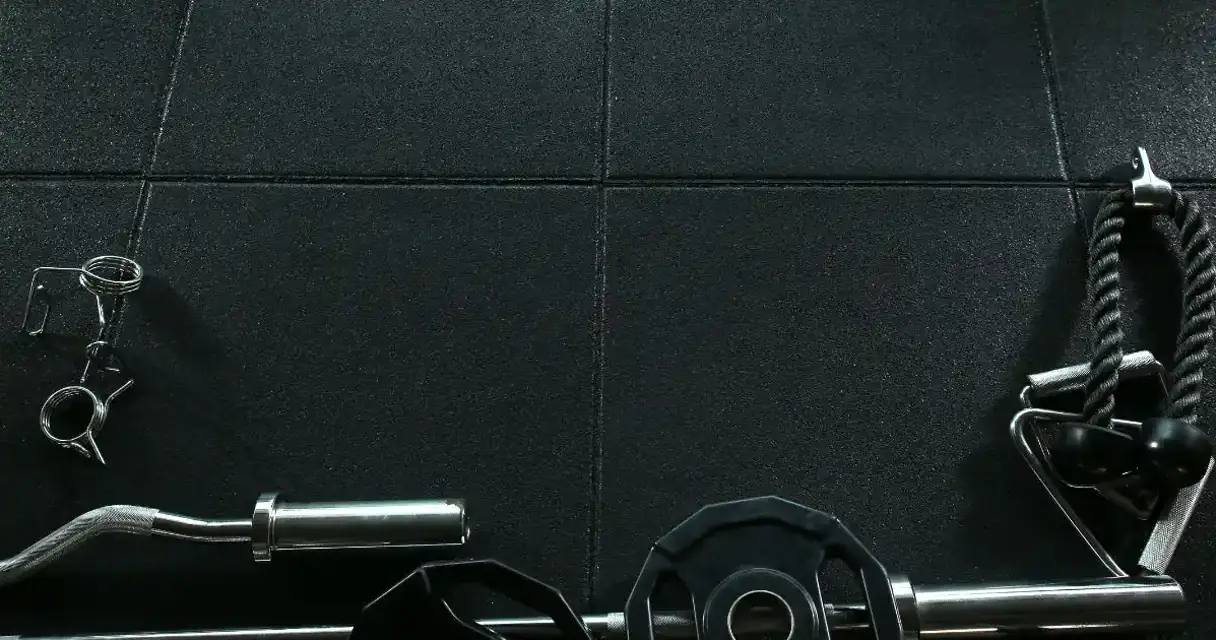
Tracking your workouts makes it possible to see whether training is truly producing the results you want. The loads used, number of repetitions, rest-period length and even how the sets feel provide useful reference points for gradually adjusting your programme.
However, these data tell only part of the story. To compare two workouts, the conditions in which exercises are performed need to remain reasonably similar. Equipment, how the space is organised and the stability of your footing can all influence movement quality and recorded performance.
Why log your strength-training sessions?
Progress in strength training is not always steady. A load may increase quickly on some exercises, then remain unchanged for several weeks. Logging your training helps you take a step back and avoid judging your results from a single workout.
A notebook or an app such as GymLog makes it easier to track loads, sets and repetitions. This information can reveal progress, but also unusual fatigue or an exercise on which performance has stalled.
Tracking also helps you manage progressive overload. Adding weight is not the only way to improve: completing one more repetition, improving range of motion or controlling the lowering phase better already counts as progress.
How should you compare your performance over time?
A data point becomes especially useful when it can be compared. Moving from eight to ten repetitions with the same load may indicate improvement, provided the movement was performed with a similar range of motion and technique.
Your environment matters too. A bench that has been moved, a poorly positioned machine or an overly cluttered space can alter your reference points. Likewise, uneven or unstable gym flooring can interfere with footing under a rack, a bench or during a standing exercise.
Creating relatively consistent conditions therefore makes tracking more meaningful. The aim is not to turn every workout into a scientific experiment, but to limit variations that do not genuinely depend on physical condition.
Why organise your training area?
A well-organised area lets you move from one exercise to the next without wasting time moving equipment. Dumbbells, weight plates and accessories should have an identifiable place, while walkways remain clear.
Organisation can be planned by use: one section for standing movements, another around the bench and an area for stretching or floor exercises. This layout makes moving around easier and reduces unnecessary handling between sets.
It also helps maintain stable reference points. Regularly putting the bench or rack back in the same place makes it easier to find a comparable position from one workout to the next.
What role does flooring play in strength training?
The surface must remain firm enough to stabilise equipment and provide precise footing. A surface that is too soft can create a slight imbalance under a bench or rack. Conversely, concrete, tile and parquet absorb little vibration and can be marked by weights.
A rubber gym flooring tile creates an intermediate layer between equipment and the underlying surface. It helps reduce impacts and noise while improving grip in the area.
How should you choose gym flooring tiles?
Choosing shock-absorbing gym flooring should not, however, depend on thickness alone. Density, equipment weight and how weights are handled must also be considered.
Requirements differ depending on whether an area holds a few dumbbells, a bench, a full rack or weights that are regularly set down on the floor. Gym flooring tiles should therefore be selected according to the exercises performed and the intensity of use.
To create a stable area, protect the underlying surface and reduce impacts beneath weights, SquareFLOOR offers a range dedicated to strength-training flooring, made up of rubber tiles available in several thicknesses and densities to match training intensity.
The modular format makes it possible to cover only the useful surface and evolve the layout over time. If new equipment is added, the area can be enlarged without necessarily replacing the entire floor covering.
Building an environment that supports consistency
Progress depends first on programme consistency, movement quality and regularity. The layout replaces none of these elements, but it creates more consistent conditions for training and interpreting your results.
A clear space, well-positioned equipment and suitable flooring make it easier to reproduce workouts. The data you record then become more representative of real progress, from your first loads through to more advanced strength-training programmes.