Optimize Your Shoulder Training: Ranking Exercises from Worst to Best
2026-05-17
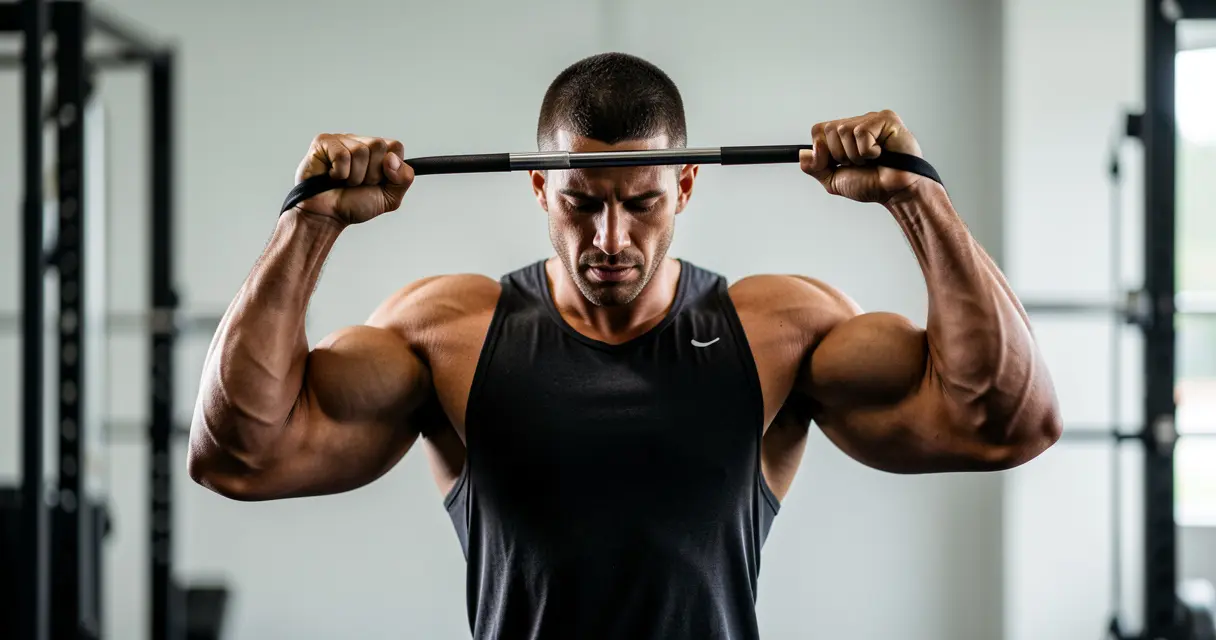
Broad, powerful shoulders are one of the most striking features of a well-developed physique. But achieving that capped, three-dimensional look isn't just about lifting heavy weights — it's about choosing the right exercises for each of the three deltoid heads: anterior (front), lateral (side), and posterior (rear).
Exercise scientists Mike Israetel and Milo Wolf recently published a comprehensive tier list ranking shoulder exercises from S-tier (optimal) to D-tier (avoid). Combined with EMG research from independent labs, we now have a clear picture of which movements deserve a spot in your routine and which ones are wasting your time.
Let's break down the best and worst shoulder exercises, organized by deltoid head, so you can build broader, stronger shoulders with maximum efficiency.
The Three Deltoid Heads: Why They All Matter
The deltoid muscle is composed of three distinct heads, each with different fiber orientations and functions:
- Anterior deltoid (front): Responsible for shoulder flexion and horizontal adduction. Heavily involved in chest pressing movements like bench press.
- Lateral deltoid (side): Responsible for shoulder abduction. This is the head that creates the "capped" look and visual width.
- Posterior deltoid (rear): Responsible for shoulder extension and horizontal abduction. Essential for balanced development and shoulder health, yet chronically undertrained.
A common mistake is overtraining the front delts (already stimulated by bench pressing) while neglecting the side and rear delts. For balanced, impressive shoulders, your programming should prioritize lateral and posterior work.
Criteria for Ranking Shoulder Exercises
Scientists evaluate exercises based on several evidence-based criteria:
- Resistance curve and continuous tension: The exercise should challenge the target muscle throughout the full range of motion, especially in the stretched position — a key driver of hypertrophy.
- Stability and isolation: More stable movements allow for heavier loads and better mind-muscle connection without compensatory recruitment from other muscles.
- Progressive overload potential: The exercise must allow you to gradually add weight, reps, or improve form over time — a cornerstone of muscle growth.
- Safety and joint health: Exercises that place excessive stress on the shoulder capsule, rotator cuff, or connective tissues should be avoided or modified.
- Stretch-mediated hypertrophy: Modern research shows that tension in the lengthened position is one of the most potent stimuli for muscle growth.
Now, let's rank the exercises for each deltoid head.
Front Deltoid Exercises: Ranked from Worst to Best
The front delts receive substantial stimulation from horizontal pressing (bench press, push-ups). Your goal with direct front delt work is to add targeted volume without excessive redundancy.
Exercises to Avoid
- Front Raises (Dumbbell or Barbell): While popular, front raises rank as C-tier or lower. EMG research from Built With Science shows they produce roughly 40% less front delt activation than overhead pressing. They also limit the amount of weight you can use, reducing motor unit recruitment. Unless you have a specific weakness, skip these in favor of presses.
- Behind-the-Neck Press: Once a bodybuilding staple, this movement places the shoulder in extreme external rotation under load, significantly increasing impingement and rotator cuff injury risk. The marginal difference in deltoid activation doesn't justify the danger.
Solid Mid-Tier Options
- Standing Barbell Overhead Press: A classic compound movement that hits the front delts hard while also engaging the core and stabilizers. Ranks A-tier for overall shoulder development but requires more technical proficiency than seated variations.
- Arnold Press: Rotating the dumbbells during the press adds a slight lateral delt component, but the complexity can limit the load you're able to use effectively.
Top Choices (S-Tier)
- Seated Dumbbell Shoulder Press: The gold standard for front delt hypertrophy. The bench provides stability, allowing you to use heavier loads and push closer to failure safely. EMG data shows up to 71% peak activation. Dumbbells also allow a natural movement path that's gentler on the shoulders than a fixed barbell.
- Seated Machine Shoulder Press: When a well-designed machine is available, this may be the single best front delt builder. The stabilized movement path, smooth resistance curve, and ability to safely train to failure make it ideal for hypertrophy. Some converging press machines are particularly effective.
Lateral Deltoid Exercises: Ranked from Worst to Best
The side delts are the key to shoulder width. These exercises directly target the "capped" look everyone wants.
Exercises to Avoid (C-Tier and Below)
- Lean-In Lateral Raise: By leaning into the movement, you shift tension away from the side delts and into the traps and upper back. Israetel and Wolf placed this in C-tier — it's an inefficient variation of a fundamental movement.
- Barbell Upright Row (Narrow Grip): The narrow grip version can cause shoulder impingement, especially if the bar is pulled too high. Even with a wider grip, this exercise places significant stress on the wrists and shoulder joints. Better alternatives exist.
Solid Mid-Tier Options (B-Tier)
- Dumbbell Lateral Raise (Standard): A timeless bodybuilding staple that ranks B-tier. When performed with proper form — slight forward lean, arms slightly bent, leading with the elbows — it effectively targets the side delts. The main limitation is the resistance curve: tension drops at the bottom where the muscle is stretched, and peaks at the top where leverage is best. This is suboptimal for stretch-mediated hypertrophy.
- Lean-Out Lateral Raise: By leaning away from the working arm (holding onto a post or rack), you improve the resistance curve by maintaining tension at the bottom. This bumps it up to A-tier territory.
Top Choices (S-Tier)
- Cable Lateral Raise: Israetel and Wolf both agree this is S-tier — and for good reason. Cables provide constant tension throughout the entire range of motion, including the crucial stretched position. Set the cable at the lowest point, cross slightly in front of your body on each rep, and you've got a near-perfect side delt movement. The ability to train unilaterally also helps correct imbalances.
- Lying Side Raise: Described by Milo Wolf as "underrated" and "solid," this exercise performed on an incline bench eliminates momentum and forces the side delts to do all the work. The resistance curve is excellent, especially in the stretched position. If you can stabilize yourself properly, it's a game-changer for side delt development.
Posterior Deltoid Exercises: Ranked from Worst to Best
Rear delts are the most neglected head, yet they're crucial for shoulder health, posture, and that complete 3D look from the side and back.
Exercises to Avoid
- Heavy Face Pulls for Hypertrophy: Face pulls are excellent for rotator cuff health and shoulder prehab — when done light and controlled. However, loading them heavy for rear delt growth causes excessive upper trap compensation and instability. Keep face pulls light (15-20 rep range) as a warm-up or finisher, not a primary mass builder.
- Bent-Over Rear Delt Fly (Standing, Unsupported): The standing bent-over position requires significant lower back stabilization, which limits the load you can use and distracts from rear delt activation. The lower back fatigue often becomes the limiting factor before the rear delts are adequately stimulated.
Solid Mid-Tier Options
- Reverse Pec Deck: A decent option, especially for beginners. The machine guides the movement and removes stability concerns. However, the fixed arm path keeps your arms at shoulder height, which doesn't perfectly match the 45-degree fiber orientation of the rear delts.
- Chest-Supported Rear Delt Dumbbell Row: By using an incline bench for chest support, you eliminate lower back fatigue and can focus entirely on driving the elbows back at a 45-degree angle. A strong A-tier choice.
Top Choices (S-Tier)
- Double-Arm Reverse Cable Fly (45° Angle): EMG research confirms this is the top rear delt exercise. Set cables high and pull down and back at approximately 45 degrees from your body — this perfectly aligns with rear delt fiber orientation. The constant cable tension maximizes activation throughout the entire range of motion.
- Single-Arm Reverse Cable Fly: Position your body sideways to the cable and perform the movement one arm at a time. This variation biases the beginning of the movement (the stretched position), which recent research identifies as critical for hypertrophy. Using both the double-arm and single-arm variations in your program ensures you target the rear delts through different portions of the strength curve.
Key Principles for Shoulder Training
Beyond exercise selection, apply these principles for maximum results:
- Prioritize side and rear delts: Front delts get plenty of indirect work from chest pressing. Allocate 60-70% of your shoulder volume to lateral and posterior exercises.
- Train shoulders 2-3 times per week: Higher frequency leads to better hypertrophy outcomes than cramming everything into one weekly session.
- Emphasize the stretched position: Control the eccentric phase and pause briefly in the stretched position — this is where the majority of muscle growth is stimulated. Your progressive overload strategy should account for this.
- Use a variety of rep ranges: Mix heavy pressing (6-10 reps) for front delts with moderate to high reps (10-20) for lateral and rear delt isolation work, which responds well to higher volume and metabolic stress.
- Warm up thoroughly: Shoulders are complex, injury-prone joints. Use light lateral raises and band pull-aparts to prime the muscles and rotator cuff before heavy work. For more on injury prevention, see our guide on connective tissue pain causes and solutions.
- Don't neglect rear delts early in the workout: Since rear delts are typically the weakest head, consider training them first in your shoulder session when you're fresh, rather than saving them for last.
Putting It All Together: A Sample Shoulder Workout
Here's a science-based shoulder routine incorporating the S-tier and A-tier exercises:
- Seated Dumbbell Shoulder Press — 3 sets of 8-12 reps (front delts, compound)
- Cable Lateral Raise — 3 sets of 12-15 reps per arm (side delts, S-tier)
- Double-Arm Reverse Cable Fly — 3 sets of 12-15 reps (rear delts, S-tier)
- Lying Side Raise — 2 sets of 15-20 reps (side delts, finisher)
- Light Face Pulls — 2 sets of 15-20 reps (rotator cuff health, prehab)
Perform this workout twice per week, progressively overloading over time, and you'll build the broad, capped shoulders you're after.
Conclusion
Building impressive shoulders isn't about doing every exercise you see on social media — it's about selecting the movements that science confirms are most effective, and executing them with proper form and consistent progressive overload.
Front delts thrive on overhead pressing. Side delts respond best to cable lateral raises and lying side raises. Rear delts need reverse cable flyes at a 45-degree angle. Everything else is — at best — a decent alternative, and at worst, a waste of time and joint health.
Track your shoulder workouts, monitor your progression, and adjust based on how your body responds. For precise workout tracking and personalized guidance, the GymLog app helps you log every set, track progressive overload, and stay consistent — which is ultimately what builds those boulder shoulders.