Front Squat vs High-Bar Back Squat: Which Is Better for Quads?
2026-11-02
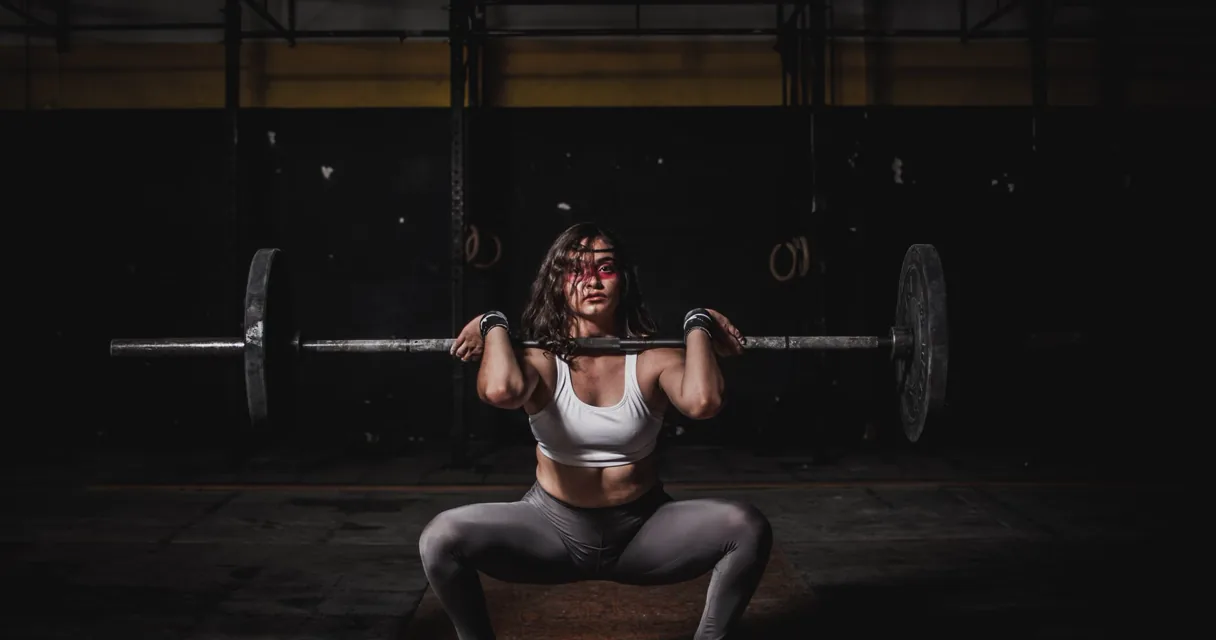
Front squats and high-bar back squats are often treated as two versions of the same exercise. They are related, but the bar position changes how the set feels, what tends to limit it, and how easily you can accumulate hard quad work. Neither variation owns hypertrophy by default.
The useful question is not which squat looks more athletic. It is which one lets you use a repeatable depth, train close enough to a challenging effort, and progress without turning every session into a technique emergency. This guide compares the front squat and high-bar back squat with that decision in mind.
The short answer
Choose the front squat when you want an upright squat, your quads are the clear target, and you can maintain a secure front rack. Choose the high-bar back squat when you want to use more total load, build barbell squat skill, or collect more productive sets before your upper back becomes the limiting factor.
| Your priority | Better starting point | Why |
|---|---|---|
| Upright torso and knee flexion | Front squat | The bar in front usually encourages a more vertical torso |
| More load and more work sets | High-bar back squat | The rack position is usually less limited by upper-back endurance |
| Build a strong front rack | Front squat | The skill improves through direct practice |
| Improve a classic back squat | High-bar back squat | Strength and coordination are specific to the movement practiced |
| Keep leg volume when one pattern irritates you | The comfortable variation | A sustainable range beats forcing a label |
What the bar position changes
Front squat: the load sits in front of the torso
In a front squat, the bar rests on the front of the shoulders while the elbows stay high enough to create a stable shelf. Because the load is in front, you usually need to keep the torso more upright to stay balanced over the midfoot. Many lifters feel a strong quad demand because the knees can travel forward while the torso stays tall.
That does not make front squats a magical quad isolation exercise. The glutes, adductors, trunk, and upper back still work hard. It does mean that a front squat can be an excellent option when a deep, knee-flexed squat is comfortable and your front rack does not fail before your legs receive enough stimulus.
The front rack is a real constraint. Wrist mobility, shoulder comfort, thoracic extension, and upper-back strength can end a set early. Start with a clean grip if it is comfortable. A crossed-arm grip or straps around the bar can be useful regressions, but treat them as ways to build a stable position rather than shortcuts around a poor setup.
High-bar back squat: the load sits over the upper traps
With a high-bar back squat, the bar sits high on the upper traps. You can still squat with a relatively upright torso and significant knee travel, especially with a comfortable heel elevation and stance. Compared with a low-bar squat, high-bar technique commonly looks more knee dominant. Compared with a front squat, it usually allows more forward torso inclination and heavier loading.
The ability to use more load is not a direct measure of better hypertrophy. It can be useful because it lets you progress over time and build a large amount of quality work. But a heavy high-bar set can also become limited by bracing, balance, or hip and back fatigue before the quads are the main limit. Your execution and programming decide which outcome you get.
For a wider look at bar path, stability, and equipment choice, read our guide to Smith machine squats versus barbell squats.
Do front squats hit the quads more?
Biomechanical comparisons show that front and back squat setups can distribute joint demands differently. A more upright front squat often reduces the hip moment and can increase the relative knee extensor demand at a matched depth. That is useful context, not a promise that every front squat will grow more quad tissue.
Muscle growth happens after repeated training exposures. Set effort, usable range of motion, weekly volume, recovery, and progressive overload matter far more than trying to win an argument from one snapshot of joint angles. If your front squat collapses because the bar rolls or your wrists hurt, a high-bar squat performed deeply and consistently may be the better quad builder for you.
Use your own data. Log load, repetitions, estimated repetitions in reserve, depth standard, and whether the quads or another area stopped the set. GymLog makes this comparison easier over a six to eight week block than changing variations every workout.
Technique checkpoints for productive sets
Build a repeatable front squat
- Set the bar on the shoulders, not in the hands.
- Keep the whole foot in contact with the floor and let the knees track with the toes.
- Raise the elbows enough to prevent the chest from collapsing.
- Descend only as deep as you can maintain balance and a controlled torso.
- End the set when the bar position or spinal control changes sharply.
A modest heel wedge or weightlifting shoe can make ankle range and knee travel easier for some lifters. It is an option, not a requirement. Do not chase an artificially vertical torso if it forces the feet to shift or creates pain.
Build a repeatable high-bar back squat
- Place the bar securely on the upper traps, not on the neck.
- Brace before each repetition and keep pressure through the midfoot.
- Allow the knees to travel as needed for your comfortable depth.
- Use the same stance, bar position, and depth target throughout a training block.
- Film an occasional side view instead of relying on how a hard set felt.
If your depth changes whenever the load increases, the numbers in your log stop meaning the same thing. Our progressive overload guide explains how to make load and repetition changes comparable.
How to program the two variations
You do not need to choose one squat forever. Give each variation a role that matches its constraints.
Option one: high-bar strength plus front-squat volume
- High-bar back squat: 3 sets of 4 to 7 repetitions, about 2 repetitions in reserve
- Front squat: 2 to 3 sets of 6 to 10 repetitions, about 1 to 3 repetitions in reserve
- Leg curl or Romanian deadlift: 3 sets of 8 to 15 repetitions
This setup works well if high-bar performance matters but you also want additional quad work with a lighter absolute load.
Option two: front squat as the main lift
- Front squat: 3 to 4 sets of 5 to 8 repetitions, about 2 repetitions in reserve
- Bulgarian split squat or leg press: 2 to 3 sets of 8 to 15 repetitions
- Hip hinge or leg curl: 3 sets of 8 to 15 repetitions
This is useful for lifters who enjoy the front rack and want a squat that keeps the torso upright. The Bulgarian split squat guide can help you choose the next unilateral movement.
Use double progression for either plan. Pick a rep range, add repetitions until all work sets reach its upper end with the same depth and control, then add the smallest practical load. Rest two to four minutes after demanding squat sets. Rushing rest can turn a quad session into a conditioning test, as explained in our rest between sets guide.
Common mistakes
Letting the front rack decide every set
If the elbows drop and the bar begins to pull you forward, the set is over even if your legs could do more. Reduce the load, use a manageable rep range, and practice the position. Add a stable quad exercise later in the workout if the rack repeatedly limits your leg volume.
Turning high-bar into a different squat every week
Small stance changes are normal while learning, but a new bar position, heel setup, or depth standard every session makes progression impossible to judge. Keep one setup long enough to learn it.
Treating discomfort as proof of effectiveness
Hard quad work can burn. Persistent joint pain, numbness, sharp pain, or a repeated pinch are not useful signals to ignore. Adjust the range, stance, loading, or exercise selection. For training stress more broadly, see our guide to muscle soreness and growth.
Final verdict
Front squats often make an upright, knee-flexed squat easier to achieve. High-bar back squats often make heavier loading and more total barbell work easier to tolerate. Both can build strong quads when you own the range, keep sets hard enough, and progress patiently.
Download GymLog to record your squat variation, heel setup, depth, load, repetitions, and RPE. After one focused block, choose the squat that gives you the clearest progress and the best joint feedback.