Does Muscle Soreness Mean Muscle Growth? DOMS Explained
2026-10-26
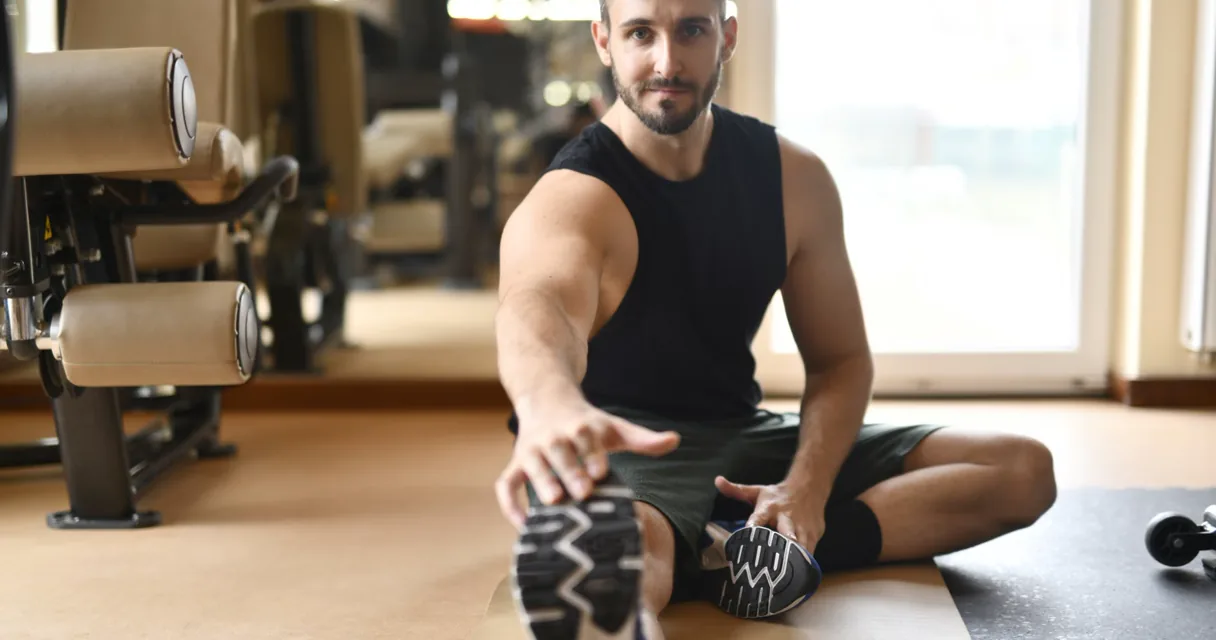
Waking up sore after a new leg session can feel like proof that the workout worked. Delayed onset muscle soreness, usually called DOMS, is real. Yet it is a poor scorecard for hypertrophy. You can build muscle while barely sore, and you can be extremely sore after training that does little for long term progress.
The more useful question is not whether soreness is good or bad. It is what information it gives you, when it is a sign to adjust, and which training signals deserve more attention. For muscle growth, performance over weeks beats how you feel the next morning.
What DOMS actually is
DOMS is the tenderness, stiffness, and discomfort that commonly appears hours after unfamiliar or demanding exercise. It often becomes most noticeable one or two days later. It is different from the temporary burning sensation during a hard set and different from sharp joint or injury pain.
Eccentric work, the lowering phase of a repetition, often produces more DOMS than familiar training. So can a new exercise, a new range of motion, a large jump in volume, or a return after time away. A slow split squat, a long downhill walk, or a first session of Romanian deadlifts can all leave you sore even when the total training stimulus is modest.
What soreness usually tells you
Soreness can tell you that your body met stress it was not recently used to. It may be useful context after a program change, but it does not tell you how much muscle protein will be added or whether the session was optimally programmed.
| Soreness is influenced by | Hypertrophy is better predicted by |
|---|---|
| Exercise novelty and new ranges of motion | Enough hard, well executed sets over time |
| Eccentric loading and muscle length | Progressive overload in load, reps, or quality |
| Individual pain sensitivity | Appropriate effort and recovery |
| Sudden jumps in volume | Consistent training that you can repeat |
Why soreness does not measure muscle growth
Muscle damage and hypertrophy can overlap, especially when training is new. They are not the same adaptation. A very sore muscle may be spending resources repairing unfamiliar disruption, while a familiar exercise can provide productive mechanical tension with little soreness.
Research and practical experience both support the repeated bout effect: repeated exposure to a movement usually makes it less sore. That does not mean the movement stopped working. It means you developed tolerance to that specific stress. Lifters who repeat well chosen movements, get stronger or add clean repetitions, and manage their weekly volume often become less sore while continuing to make progress.
Novelty can create noise
Changing every exercise each week is an easy way to create soreness. It is also an easy way to make progression difficult. If you replace a stable chest press with a new variation, add long negatives, and double your sets, DOMS will probably rise. None of those changes prove that your chest received a better growth stimulus.
This is why chasing soreness can backfire. Excessive soreness can shorten your next session, alter technique, reduce daily activity, and encourage random program hopping. A training plan should be challenging enough to stimulate adaptation and repeatable enough to accumulate quality work.
For a related discussion of effort, read our guide to training to failure for hypertrophy. Failure can increase fatigue and soreness, but it is not automatically a better muscle building choice.
When soreness is normal and when to adjust
Mild to moderate soreness is common after a new movement or a demanding phase. It does not automatically require a rest day. Use function, not bravery, to decide what comes next.
Usually manageable soreness
You can often train around soreness when it is mild, your warm up improves movement, and you can keep normal range of motion and technique. A lighter session, a different muscle group, or simply a longer warm up may be enough.
Soreness that deserves a change
Reduce the load, sets, or exercise range when soreness changes how you move, prevents normal daily activity, or makes you compensate. Avoid pushing through sharp, localized, joint, or worsening pain. If severe symptoms, major swelling, unusual weakness, dark urine, or pain after a clear injury are present, seek medical assessment rather than treating it as ordinary DOMS.
| Situation | Practical response |
|---|---|
| Mild soreness, normal technique | Keep the plan and use a thorough warm up |
| New exercise caused several sore days | Keep the movement but begin with fewer hard sets |
| Soreness lowers next session performance | Reduce novelty or volume before adding recovery tricks |
| Pain is sharp, joint focused, or worsening | Stop the aggravating movement and get appropriate advice |
Better ways to judge whether training is working
A good hypertrophy plan does not need you to guess from soreness. Track the variables that can show a trend over several weeks.
1. Repetitions and load at a similar effort
If you complete more clean repetitions with the same weight and the same approximate RIR, you have progressed. If you add a small amount of weight while keeping range of motion and control, that is also progress. Our progressive overload guide explains how to use these small improvements without forcing weekly max attempts.
2. High quality weekly sets
Count hard sets for each muscle group, not just how exhausted one session feels. A manageable amount of productive work repeated two or three times per week is generally more useful than a single marathon session that leaves you unable to train well again.
3. Recovery and session readiness
Watch your sleep, motivation, joint comfort, and performance across several sessions. One sore day is not a diagnosis. A pattern of declining repetitions, poor sleep, persistent fatigue, and soreness that never settles may mean the plan asks for more than you can recover from. Our deload week guide shows how to reduce fatigue without abandoning training.
4. Body measurements and photos
Muscle growth is slow. Use measurements, consistent photos, fit of clothing, and training performance over a meaningful block. Daily mirror checks and next day soreness are both noisy signals.
How to reduce unnecessary DOMS without making training easy
The goal is not to eliminate every sensation. The goal is to preserve performance and consistency.
- Introduce one new exercise or technique at a time instead of changing the whole program.
- Start a new movement with fewer hard sets, then add work over two or three exposures.
- Keep eccentrics controlled, but do not add extreme slow negatives simply to feel sore.
- Maintain a consistent range of motion before increasing load or volume.
- Prioritize adequate food, fluids, and sleep, especially after hard lower body sessions.
- Use light movement if it helps you feel better, but do not mistake it for a cure that replaces sensible programming.
A controlled eccentric can improve execution, but it is not a soreness challenge. Our tempo training guide explains how to use the lowering phase without turning every set into slow motion.
A simple return after time away
After a break, resist the urge to prove that you are back with a huge session. Choose familiar movements, leave two or three repetitions in reserve, and start with roughly half to two thirds of your previous hard set volume for the first week. Add work gradually as your technique and recovery normalize.
For example, instead of four hard leg exercises on day one, use two familiar movements for two controlled work sets each. Record the load, repetitions, and RIR in GymLog. The next session should be an opportunity to repeat or slightly improve the work, not a test of how much soreness you can tolerate.
The bottom line
Muscle soreness is feedback, but it is not a growth meter. It often reflects novelty, eccentric stress, and your current tolerance more than it reflects the quality of a hypertrophy stimulus. Less soreness after several weeks is frequently a sign that you adapted to the work, not that the work stopped building muscle.
Build your program around hard, controlled sets that you can progress and recover from. Track performance, effort, and weekly volume in GymLog, then make small adjustments from real trends instead of chasing next day pain.