Bulgarian Split Squat for Quads or Glutes: Stance, Form, and Progression
2026-08-20
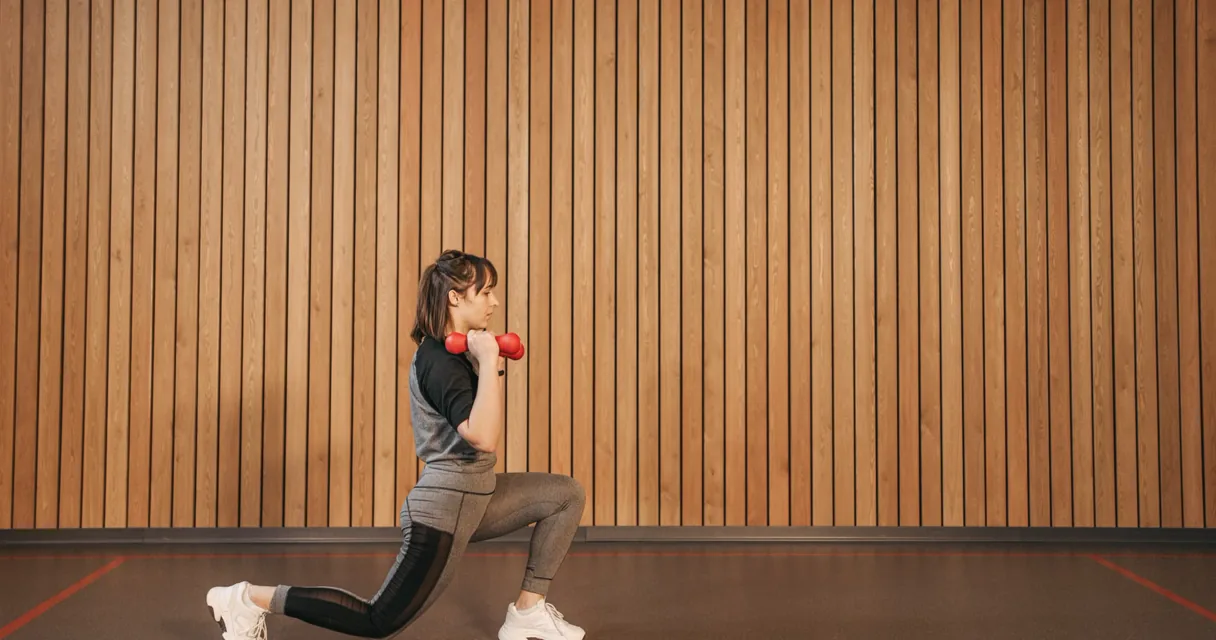
The Bulgarian split squat is one of the most productive lower-body exercises when you want hard leg work without needing a barbell on your back. It trains one leg at a time, exposes left-to-right differences, and can be loaded heavily with dumbbells, a barbell, or a machine setup.
The common question is whether it is a quad or glute exercise. The useful answer is both. Your front-foot distance, knee travel, torso angle, and range can change where the challenge is felt, but none of those choices turns a compound single-leg squat into isolation work. The goal is to choose a version you can control, repeat, and progress.
What the Bulgarian split squat trains
The front leg does the main work. Its quadriceps extend the knee as you stand, while the glutes contribute to hip extension and help control the pelvis. The adductors, hamstrings, trunk, and foot muscles also stabilize the movement.
A biomechanics study comparing Bulgarian split squats with back squats found that both exercises were hip dominant in the tested conditions. That is a useful reminder not to reduce the exercise to a social-media cue. A Bulgarian split squat can still be an excellent quad builder when you allow a comfortable amount of knee flexion and train it hard.
The rear leg is support, not the engine
Place the top of the rear foot or the ball of the foot on a low bench. The rear leg should help you balance, not push you upward. If most of the pressure is in the back foot, move the front foot slightly, lower the bench, or reduce the load until the working leg owns the repetition.
A bench that is roughly knee height is common, but lower is not worse. The best height is the one that lets you keep the pelvis level and move without hip pinching.
Quad bias versus glute bias: use adjustable levers
Both versions train the same major muscles. Treat these positions as gentle biases, not promises of exclusive activation.
| Goal | Stance and torso | Main cue | What to monitor |
|---|---|---|---|
| More quad emphasis | Slightly shorter stance, upright torso | Let the front knee travel naturally | Full front-foot pressure and a stable knee |
| Balanced lower-body work | Moderate stance, natural torso angle | Lower straight down under control | Even balance and a comfortable depth |
| More glute emphasis | Slightly longer stance, modest forward lean | Push the floor away through the whole front foot | Hips stay square and the lower back stays quiet |
For a quad-focused Bulgarian split squat
Bring the front foot closer by a small amount and allow the knee to travel forward in line with the toes. Keep the torso relatively upright, descend until the front thigh reaches a depth you can control, then stand by pressing through the entire foot.
Do not force the knee to remain behind the toes. For many lifters, that restriction shortens the available knee range and turns a potentially good quad movement into an awkward balance drill. The better standard is a knee that tracks smoothly, stays comfortable, and does not collapse inward.
For a glute-focused Bulgarian split squat
Move the front foot forward slightly, maintain a long enough stance to lower without crowding the front hip, and lean the torso forward a little from the hips. The front shin may look more vertical, but it does not need to be perfectly vertical.
Keep your ribs and pelvis connected rather than turning the bottom position into a lower-back arch. A longer stance increases the hip extension demand, but extra length is not automatically better if it makes you lose balance or limits useful depth.
Bulgarian split squat form, step by step
1. Find your stance before adding load
Start with bodyweight and lower slowly. At the bottom, the front heel should remain planted, the front knee should track naturally, and the rear knee should approach the floor without slamming it. Adjust the front foot by a few centimeters at a time until this path feels stable.
Use a rack upright, wall, or light fingertip support while learning. Removing a balance problem can make the working leg train harder and make your progress easier to measure.
2. Lower with the front leg in control
Think about dropping the rear knee toward the floor instead of reaching forward with the front knee. Keep the pelvis approximately square and avoid twisting toward the working leg. A two-second descent is a useful default because it reveals whether the position is under control.
Your depth is personal. Stop before the pelvis rotates, the front heel lifts, or pain begins. More range is only useful when you can keep the same movement quality on every repetition.
3. Stand without bouncing or pushing from behind
Pause briefly if you tend to rebound. Drive the front foot through the floor and let the hips and shoulders rise together. Avoid turning the top into a balance reset after every repetition; the same setup should carry through the set.
How to load and program Bulgarian split squats
Dumbbells are often the easiest starting tool because they are simple to set up and make it easy to adjust a load. A single dumbbell held on the side opposite the working leg can make balance more demanding. Two dumbbells usually allow more total load. A Smith machine or supported variation can be useful when balance, rather than leg strength, is the limiter.
Our comparison of dumbbells, machines, and barbells can help you choose the tool that fits your gym and goal.
| Training goal | Sets and reps per leg | Effort target | Rest |
|---|---|---|---|
| Learning the movement | 2 to 3 × 8 to 10 | RPE 6 to 7 | 60 to 90 seconds between legs |
| Hypertrophy | 3 to 4 × 8 to 15 | RPE 7 to 9 | 90 to 150 seconds after both legs |
| Strength emphasis | 3 to 5 × 5 to 8 | RPE 7 to 8 | 2 to 3 minutes after both legs |
| Secondary lower-body work | 2 to 3 × 10 to 15 | Leave 1 to 3 reps in reserve | 90 seconds after both legs |
Perform all repetitions on one side before changing sides, or alternate legs. Either method works. Keep the method consistent when comparing sessions in your log.
Use double progression, one variable at a time
Choose a range, such as 8 to 12 repetitions per leg. Keep the same load and setup until every working set reaches 12 controlled repetitions. Then increase the load by the smallest available jump and return near the bottom of the range.
For example, a lifter might perform 12 kg dumbbells for 8, 8, and 7 repetitions per leg. Over several sessions, the target is 12, 12, and 12 with the same depth and balance before moving to 14 kg. This is progressive overload that respects the exercise instead of chasing a number.
Rate the final set honestly. The RPE scale guide can help you distinguish a hard leg set from a set that ended early because balance failed.
Common Bulgarian split squat mistakes
Chasing a stance copied from someone else
Limb length, mobility, bench height, and the goal of the exercise all influence stance. A setup that looks ideal for another lifter may feel unstable for you. Start from a moderate stance, then change one detail at a time and keep the version that gives a repeatable path.
Letting the rear leg do too much
A strong push from the rear foot makes the set easier but hides how much work the front leg receives. Use a lighter load, reduce bench height, or hold a support until the front leg can control the full range.
Turning every set into a balance test
Unilateral does not have to mean unstable. Light support or a Smith machine can be a smart choice when it lets you apply more controlled tension to the quads and glutes. The exercise should challenge the target tissues, not only your ability to avoid falling over.
Adding load before the path is repeatable
If one repetition is shallow, the next twists, and the next uses the rear foot, a heavier dumbbell is not a clear progression. First make the depth, stance, and tempo consistent. Then load it.
Where it fits in a leg program
Use the Bulgarian split squat as a primary unilateral movement after a main squat or hinge, or make it the main lower-body lift when equipment is limited. It pairs well with a hamstring curl or Romanian deadlift because those movements add a different hip and knee challenge.
Beginners can begin with a split squat or reverse lunge before elevating the rear foot. The 3-day full-body beginner workout shows where single-leg work fits in a simple weekly plan. If you train four days, it also fits naturally in the lower sessions of our upper/lower hypertrophy split.
Final takeaway
The Bulgarian split squat is not a quad-only or glute-only exercise. A shorter, more upright setup can make quad work more prominent, while a slightly longer stance and forward torso angle can increase the hip extension challenge. Both choices can build muscle when they are comfortable, stable, and progressively loaded.
Pick one setup for several weeks, record the load, repetitions, and RPE for each leg, and earn progress with cleaner work before more weight. Download GymLog to make every single-leg session measurable instead of relying on memory.