Romanian Deadlift vs Leg Curl: Build Stronger Hamstrings With Both
2026-08-24
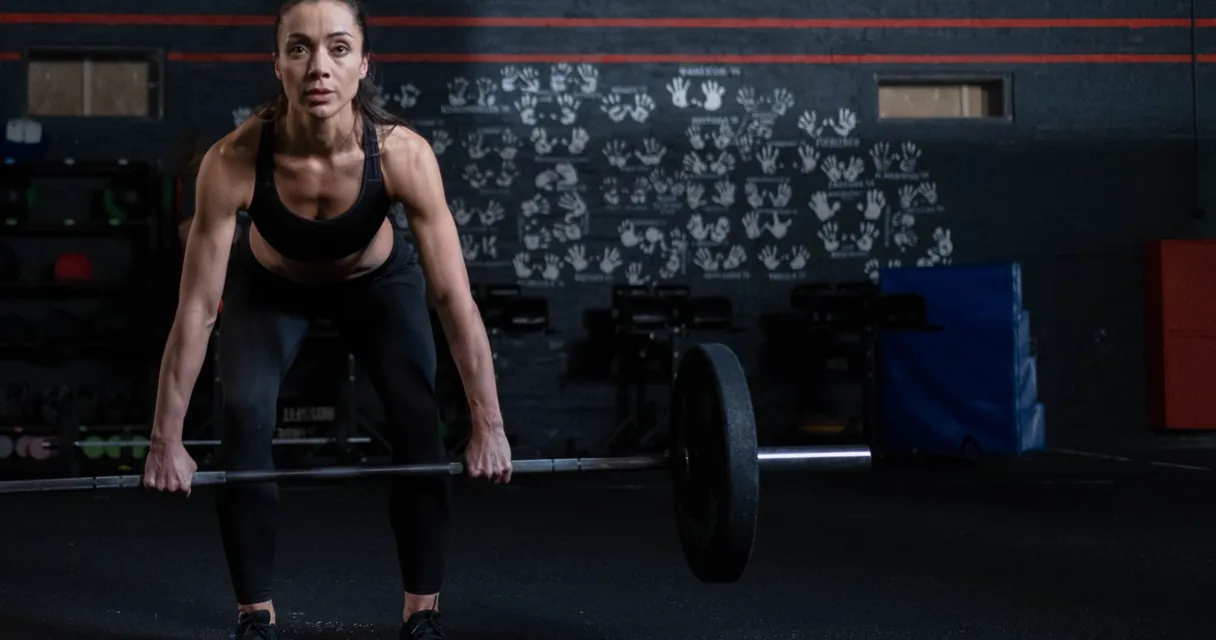
Romanian deadlifts and leg curls are often presented as competing hamstring exercises. That framing misses the useful distinction: they challenge the hamstrings through different joint actions. One is a hip hinge that asks the hamstrings to help extend the hip; the other is a knee flexion exercise that asks them to bend the knee.
If your goal is stronger, more muscular hamstrings, the question is rarely which movement wins in isolation. It is how to use each movement with enough effort, range of motion, and recovery to make your weekly training complete. A Romanian deadlift can provide a demanding loaded stretch and train the glutes at the same time. A leg curl can add direct knee flexion work with less grip and lower back fatigue.
Why Romanian deadlifts and leg curls are not interchangeable
The hamstrings cross the hip and knee, with one important exception: the short head of the biceps femoris crosses only the knee. This anatomy explains why a hip hinge and a leg curl complement each other instead of doing exactly the same job.
A Romanian deadlift lengthens the hamstrings as the hips travel back, then challenges them as you extend the hips to stand. A leg curl keeps the hip position relatively fixed and trains knee flexion. Neither movement needs to be labeled superior for every person. Together, they cover functions that a single exercise cannot fully duplicate.
| Exercise | Main joint action | Extra demand | Best use |
|---|---|---|---|
| Romanian deadlift | Hip extension | Glutes, trunk, grip, balance | Heavy hamstring work and hip-hinge strength |
| Seated leg curl | Knee flexion at a long starting length | Very little lower back fatigue | Direct hamstring volume with stable setup |
| Lying leg curl | Knee flexion | Easy setup in many gyms | Direct work when seated curl is unavailable |
Romanian deadlift: the hip-hinge option
The Romanian deadlift is a strong default when you want to load hip extension without turning every set into a pull from the floor. Its main quality is controlled tension as the hamstrings lengthen during the descent. That does not mean forcing the bar to the floor or chasing an extreme stretch. It means finding a repeatable depth where your pelvis stays controlled and your back remains neutral enough to load confidently.
Romanian deadlift technique that keeps the hamstrings involved
Start with the bar close to your thighs, soften the knees, and push the hips back. Let the bar travel close to the legs while your torso inclines forward as one unit. Stop the descent when the hamstrings reach a strong stretch and you can still keep the bar close without losing pelvic control.
Then press the floor away and bring the hips forward. Avoid turning the top into a hard backward lean. The repetition ends when you are tall and balanced, not when your lower back has extended as far as possible.
A controlled two to three second descent is useful while learning, but deliberately slow repetitions are not mandatory forever. Once your hinge is consistent, use a tempo that lets you feel the hamstrings while preserving enough load and effort to progress.
Common Romanian deadlift errors
- Bending the knees so much that the movement becomes a squat
- Reaching for the floor after hamstring tension has disappeared
- Letting the bar drift away from the body
- Adding weight when range or back position changes from rep to rep
Use the RPE scale to rate the final set honestly. If grip or lower back always ends the set before the hamstrings, straps, a lighter load, or a different exercise order may make the movement more productive.
Leg curls: the direct knee-flexion option
Leg curls give the hamstrings a job that a Romanian deadlift cannot fully replace: bending the knee against resistance. They are also a practical way to add hard hamstring volume after a compound lower-body lift without asking the lower back to stabilize another demanding set.
A study comparing seated and prone leg curls found greater hamstring hypertrophy with the seated version, likely because the hip position creates a longer starting muscle length. That is a useful preference, not a reason to abandon a lying curl that fits your gym and body well. Stable execution, a comfortable range, and progressive loading still matter most.
Make the curl fit the machine
Set the knee joint close to the machine pivot and secure the thigh pad so the hips do not lift. Begin each repetition from a controlled stretch, curl without kicking the weight, and lower until you regain the starting position. On a seated machine, keep your hips back against the pad rather than sliding forward to shorten the range.
Do not turn the last repetitions into a full-body swing. A small reduction in load that keeps the hips still often produces a clearer hamstring set than a heavier stack moved with momentum.
The best hamstring plan uses both movements
For hypertrophy, begin with the exercise that deserves your freshest effort. If Romanian deadlift strength or hinge technique is the priority, put it first. If you already squat, deadlift, or perform hard rows and your lower back is tired, start with leg curls or use them as the main hamstring exercise for that session.
| Goal | Romanian deadlift | Leg curl | Practical note |
|---|---|---|---|
| New to hamstring training | 2 × 8 to 10 | 2 × 10 to 15 | Leave two to three reps in reserve |
| General hypertrophy | 3 × 6 to 10 | 3 × 8 to 15 | Train both once or twice each week |
| Lower back fatigue is high | 2 × 8 to 10 | 3 to 4 × 10 to 15 | Use a supported or machine hinge if needed |
| Hinge technique is the priority | 3 to 4 × 6 to 8 | 2 × 10 to 15 | Keep curl work simple and controlled |
These are starting points, not a mandatory template. Your squat, split squat, glute work, sport, and recovery all contribute to the amount of hamstring training you can tolerate. The 4-day upper/lower split is a useful structure when you want room for both a hinge and direct leg curls across the week.
Progress one variable at a time
Pick a rep range and keep the same setup for several sessions. For example, use Romanian deadlifts for three sets of six to ten reps. Once all three sets reach ten controlled reps, add the smallest practical load and return near six. Use the same method for leg curls, perhaps in an eight to fifteen rep range.
This is progressive overload in a form that respects exercise quality. More load only counts when the bar path, range, and control stay recognizable.
When one exercise may deserve more attention
Prioritize Romanian deadlifts when you need practice with a hip hinge, want a compound movement that also loads the glutes, or can recover well from it. Prioritize leg curls when you need direct hamstring work with little lower back loading, when grip limits your hinge, or when you want to increase knee-flexion volume.
If a movement causes sharp pain, repeated cramping, or symptoms that do not settle with sensible adjustments, stop treating it as a programming puzzle and speak with a qualified clinician. Training discomfort from effort is different from pain that changes the way you move.
Final takeaway
Romanian deadlifts and leg curls are better partners than rivals. The Romanian deadlift trains a loaded hip hinge and gives the hamstrings a demanding lengthened challenge. The leg curl adds direct knee flexion work that no hinge fully covers.
Use one or both according to your goal, equipment, and recovery. Record load, repetitions, and RPE in GymLog, then give a consistent plan enough weeks to show whether your hamstrings are actually getting stronger.