Dumbbells vs Machines vs Barbells for Hypertrophy: Which Builds More Muscle?
2026-07-02
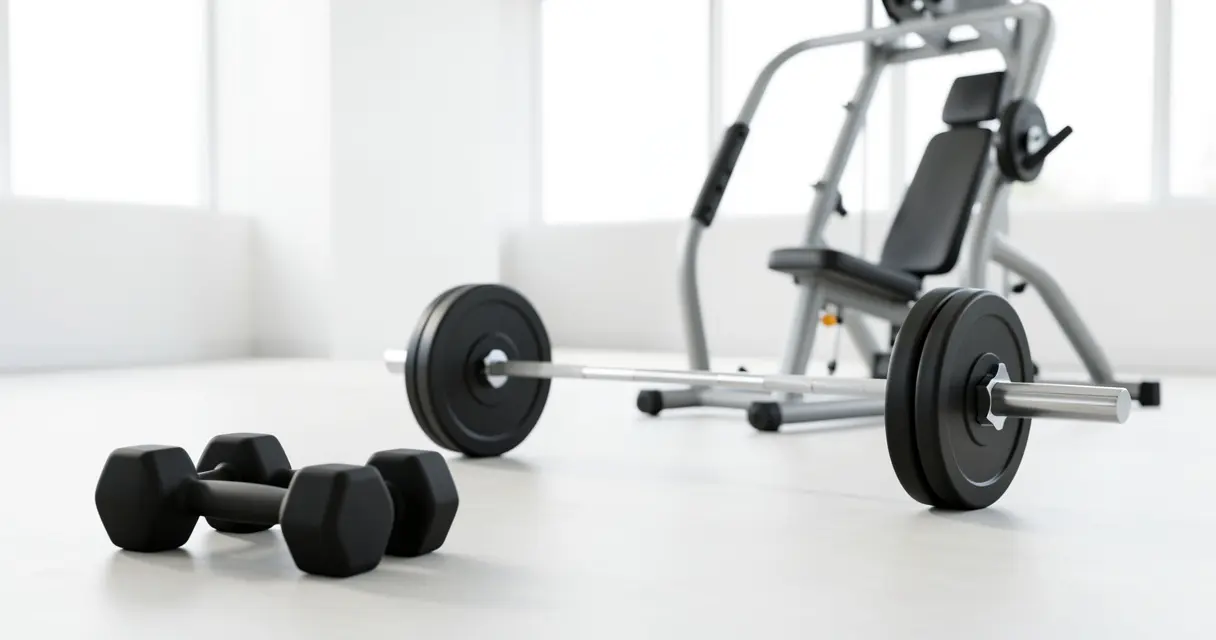
Walk into almost any gym and you will hear the same argument repeated in different forms. One lifter says barbells are the only serious way to build size. Another swears machines isolate muscles better. Someone else says dumbbells win because they feel more natural and expose imbalances.
The real answer is less tribal and far more useful. If your goal is hypertrophy, dumbbells, machines, and barbells can all build muscle extremely well. The better question is not which tool is universally superior. The better question is which tool gives the best stimulus for this exercise, this lifter, and this phase of training.
That is exactly where many ranking articles stay shallow. Most compare only free weights versus machines, or only dumbbells versus barbells. Very few explain how to make a practical three-way choice based on stability, progression, joint comfort, range of motion, and proximity to failure. That is the gap this guide will solve.
What the current evidence really says
The broad research on machines versus free weights is much less dramatic than gym culture suggests.
Muscle growth is more similar than most people expect
A recent meta-analysis comparing free-weight and machine-based training found no meaningful difference in hypertrophy when the training was compared directly. In plain English, muscles do not care much whether tension comes from a machine, a dumbbell, or a barbell if the hard sets are well executed and taken close enough to failure.
That matters because it immediately kills a lot of bad advice. You do not need to force every program to revolve around barbells to grow. You also do not need to pretend machines are only for beginners. The main drivers are still quality volume, enough effort, and consistent progression.
This also fits the bigger picture from our guide to progressive overload. The best equipment is the one that lets you add reps, load, execution quality, or total work over time without constantly running into avoidable bottlenecks.
Strength gains are more specific to the tool you use
The same research showed something important for programming: strength tends to improve most in the modality you actually train. If you barbell bench, you usually get better at barbell benching. If you spend more time on chest press machines, machine strength tends to improve more there.
This is why equipment choice depends on your main goal. If you care about sport-specific barbell strength, barbells deserve a bigger role. If you care mostly about hypertrophy, you can be much more flexible and simply ask which option loads the target muscle best.
Stability is not automatically a hypertrophy advantage
A common belief is that free weights must build more muscle because they require more stabilization. It sounds logical, but the long-term hypertrophy data does not support the idea that extra instability is automatically better for growth.
More stabilization can be useful when you want coordination, skill, or transfer to specific lifts. But for pure muscle building, too much instability can also reduce the force you can direct into the target muscle. That is one reason machines often shine on later sets and higher-rep accessory work.
What each tool does best for hypertrophy
The smartest lifters stop asking for one winner and start asking what each tool is best at.
Barbells: best for heavy bilateral progression
Barbells are extremely effective when you want:
- straightforward load progression
- stable setup across weeks
- high output on compounds like squats, presses, rows, and deadlift variations
- direct carryover to barbell strength goals
Because both hands work on one implement, barbells make it easier to organize load, track progress cleanly, and push heavy sets without fighting as much side-to-side chaos. That makes them ideal for the main lift slot in many programs.
For example, if you run a 4-day upper/lower split for hypertrophy, a barbell bench press or squat often fits very well as the first movement of the day. You are fresh, focused, and better able to produce force.
Where barbells are less ideal
Barbells are not automatically the best choice for every muscle. The fixed hand position and shared implement can lock you into a path that feels great for one lifter and awkward for another. They can also hide side-to-side differences and sometimes become more about technique tolerance than local muscular fatigue.
If the target muscle keeps losing the job, or a joint feels stuck in a bad groove, a different tool may give you a better hypertrophy stimulus.
Dumbbells: best for freedom, balance, and individual joint comfort
Dumbbells offer a mix of freedom and challenge that many hypertrophy programs need.
Why dumbbells work so well
Dumbbells let each arm or leg move more independently. That can be useful for:
- reducing side-to-side imbalances
- finding a more natural joint path
- getting more stretch on some upper-body movements
- exposing weak links that barbells can hide
This is why many lifters love dumbbells for incline presses, rows, split squats, Romanian deadlifts, curls, and lateral raise variations. On these exercises, the extra freedom can improve comfort and help you keep tension where you want it.
That freedom also makes dumbbells a practical place to apply the ideas from our mind–muscle connection guide. Moderate-load dumbbell work often makes it easier to slow down slightly, adjust path, and feel the target muscle without becoming trapped in one rigid groove.
Where dumbbells become limiting
Dumbbells are not always convenient once loads get very heavy. Getting them into position can waste energy before the set even begins. On some presses and split-leg patterns, setup fatigue becomes the real limiter instead of the target muscle.
That is why dumbbells are excellent secondary compounds and accessories, but not always the easiest place to drive long-term top-end loading.
Machines: best for stability, targeting, and pushing close to failure
Machines are often underrated by lifters who still think guided movement means inferior muscle gain.
Why machines are so effective
Machines reduce the skill and balance demands of a lift. That lets you direct more attention toward the working muscle and often push sets harder with less technical leakage.
Machines are especially useful when you want:
- high local tension with less coordination demand
- safer hard sets near failure
- easier drop sets or rest-pause work
- better fatigue management late in the workout
- joint-friendly options when a free-weight pattern feels rough
This is one reason machine chest presses, hack squats, leg curls, leg extensions, cable rows, and lateral raise machines are staples in hypertrophy-focused training.
Where machines are less ideal
Machines vary a lot between gyms, and not every machine fits every body well. Some lock you into a path that feels fantastic. Others feel terrible because the lever, seat, or handle position does not match your structure.
So the advantage of a machine is not that it is a machine. The advantage is that it gives you stability without stealing productive range of motion or joint comfort.
Which is best for common hypertrophy goals?
Here is the practical answer most readers actually need.
If your main goal is maximum muscle size
Use the tool that gives the target muscle the best mix of tension, comfort, and progression. That often means a combination:
- barbells for your first heavy compound
- dumbbells for a secondary movement with more freedom
- machines for stable high-effort accessories
This combination usually beats equipment ideology.
If you are a beginner
Beginners can build muscle with all three. Machines may be easier to learn at first because they reduce coordination demands, but beginners should not fear free weights either. The right answer is usually to learn basic free-weight patterns while also using machines to accumulate quality volume.
If you train at home with limited equipment
If you only have barbells and dumbbells, you can build plenty of muscle. You do not need machines to grow. But you may need smarter exercise selection, cleaner tempo, and more careful logging to keep progression moving. Our article on tempo training for hypertrophy becomes especially useful here.
If your joints get irritated easily
Joint comfort matters because pain changes execution, confidence, and consistency. If a barbell pattern repeatedly bothers your shoulders, hips, elbows, or lower back, do not treat the tool as sacred. Dumbbells or machines may let you keep training hard without turning every session into damage control.
If you want to get stronger on a specific lift
Bias the tool you want to improve. This is where specificity matters most. Use our RPE scale guide to keep effort honest while you progress the movement that actually matters to you.
A simple way to combine barbells, dumbbells, and machines
A great hypertrophy program does not ask one tool to do everything.
Upper-body example
- Barbell bench press — 3 to 4 sets of 5 to 8 reps
- Incline dumbbell press — 3 sets of 8 to 10 reps
- Chest press machine — 2 to 3 sets of 10 to 15 reps
- Chest-supported row or cable row — 3 sets of 8 to 12 reps
- Lateral raise machine or dumbbells — 3 to 4 sets of 12 to 20 reps
- Cable curl and triceps extension — 2 to 3 sets each
This structure uses barbells for heavy output, dumbbells for freedom and stretch, and machines for stable fatigue-focused work.
Lower-body example
- Barbell squat or Romanian deadlift — 3 to 4 sets of 5 to 8 reps
- Dumbbell split squat or walking lunge — 2 to 3 sets of 8 to 12 reps per leg
- Hack squat or leg press — 3 sets of 10 to 15 reps
- Leg curl — 3 sets of 10 to 15 reps
- Calf raise machine — 3 to 4 sets
Again, the combination is the point. Each exercise uses the equipment that makes the slot more productive.
The biggest mistakes lifters make
Mistake 1: Picking equipment by ego instead of stimulus
Many lifters stay married to barbells because the loads look impressive, or hide inside machines because they never want to practice harder patterns. Neither mindset is helpful. Judge the exercise by the stimulus it creates, not by the culture attached to the tool.
Mistake 2: Treating stability like a moral value
More stability is not cowardly, and more instability is not automatically superior. Stability is just a variable. Use more of it when it helps you push the target muscle harder. Use less of it when you need more freedom or more task-specific skill.
Mistake 3: Using only one category forever
Programs become weaker when every slot is forced into the same equipment family. A pure barbell plan can miss easy hypertrophy volume. A machine-only plan can underdevelop some skill and progression opportunities. A dumbbell-only plan can become awkward once loads climb. Variety is useful when it solves a real programming problem.
Final verdict
For hypertrophy, dumbbells, machines, and barbells are all effective. The evidence does not support the old idea that one category is universally best for building muscle. What matters more is whether the tool lets you train the target muscle hard, safely, and progressively.
Barbells are usually strongest for heavy bilateral loading and clear progression. Dumbbells shine when you need freedom, balance, and a better individual path. Machines are often unbeatable for stable high-effort work and targeted volume close to failure.
If you stop thinking in terms of loyalty and start thinking in terms of function, your program becomes much easier to build and much easier to progress. Download GymLog to track which lifts respond best to barbells, dumbbells, and machines so your future training decisions are based on data, not gym mythology.