How Much Protein Per Meal for Muscle Growth? A Practical Guide
2026-07-06
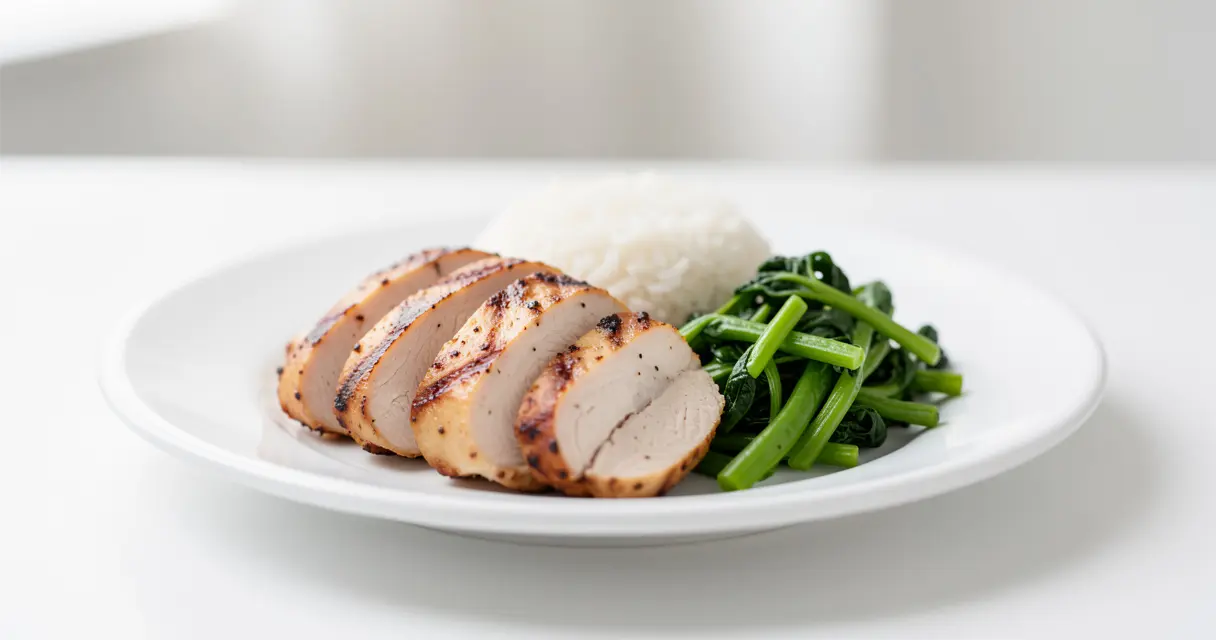
How much protein per meal for muscle growth is one of the most searched nutrition questions in fitness, and also one of the most misunderstood. Some people still repeat the old claim that the body can only use 20 to 30 grams of protein at once. Others swing too far in the opposite direction and act as if meal distribution never matters.
The useful answer sits between those extremes. For most lifters, total daily protein still matters most, but how you spread that protein across the day can make your plan more effective and easier to repeat. That matters even more if your goal is hypertrophy, recovery, or body recomposition.
Many ranking pages stop at a vague number and never explain where it comes from, who it applies to, or how to adjust it for body size, mixed meals, or real schedules. This guide fills that gap with a practical framework you can actually use.
The short answer
A very practical target for most people is about 0.4 grams of protein per kilogram of body weight per meal.
If you hit that target across four meals, you reach about 1.6 grams per kilogram per day, which lines up well with the lower end of the evidence-based range often used to support muscle growth. If you aim higher, such as 2.2 grams per kilogram per day, four meals would put you closer to 0.55 grams per kilogram per meal.
In plain English, that means a 70 kilogram lifter often does well with roughly 28 to 40 grams per meal, depending on the daily target, food quality, and number of meals.
Why the old 20 to 30 gram rule is incomplete
The idea that anything above 20 to 30 grams is wasted is too simplistic.
Muscle protein synthesis is not the same as total body use
A single feeding of high quality protein can stimulate muscle protein synthesis strongly at around 20 to 25 grams in many younger adults, especially when fast digesting protein is used in isolation. That is where the old sound bite came from.
The problem is that real meals are not pure whey shakes consumed in a laboratory. Mixed meals digest more slowly, larger lifters need more absolute protein, and amino acids above that threshold are not automatically useless. Some may support other tissue needs and still contribute to the bigger anabolic picture.
That is why the more practical sports nutrition recommendation is to think in grams per kilogram per meal instead of chasing one fixed number for everyone.
Body size changes the answer
A 55 kilogram beginner and a 100 kilogram advanced lifter do not need the same per meal target.
Using body weight keeps the recommendation more honest:
- 60 kg lifter: about 24 to 33 grams per meal
- 70 kg lifter: about 28 to 39 grams per meal
- 80 kg lifter: about 32 to 44 grams per meal
- 90 kg lifter: about 36 to 50 grams per meal
Those ranges are much more useful than pretending everyone should drink the same 25 gram shake.
Food quality and meal context matter too
Thirty grams of whey, thirty grams of chicken protein, and thirty grams of lower quality plant protein do not behave identically.
High quality animal proteins and whey generally provide enough essential amino acids, including leucine, with less total food volume. Plant-based lifters can still build muscle very well, but they may need a slightly larger serving, smarter food combinations, or more attention to total daily intake.
What a smart protein distribution looks like
If your main goal is muscle gain, a simple plan usually beats a perfect plan that you cannot sustain.
Most lifters do well with three to five feedings
For many people, three to five protein feedings across the day is the sweet spot.
That might look like:
- breakfast with 25 to 40 grams
- lunch with 25 to 40 grams
- a post workout shake or snack with 20 to 40 grams
- dinner with 30 to 45 grams
This structure tends to work better than eating a tiny breakfast, almost no protein at lunch, and trying to fix everything with one giant dinner.
Four meals often makes the math easiest
Four meals is not mandatory, but it is easy to build around. It makes it simpler to reach both daily protein targets and a balanced distribution.
Here is a practical example for an 80 kilogram lifter targeting about 160 grams per day:
- Breakfast: 35 grams
- Lunch: 40 grams
- Post workout meal or shake: 35 grams
- Dinner: 50 grams
That is not magic. It is simply organized.
Does protein timing around workouts matter?
Yes, but much less than many supplement headlines suggest.
Total intake still wins
If your daily protein intake is too low, perfect timing will not rescue your results. That is why our article on whey protein before or after a workout keeps the focus on the full day first.
For most lifters, the best rule is simple: get a protein feeding reasonably close to training, but do not obsess over a narrow 30 minute window.
Timing matters more in some situations
Protein timing becomes more relevant when:
- you train fasted in the morning
- your last meal was several hours before lifting
- you struggle to hit daily protein consistently
- you are pushing hard during a calorie deficit
If you had a solid protein rich meal one to three hours before training, the urgency is lower. If you trained after a long gap without food, a shake before or after training becomes more useful.
If you are cutting, the bigger challenge is often protecting muscle while calories are lower. Our guide to building muscle in a calorie deficit explains how nutrition and training priorities shift in that phase.
Best protein sources per meal
The best protein source is the one that gives you enough high quality protein consistently and fits your digestion, budget, and schedule.
Great options for most lifters
- whey protein
- Greek yogurt or skyr
- eggs plus egg whites
- chicken, turkey, lean beef, or fish
- cottage cheese
- tofu, tempeh, and soy products
Whey is convenient, but it is not mandatory. Whole foods often make the meal more filling and easier to anchor into your routine.
Plant based athletes may need a bigger serving
Plant proteins can absolutely support hypertrophy, but some sources are lower in leucine or less digestible. In practice, that often means using slightly larger portions, combining sources such as soy plus grains or legumes, and being more deliberate about total intake.
Common mistakes that hold protein planning back
Mistake 1: Treating per meal protein like the only number that matters
Per meal targets are useful, but they do not replace the basics. If your total daily intake is too low, the rest of the conversation is secondary.
Mistake 2: Backloading almost all protein into dinner
One huge evening meal can still count toward your total, but many people do better with a more even spread. Distribution gives you several quality feeding opportunities instead of one nutritional rescue attempt.
Mistake 3: Forgetting calorie context
Protein helps, but your energy intake still shapes the result. If you are trying to gain size with very low calories, or lose fat with wildly inaccurate tracking, progress becomes harder to read. Use the GymLog calorie calculator to estimate intake more clearly.
Mistake 4: Assuming bigger is always better
More protein is not automatically more muscle. Once your total intake and distribution are already solid, sleep, training quality, exercise selection, and progression often become the bigger bottlenecks.
A simple way to set your own target
Use this quick framework:
Step 1: Set your daily target
Most lifters aiming to build or keep muscle do well around 1.6 to 2.2 grams of protein per kilogram of body weight per day.
Step 2: Divide it across three to five feedings
If you prefer three large meals, each one needs more protein. If you eat four or five times per day, the target per meal drops slightly.
Step 3: Keep at least one feeding reasonably close to training
This is where convenience matters. A full meal, a yogurt bowl, or a whey shake can all work.
Step 4: Repeat for weeks, not days
The best protein strategy is not the cleverest one on paper. It is the one you can repeat while training hard and recovering well.
Final verdict
How much protein per meal for muscle growth? For most people, around 0.4 grams per kilogram per meal is a strong starting point, with 0.55 grams per kilogram per meal being a practical upper target when daily intake is higher and meals are limited to about four feedings.
The real goal is not to worship one number. It is to combine enough total daily protein, a sensible distribution across the day, and a meal near training when practical. Do that consistently and you will get far more from your nutrition than from repeating the old 30 gram myth.
Download GymLog to track your meals, workouts, body weight, and performance trends so you can see whether your protein plan is actually helping you build muscle.