Whey Protein Before or After Workout: What Actually Matters for Muscle Gain
2026-06-18
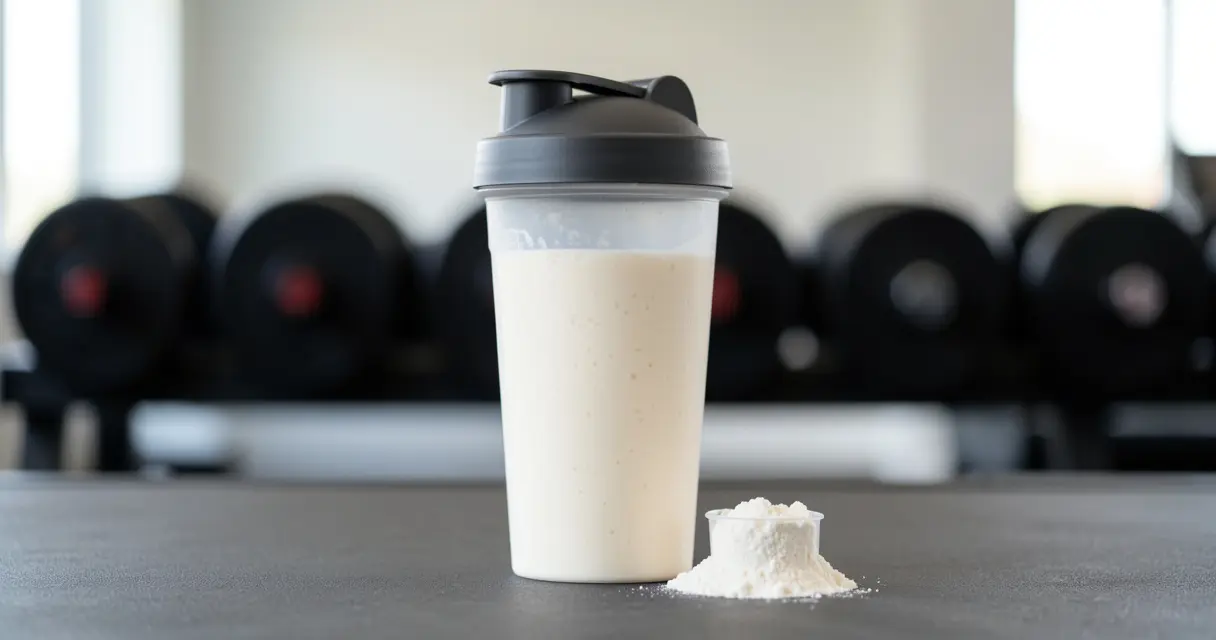
Search Google for whey protein before or after workout and you will see the same recycled debate: one side says the post workout anabolic window is everything, while the other says timing never matters at all. Both takes are too simplistic.
The real answer is more useful. Whey protein timing matters a little, but it matters far less than your total protein intake, your training quality, and whether your last meal was close to your workout. That is why two people can follow opposite timing strategies and still make progress.
This guide breaks down when whey protein after a workout is the best call, when a pre workout shake makes sense, and how to choose the most practical option for muscle gain, recovery, or fat loss.
The short answer: after training is the easiest default
If you want one simple rule, take whey protein after your workout.
That default works well because whey digests quickly, gives you a reliable dose of essential amino acids, and fits naturally into the recovery window when most people want an easy meal or shake. It also helps many lifters avoid under eating protein later in the day.
But post workout is not magical. You do not need to sprint from the last set to your shaker bottle. Muscle protein synthesis stays elevated long after the session, which means your full day of eating still drives the result.
Why the anabolic window is smaller than most headlines suggest
Many supplement articles still treat protein timing like a 30 minute emergency. That framing is outdated.
Current sports nutrition thinking is much more practical:
- muscle protein synthesis stays elevated for many hours after resistance training
- the meal you ate before training still contributes amino acids during and after the session
- daily protein intake and protein distribution across the day matter more than a frantic post workout ritual
That does not mean timing is useless. It means timing is context dependent.
If you train after five hours without eating, timing matters more. If you trained one hour after a high protein meal, timing matters less.
When whey protein after a workout makes the most sense
1. You want the simplest hypertrophy routine
For most lifters chasing muscle gain, a post workout whey shake is the easiest habit to repeat. You finish training, drink 20 to 40 grams of whey, and move on to your next meal.
That habit is especially useful if you often miss protein later in the day. Convenience matters because the best nutrition strategy is the one you actually follow for months.
2. You train hard and do not want a heavy stomach beforehand
Some people hate lifting with food sitting in their stomach. If you feel better training without a pre workout shake, there is no reason to force one. A post workout shake solves the recovery side without making the session feel sluggish.
3. Your goal is recovery plus appetite control
After a hard session, whey can help you quickly cover protein needs while taking the edge off hunger. That is useful during a lean gain phase and even more useful if you are trying to build muscle in a calorie deficit.
When whey protein before a workout can be a smart move
1. You train fasted in the morning
If you lift early and do not want a full breakfast, a small whey shake 30 to 60 minutes before training can give you amino acids without a heavy meal. This is one of the clearest cases where pre workout whey is practical.
2. Your last meal was more than three or four hours ago
If there is a long gap between your last real meal and your session, whey before training can reduce that gap and give you a more supportive protein pulse around the workout.
3. You struggle to eat enough protein overall
For skinny beginners, busy workers, or anyone who chronically under eats protein, a pre workout shake can simply be an easy way to hit the daily target. That matters more than whether the shake was at 4:30 or 5:15.
Total daily protein still matters more than perfect timing
This is the part many ranking articles underplay.
If your daily intake is too low, perfect timing will not save you. Muscle gain still depends on enough total protein, enough calories for your goal, and enough training stimulus to force adaptation.
For most lifters, a useful target is around 1.6 to 2.2 grams of protein per kilogram of body weight per day. If you are not even close to that range, fix the full diet first. Our bodybuilding nutrition guide covers the bigger picture, and our calorie calculator can help you estimate intake.
A better priority order
- Hit your daily protein target.
- Spread protein across three to five feedings.
- Put one feeding reasonably close to training.
- Use whey because it is convenient, not because it is magical.
That order will outperform timing obsession almost every time.
How much whey protein should you take?
For most people, 20 to 40 grams is the practical range.
Use the lower end if:
- you are lighter
- you recently ate a protein rich meal
- the shake is only one part of a larger meal
Use the higher end if:
- you are larger
- you trained after a long gap without food
- the shake is replacing a full protein serving
- you are trying to make it easier to hit a high daily target
Whey is especially useful because it is rich in leucine, one of the main amino acids involved in triggering muscle protein synthesis.
Is whey isolate better than concentrate around workouts?
Usually, either can work.
Whey isolate is often easier to digest and has slightly more protein per scoop. Whey concentrate is often cheaper and still effective. The better choice depends on your stomach, your budget, and whether lactose bothers you.
If shakes regularly cause bloating, isolate may be a better fit. If digestion is fine, concentrate can do the job just as well for many lifters.
What about carbs with whey?
You do not always need carbs with your shake, but they can be helpful.
Carbs make the most sense when:
- the session was long or demanding
- you are training again later that day
- you struggle with glycogen, energy, or total calorie intake
- you are in a mass gain phase
If your overall diet is solid, whey alone is often enough after lifting. The real mistake is assuming a fancy shake matters more than the quality of your full day of eating and sleeping. Recovery is built on habits, not on a single scoop. Our sleep and muscle growth guide explains why recovery quality can erase good nutrition if sleep keeps falling apart.
Best whey timing by training situation
Morning fasted training
- Best option: whey before or immediately after training
- Why: there was no recent meal supporting the session
Lunch break workout after breakfast
- Best option: either works
- Why: breakfast is still contributing amino acids
Evening training after a long workday
- Best option: whey before if lunch was far away, after if dinner follows soon
- Why: the size of the meal gap matters more than the clock itself
Fat loss phase
- Best option: after training or between meals
- Why: whey helps you cover protein with relatively low calories and can improve satiety
Common mistakes people make with whey timing
Treating whey like a substitute for a full nutrition plan
Whey is a supplement, not a rescue plan. If calories, meal quality, and training progression are weak, the shake will not fix the system.
Panicking about a missed 30 minute window
If you finish training and eat a protein rich meal within the next couple of hours, you are fine in most cases.
Taking whey but ignoring progression in the gym
Protein supports growth, but training creates the reason to grow. If your lifts are not progressing, review your programming and your progressive overload strategy.
Buying a formula with extras you do not need
Many products hide mediocre formulas behind flashy claims. A simple whey product with transparent labeling is often the better choice.
A simple practical rule you can use today
Use this decision tree:
- Had a protein rich meal one to three hours before training? Post workout whey is optional and convenient, not mandatory.
- Training fasted or long after your last meal? Pre workout whey makes sense.
- Only want one easy default? Take 20 to 40 grams after training.
- Still missing protein by the end of the day? Timing is not the problem. Daily intake is.
Final verdict
Whey protein after a workout is the easiest default for most people, but it is not the only effective option. If your pre workout meal was long ago or you train fasted, whey before lifting can be just as smart. The real winner is the timing strategy that helps you hit your protein target consistently and recover well enough to train hard again.
If you want to see whether your training, protein intake, and recovery are actually producing better performance, track your sessions in GymLog. Logging reps, load, body weight, and recovery trends makes it much easier to spot whether your nutrition is helping your results move in the right direction.