3-Day Full-Body Workout for Beginners: A Repeatable Gym Plan
2026-08-17
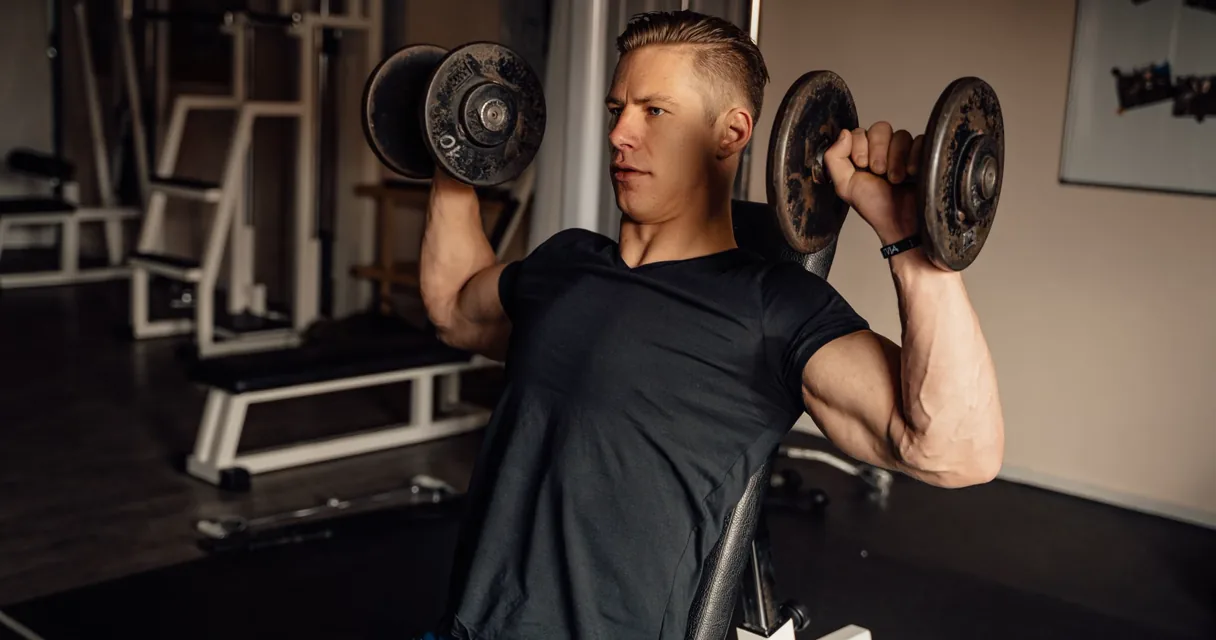
A 3-day full-body workout is one of the best places to start in the gym. It gives you three chances each week to learn the fundamental patterns, build strength, and accumulate useful muscle-building volume without turning training into a daily obligation.
The mistake many beginner plans make is trying to include every possible exercise. That creates long sessions, excessive soreness, and no clear way to improve. A better plan repeats a small group of movements, uses manageable effort, and records each session so progress is visible.
This beginner gym program uses three distinct full-body workouts. Run them on nonconsecutive days, such as Monday, Wednesday, and Friday, for eight weeks before making major changes.
Why full-body training works for beginners
Beginners improve quickly when they can practice key lifts more than once per week. Squatting, pressing, rowing, hinging, and pulling are skills as well as exercises. Regular exposure helps you learn stable technique while the loads are still moderate.
A full-body split also protects recovery. Instead of destroying one muscle group in a single session, you spread your weekly work across three visits. That means better quality reps and fewer days where soreness stops you from training.
Compared with a three-day push, pull, legs routine, this approach gives each major muscle group three smaller exposures rather than one large weekly dose. If you later have four days available and need more volume, move on to our 4-day upper/lower split.
The rules before you start
Choose three nonconsecutive days
Leave at least one rest day between sessions. Monday, Wednesday, and Friday is simple, but Tuesday, Thursday, and Saturday works just as well. Consistency matters more than the calendar.
Train close to hard, not to failure
For most sets, stop with roughly two repetitions in reserve. You should feel that another two clean reps were possible. This is hard enough to stimulate progress while leaving room to practice good technique on the next set.
Use the RPE scale if you want a simple way to rate effort. Most beginner working sets should feel like RPE 7 to 8, not an all-out test.
Start with fewer sets than you expect
The plan begins with two work sets for most exercises. During the first two weeks, learning the movement and recovering well are more valuable than chasing fatigue. Add a third set only after your form is consistent and you are recovering comfortably.
The 3-day full-body workout plan
Do the sessions in order. If you miss a workout, continue with the next session rather than trying to cram two workouts into one day.
Workout A: squat, press, row
- Goblet squat or leg press — 2 to 3 sets of 8 to 12 reps
- Dumbbell bench press or chest press machine — 2 to 3 sets of 8 to 12 reps
- Seated cable row or chest-supported row — 2 to 3 sets of 8 to 12 reps
- Romanian dumbbell deadlift — 2 sets of 8 to 12 reps
- Lat pulldown — 2 sets of 10 to 12 reps
- Plank — 2 sets of 20 to 45 seconds
The aim on Workout A is to learn a squat pattern, a horizontal press, and a horizontal pull. Machines are excellent choices if they let you train with more confidence and control. They are not a lesser option for a beginner.
Workout B: hinge, vertical press, single-leg work
- Romanian deadlift or back extension — 2 to 3 sets of 8 to 10 reps
- Seated dumbbell shoulder press or machine shoulder press — 2 to 3 sets of 8 to 12 reps
- Assisted pull-up or neutral-grip lat pulldown — 2 to 3 sets of 8 to 12 reps
- Split squat or reverse lunge — 2 sets of 8 to 10 reps per leg
- Incline push-up or incline dumbbell press — 2 sets of 10 to 15 reps
- Cable curl and rope pressdown — 2 sets of 10 to 15 reps each
Keep the Romanian deadlift slow and controlled. Push your hips back, keep the weights close to your legs, and stop the range when your back position begins to change. You do not need to pull from the floor to build strong hamstrings as a beginner.
Workout C: leg press, chest, back, core
- Leg press or goblet squat — 2 to 3 sets of 10 to 15 reps
- Machine chest press or dumbbell bench press — 2 to 3 sets of 8 to 12 reps
- One-arm cable row or chest-supported row — 2 to 3 sets of 10 to 12 reps
- Leg curl — 2 sets of 10 to 15 reps
- Dumbbell lateral raise — 2 sets of 12 to 15 reps
- Ab wheel progression or cable crunch — 2 sets of 8 to 12 reps
If ab wheel rollouts are too demanding, start with a shorter range or use cable crunches. Our ab wheel rollout progression guide explains how to build the movement safely.
How to warm up without wasting time
Warm up for five to eight minutes with easy cycling, walking, or rowing. Then perform one or two lighter practice sets before the first three exercises of the session.
For example, before goblet squats, do one set with a very light dumbbell for 10 reps, then one slightly heavier set for 5 reps. Those sets prepare your joints and help you rehearse the pattern. They are not working sets.
Avoid long static stretching before your main lifts. Use your warm-up to move, gradually load the exercise, and check that you feel ready.
How to progress for eight weeks
Use double progression. Each exercise has a rep range, such as 8 to 12 reps. Keep the same weight until you reach 12 controlled reps on every work set. Then increase the load by the smallest available jump and begin near the bottom of the range again.
Example for dumbbell bench press:
- Week 1: 10 kg for 8 and 8 reps
- Week 2: 10 kg for 9 and 8 reps
- Week 3: 10 kg for 10 and 9 reps
- Week 4: 10 kg for 12 and 12 reps
- Week 5: 12 kg for 8 and 8 reps
Progress can also be one better rep, a smoother technique, or a more stable range of motion. The complete guide to progressive overload covers why those small wins matter.
Log the weight, reps, and effort after every set. GymLog makes this simple and prevents the common beginner problem of guessing what you did last week.
Rest periods and session length
Rest for about two minutes after squats, presses, rows, leg presses, and Romanian deadlifts. Rest for 60 to 90 seconds after curls, lateral raises, and core work. Starting the next set too soon makes technique worse and turns strength training into rushed cardio.
A session should usually take 45 to 60 minutes. If it takes much longer, reduce the number of exercises before reducing your rest. Good sets need enough recovery.
Common beginner mistakes
Changing the plan every week
New exercises feel exciting, but frequent changes make it impossible to measure improvement. Keep the main lifts for the full eight-week block unless a movement causes pain or your gym does not have the equipment.
Adding weight before the reps are ready
Heavy weights are not automatically productive. If depth, control, and range of motion disappear, the load is too high for the goal. Earn increases with clean reps.
Treating soreness as the scorecard
Soreness can happen, especially in the first weeks, but it does not prove that a workout worked. Better signals are steadier technique, more reps at a given load, and a gradual increase in weekly training performance.
Ignoring sleep and food
Training is the signal; recovery is where adaptation happens. Aim for regular sleep, enough total calories for your goal, and a protein intake you can sustain. Read our guide to protein per meal for muscle growth for a practical way to spread protein through the day.
When to move beyond this beginner plan
Run this plan for at least eight weeks. Consider a new split when you can complete the sessions confidently, you want more volume for a specific muscle group, and you can train four days each week without compromising recovery.
Do not change because the plan stops making you extremely sore. Change when your goals, schedule, and recovery capacity call for more specialized work.
Final takeaway
The best beginner workout is not complicated. Train your full body three times per week, repeat the fundamentals, leave a little in the tank, and improve one small detail at a time. That is enough to build a strong base for every program that follows.
Download GymLog to track every set, rep, and RPE from this 3-day full-body plan. Clear training records turn a beginner routine into a repeatable system for strength and muscle.