Chest Press Machine vs Barbell Bench Press: A Lifter’s Guide to Hypertrophy
2026-09-28
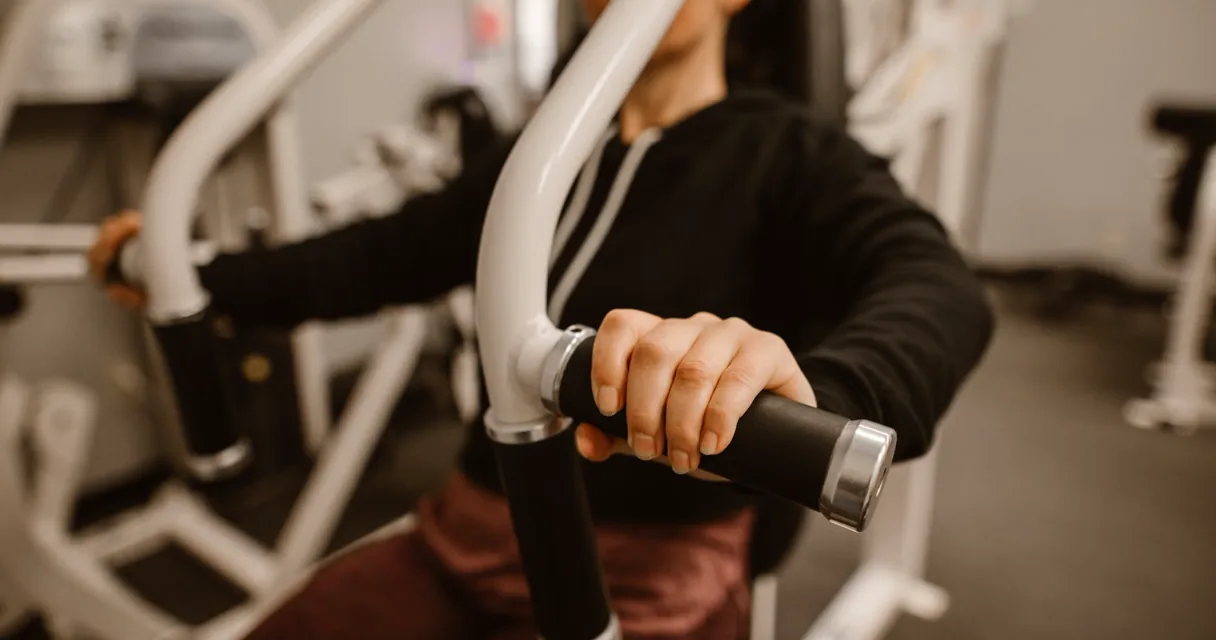
The chest press machine versus barbell bench press debate often starts with a false choice. One option is called functional and the other is called easy, as if a chest muscle can tell whether resistance came from a bar or a weight stack. It cannot. Your pecs respond to challenging, repeatable contractions, enough useful volume, and progression over time.
The tools do create different training problems. A barbell bench press asks you to control the bar, organize your upper back, use leg drive, and coordinate a path through space. A chest press machine gives the movement a fixed or guided path, which can make setup, stability, and training near failure more straightforward. Neither feature automatically makes an exercise superior for hypertrophy.
For muscle growth, choose the movement you can perform through a comfortable range, load progressively, and repeat without your shoulders or fear of a missed rep becoming the limit. This guide turns that principle into a practical decision.
The short answer
Use the barbell bench press when building barbell strength is a major goal, you enjoy practicing a technical compound lift, and you can keep the setup stable. Use a chest press machine when you want stable chest volume, less balancing demand, a lower barrier to training close to failure, or a pressing path that feels more comfortable for your joints.
Research comparing free weights and machines does not support a universal hypertrophy winner. A systematic review and meta analysis found similar muscle growth across the modalities when training was matched. An eight week trial in trained men likewise compared full programs built around free weights or machines with matched training variables and found comparable hypertrophy, while strength changes were more specific to the equipment practiced.
| If this describes you | Start with | Main reason |
|---|---|---|
| You want a bigger barbell bench press | Barbell bench press | Specific practice improves the specific skill |
| You want chest volume with less setup fatigue | Chest press machine | The guided path reduces balancing demands |
| You train alone and want to approach failure | Chest press machine | It is easier to end a hard set safely |
| You enjoy technical compound lifting | Barbell bench press | Setup and bar control are part of the goal |
| One machine path feels uncomfortable | Barbell or another machine | A fixed path must still fit your body |
What each exercise actually asks of you
Barbell bench press: a strength skill and chest exercise
The barbell bench press trains the chest, triceps, and front deltoids while demanding coordination from the upper back, legs, and torso. Small changes in grip, touch point, elbow path, and bar path can change how a repetition feels. That learning is valuable if your goal includes the lift itself.
It also means the chest is not always the limiting factor. A set can end because the bar becomes unstable, the setup slips, a spotter is unavailable, or fatigue disrupts the groove. Those are real constraints, not proof that the exercise is ineffective. They simply matter when you count productive chest work.
Set the shoulder blades back and down in a comfortable position, keep the feet planted, and lower the bar with control to a repeatable touch point. A grip around one and a half to two times shoulder width is a useful starting range for many lifters. If your bench is stalled, use the bench press plateau guide to diagnose whether the issue is technique, frequency, or accumulated fatigue.
Chest press machine: stable resistance, not a lesser exercise
A chest press machine supports the torso and guides the handles through a designed path. That can let you focus more directly on elbow extension and horizontal pressing without needing to balance a bar. It is especially practical after demanding free weight work, when training alone, or when you want to take a set close to technical failure without worrying about being pinned.
The machine is not automatically comfortable just because it is stable. Seat height, handle position, and lever geometry differ widely. Adjust the seat so the handles begin around mid chest for your build, keep the shoulders from rolling forward, and use a range you can control without a sharp shoulder sensation. If the path feels wrong, changing the seat or choosing another press is better than forcing your anatomy into the machine.
Muscle growth: stability is a programming variable
A machine can make it easier to direct effort toward the chest because less coordination is required. That does not mean stabilizers are useless or that machines remove all technique. It means more of your attention can go to keeping the rib cage and upper back organized, controlling the lowering phase, and pressing through a repeatable range.
A barbell can be equally productive for pec growth, especially when the load, range, and technique are consistent. But it carries a larger skill component. If bar control is the limiting factor, the chest may receive fewer hard repetitions than it would on a stable press. That is a reason to use a machine for some volume, not a reason to abandon bench press.
Do not use the number on a machine stack to compare yourself with a barbell. Pulley ratios, lever arms, and friction make those numbers non transferable. Compare each movement only with its own previous performance: load, repetitions, range, effort, and joint feedback.
Technique standards that make either press useful
Set up the chest press machine
- Set the seat so the handles line up roughly with the middle of your chest.
- Keep your back and head in contact with the pad when the design allows it.
- Start with shoulders organized rather than reaching forward to gain extra range.
- Lower until you feel a controlled chest stretch without shoulder pain.
- Press smoothly and stop short of a violent elbow lockout.
Set up the barbell bench press
- Place your eyes under the bar and create a stable upper back position before unracking.
- Keep the feet planted and use leg drive without lifting the hips.
- Lower under control to the same touch point on every repetition.
- Press back and up along a path you can repeat, rather than forcing a perfectly vertical line.
- Use safeties or a reliable spotter when hard sets are close to failure.
For a chest accessory that reduces triceps limitation, a cable fly or pec deck can complement either press. It is not mandatory, but it can add chest volume without another demanding compound set.
How to program machine and barbell pressing
You do not need to treat the exercises as rivals. Many effective chest plans give them separate roles.
| Goal | First press | Second chest movement | Example |
|---|---|---|---|
| Barbell strength plus chest size | Barbell bench press | Chest press machine | 3 × 5 to 8, then 2 × 8 to 15 |
| Chest hypertrophy with simple progression | Chest press machine | Incline dumbbell press | 3 × 8 to 15, then 2 × 8 to 12 |
| Return after a technique break | Chest press machine | Light barbell practice | 2 to 3 controlled sets each |
| Minimal equipment home gym | Barbell bench press | Push ups or dumbbell press | 3 to 4 hard sets, then accessories |
A practical starting target is two to four hard pressing sets per session, once or twice each week, adjusted for your total chest, shoulder, and triceps work. Use a range such as 6 to 10 repetitions for the barbell or 8 to 15 for a machine, but do not turn those ranges into rules. The useful range is the one that lets you control the movement and make small improvements.
Use double progression: keep the same load until you reach the top of your chosen repetition range on every working set with similar technique and about one to three repetitions in reserve. Then add the smallest practical load and build again. Rest two to three minutes after hard barbell sets and at least one to two minutes after challenging machine sets. The rest between sets guide explains why rushed recovery can make later sets less useful.
Common mistakes
Treating a machine as automatically safer
A machine can reduce the consequences of a missed repetition, but it cannot guarantee a pain free shoulder path. Do not force the deepest setting or lock the shoulders into a position that feels pinchy. Adjust the setup, reduce the range, or choose another movement.
Chasing the heaviest stack number
Machine stacks differ. A heavier label does not prove more chest stimulus. A controlled set that takes the target muscle near failure is more valuable than a load that turns every repetition into a shortened bounce.
Adding both presses without replacing volume
Bench press and chest press both count as pressing volume. Adding one on top of an already demanding chest day can exceed your recovery before it improves growth. Start by assigning a role to each exercise, then watch performance, soreness, and shoulder feedback.
Final verdict
A chest press machine can build chest muscle just as effectively as barbell bench press when training effort and progression are in place. The barbell is the better choice for becoming stronger at barbell bench press. The machine is often the easier choice for stable volume, training alone, and hard sets with fewer balancing demands.
Use the tool that fits your immediate goal, then track it long enough to judge it fairly. Download GymLog to record the exact machine setting or barbell load, repetitions, RPE, and notes. Your log will show whether a movement is building momentum or only adding fatigue.