Cable Fly vs Pec Deck for Chest Hypertrophy
2026-08-31
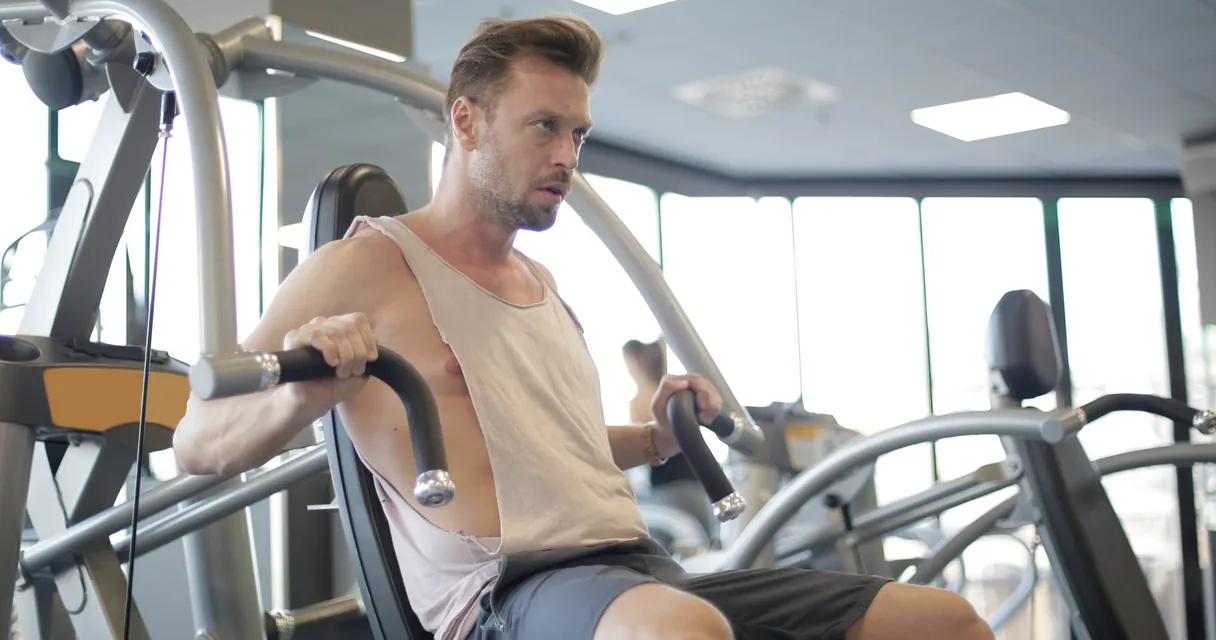
Cable flyes and the pec deck are often treated as interchangeable chest exercises. Both bring the upper arm across the body and can give the pectorals a clear training stimulus. Yet the experience can feel very different: cables demand more setup and coordination, while the pec deck gives you a fixed path and a fast route to a hard, repeatable set.
There is no direct hypertrophy research that crowns one of these exercises as the universal winner. That is useful news, not a problem. The best choice is usually the variation that lets you use a comfortable range of motion, keep the chest as the limiting muscle, and add high-quality repetitions over time.
Use this guide to choose a primary fly variation, set it up without turning it into a shoulder exercise, and program it alongside your pressing work.
What both exercises train
Both movements primarily train horizontal shoulder adduction: bringing the upper arm toward the midline. The pectoralis major is the main target, with the front deltoid contributing. Your elbows stay slightly bent and relatively fixed; if the elbows repeatedly extend and flex, the movement has started to become a press.
A fly is not required for chest growth. Heavy and moderate pressing already trains the pectorals effectively. But a fly can be valuable when pressing is limited by triceps fatigue, when you want more chest work without another heavy compound lift, or when you can feel the chest more clearly in an adduction pattern.
Do not chase isolated upper or lower chest claims
Changing a cable angle changes the line of force and can make a position feel more or less comfortable. It does not turn the chest into separate muscles that can be perfectly isolated. Think of high-to-low and low-to-high cable flyes as ways to find a stable, pain-free path and add variety around your presses, not as magic regional solutions.
Cable flyes: adjustable resistance and more setup
A cable fly lets you choose pulley height, handle position, torso angle, and stance. That freedom can help you find a line of pull that suits your shoulder structure and the equipment in your gym. Cables also keep external resistance present when the handles meet, unlike a dumbbell fly where gravity gives little challenge at the top.
The trade-off is stability. A standing cable fly asks your trunk and lower body to resist the cables pulling you backward. That is not automatically better for hypertrophy. If balance, grip, or low-back bracing ends the set before your chest does, the exercise is no longer doing its intended job.
Cable fly setup that keeps the chest involved
Start with the pulleys near shoulder height for a standard fly. Take a split stance, lean forward slightly from the ankles, and keep your ribcage stacked rather than flared. Begin with the hands just behind the torso only if that shoulder position feels comfortable. Then bring the upper arms toward each other in a smooth arc.
Keep a soft elbow bend and preserve it throughout the repetition. Stop the stretch before the front of the shoulder feels pinched. At the squeeze, bring the handles together without throwing the shoulders forward. A brief controlled squeeze is enough; do not turn the top into a shrug.
If the cable stack pulls you out of position, lower the load, use a staggered stance, or choose a seated cable fly. The goal is not to make the exercise look difficult. The goal is to make the chest work hard with a repeatable technique.
Pec deck: stability and easier effort control
The pec deck places you in a supported seat with a fixed movement path. That external stability is a major advantage for many people. It can make it easier to take a set close to technical failure without losing balance or changing the path to finish extra repetitions.
The fixed path can also be a limitation. Shoulder widths, arm lengths, seat adjustments, and machine designs vary. A pec deck that fits one lifter can put another person in an uncomfortable deep stretch or force the elbows too high. A stable machine is useful only when its setup lets your shoulders feel normal.
Pec deck setup that avoids shoulder irritation
Set the seat so the handles or elbow pads line up roughly with the middle of the chest and the upper arms are not forced far above shoulder level. Place the back against the pad, keep the ribs down, and use a light bend at the elbows if the machine allows it.
Begin with a conservative load. Let the elbows or handles travel back only as far as you can control without a sharp stretch, numbness, or front-shoulder discomfort. Close the pads by moving the upper arms inward, then control the return for two to three seconds. When the stack starts crashing or your shoulders roll far forward, the set is over.
Which one should you choose?
Choose the pec deck when you want a simple, stable chest isolation exercise, especially late in a session. It is often a practical option for beginners learning effort, for people who train alone, or for anyone whose cable fly setup becomes a full-body balancing drill.
Choose cable flyes when you need a movement path the pec deck cannot provide comfortably, when you want to adjust the resistance angle, or when a cable station lets you keep the chest loaded with good control. A seated cable variation is an excellent middle ground when you like the cable path but want more support.
The decision should be based on performance, not novelty. After several weeks, ask:
- Can I feel the chest working without joint discomfort?
- Can I keep the same range and tempo as the set gets hard?
- Does the load or repetition count improve over time?
- Can I recover while still progressing on presses?
The movement that answers yes more often is your better current choice.
Program flyes for growth without duplicating fatigue
Flyes are usually best after your main chest press. A chest-focused session might start with an incline dumbbell press, then use two or three hard sets of one fly variation. If you also perform weighted dips, keep the fly volume modest because your chest has already accumulated demanding work.
A reliable starting prescription is two to four weekly fly sets in the 10 to 20 repetition range, leaving one to three repetitions in reserve on most sets. Stable pec deck sets can occasionally reach technical failure; cable flyes can too when your stance and shoulder position remain controlled. The goal is productive effort, not a contest with the weight stack.
Simple double progression
Pick a load you can control for 10 to 15 repetitions. Keep the range and tempo identical each week. When you reach 15 clean repetitions on every work set, add the smallest available load and return to the lower end of the range.
Log the weight, repetitions, range notes, and estimated RIR in GymLog. The progressive overload guide explains why those repeatable details matter more than constantly changing exercises. If your pressing performance declines or your shoulders stay irritated, reduce fly volume before adding intensity techniques.
Common mistakes with both variations
The first mistake is chasing the deepest possible stretch. A controlled stretch can be useful, but a position that causes sharp pain, tingling, or a feeling of instability is not a productive chest stimulus. Reduce the range and assess the setup.
The second mistake is using too much load. When a fly becomes a swinging press with rapidly changing elbow angles, the chest may no longer be the limiting factor. Use a load that permits a smooth arc and a controlled return.
The final mistake is stacking every advanced method onto one exercise. Do not combine failure, drop sets, forced repetitions, and partials just because the movement is stable. If you use a drop set, count it as a demanding dose of work and adjust the rest of your chest training accordingly.
Final verdict: choose the fly you can progress
Cable flyes offer adjustable resistance and a customizable path. The pec deck offers stability and straightforward effort control. Neither deserves automatic priority for chest hypertrophy.
Choose the variation that fits your shoulders, keeps the chest as the limiting muscle, and lets you add clean repetitions over time. Build your chest program around presses, use flyes to add focused volume, and track the response in GymLog. Consistent execution and progression will do more for your chest than searching for a universal winner.