Drop Sets: The Ultimate Guide to Explosive Muscle Growth
2026-05-21
What Are Drop Sets?
Drop sets are one of the most powerful intensification techniques in bodybuilding. Popularized by Arnold Schwarzenegger and the Golden Era bodybuilders, this method has stood the test of time — and modern science now confirms what old-school lifters knew intuitively: pushing past failure triggers exceptional muscle growth.
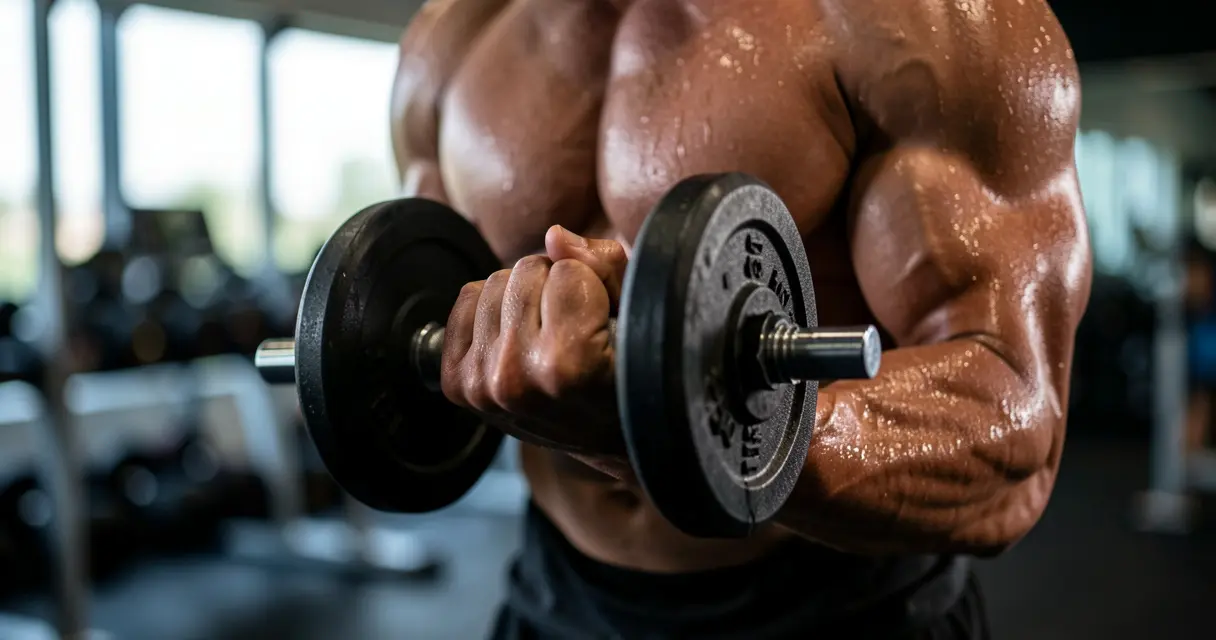
The concept is deceptively simple. You perform a set of an exercise until you can't complete another rep with good form — true muscular failure. Then, instead of resting, you immediately reduce the weight by 10% to 30% and continue repping out. No rest. No pause. Just relentless work until the muscle is completely exhausted.
Why does this work? Muscle growth is driven by three primary mechanisms: mechanical tension, metabolic stress, and muscle damage. Traditional sets primarily target mechanical tension. Drop sets add massive metabolic stress — the "pump" and burning sensation that signals your muscles are flooded with metabolites. This metabolic stress triggers anabolic signaling pathways that complement the mechanical tension from your heavy sets.
A 2023 meta-analysis published in the Journal of Sports Sciences examined 6 studies comparing drop sets to traditional training. The conclusion: both methods produce statistically similar hypertrophy, but drop sets achieve it in roughly half the training time. That's the real magic — efficiency without sacrificing results.
The Science: Why Drop Sets Trigger Hypertrophy
When you reach failure and then drop the weight, you recruit additional motor units that were previously fatigued. Think of it as unlocking reserve muscle fibers. The first set to failure exhausts your highest-threshold motor units (the ones controlling your strongest, fastest-twitch fibers). Dropping the weight allows those fatigued fibers to rest momentarily while recruiting slightly lower-threshold units — fibers that wouldn't normally be fully stimulated.
This sequential recruitment pattern means drop sets achieve complete fiber activation across the entire muscle. Traditional straight sets rarely accomplish this because fatigue limits your ability to recruit every fiber before the set ends.
Additionally, the extended time under tension during a drop set dramatically increases cell swelling — the fluid shift into muscle cells that directly stimulates protein synthesis through mechanotransduction pathways. It's not just about looking pumped; that swelling is a genuine hypertrophic stimulus.
5 Drop Set Protocols You Need to Try
Not all drop sets are created equal. Here are five distinct protocols, each with unique benefits.
1. The Classic Drop Set (Widowmaker)
The original, and still the most effective for overall hypertrophy. This is what most people picture when they hear "drop set."
How to do it: Pick a weight you can lift for 8–12 reps to failure. Immediately reduce the load by 20–25% and continue to failure again. Drop once more by another 20–25% and rep out one final time. Three total "tiers" with zero rest between them.
Best for: Compound and isolation exercises. Squats, leg press, dumbbell curls, lateral raises, triceps pushdowns.
Example: Dumbbell lateral raises — 12 kg × 10 reps → 8 kg × 8 reps → 5 kg × 12 reps. Your shoulders will be screaming.
2. The Double Drop Set
A more aggressive two-tier version for when time is tight but intensity is non-negotiable.
How to do it: One drop only, but a larger reduction (30–40%). First set to failure at your working weight, then immediately drop to roughly 60% of the original load and rep out. The larger gap targets different fiber types more distinctly.
Best for: Machine exercises where changing weight is quick — leg extensions, hammer strength presses, cable exercises.
3. The Mechanical Drop Set
Instead of changing the weight, you change the exercise variation to make it easier. This is brilliant for home gyms or crowded commercial gyms where changing plates is impractical.
How to do it: Start with the hardest variation, fail, then switch to an easier variation without rest.
Example — Shoulders: Dumbbell overhead press → standing dumbbell press → seated Arnold press.
Example — Back: Wide-grip pull-ups → neutral-grip pull-ups → chin-ups (palms facing you).
This protocol has the added benefit of hitting the muscle from multiple angles in a single giant set.
4. The Running the Rack Drop Set
The dumbbell rack becomes your playground. This is a gym classic, especially for biceps and lateral raises.
How to do it: Start at a challenging weight (e.g., 20 kg dumbbells for curls). Curl to failure. Rack them, immediately grab the 17.5 kg dumbbells. Curl to failure. Rack, grab 15 kg. Continue down the rack until you can barely lift the 5 kg dumbbells.
Best for: Dumbbell curls, lateral raises, dumbbell shoulder press, dumbbell triceps extensions.
Running the rack creates an absurd pump and is arguably the most fun drop set variation. Just be courteous — don't hog six pairs of dumbbells during peak hours.
5. The Timed Drop Set (30-Second Protocol)
Forget counting reps. Use time instead. This protocol standardizes the metabolic stimulus.
How to do it: Set a timer for 30 seconds. Lift continuously (controlled tempo, no grinding) for the full 30 seconds with your starting weight. Immediately drop 20% and go another 30 seconds. Drop again and finish with a final 30-second bout. Ninety seconds of uninterrupted work.
Best for: Isolation exercises where form breakdown is less dangerous — leg extensions, hamstring curls, cable flyes, machine rows.
The timed protocol eliminates the psychological variable of "how many reps did I get?" and forces honest effort. Your muscles don't count reps; they only understand tension and time.
Best Exercises for Drop Sets
Not every exercise is drop-set-friendly. Here's your cheat sheet.
| Exercise | Drop Set Suitability | Notes |
|---|---|---|
| Dumbbell lateral raises | ★★★★★ | The perfect drop set exercise. Safe, quick weight changes. |
| Leg extensions | ★★★★★ | No spotter needed. Machine pin makes weight changes instant. |
| Cable triceps pushdowns | ★★★★★ | Just move the pin. Zero setup time. |
| Dumbbell biceps curls | ★★★★★ | Classic running-the-rack candidate. |
| Leg press | ★★★★☆ | Brutal but effective. Need a partner for plate changes. |
| Machine chest press | ★★★★☆ | Safe to failure without a spotter. |
| Barbell bench press | ★★☆☆☆ | Dangerous to failure without a spotter. Use sparingly. |
| Barbell squat | ★☆☆☆☆ | High injury risk when fatigued. Avoid drop sets here. |
| Deadlift (any variation) | ☆☆☆☆☆ | Never. Form breakdown under fatigue = spinal injury risk. |
The Golden Rule
Use drop sets on isolation and machine exercises. Avoid them on heavy barbell compounds where form failure means injury. If you absolutely must drop-set a barbell movement, use a power rack with safety pins set at the correct height, and have a competent spotter.
Programming Drop Sets Into Your Routine
Drop sets are a tool, not a training system. Here's how to integrate them intelligently.
Where in the Workout?
Always at the end. Drop sets should be the final set of your final exercise for a given muscle group. Do your heavy, progressive-overload work first when you're fresh, then use drop sets as a finisher to squeeze out the last drops of growth stimulus.
Sample Push Day with Drop Sets
- Barbell bench press — 4 sets × 6–8 reps (no drop set)
- Incline dumbbell press — 3 sets × 8–12 reps (no drop set)
- Cable flyes — 3 sets × 12–15 reps (no drop set)
- Dumbbell lateral raises — 3 sets × 12–15 reps, final set as a triple drop set
- Cable triceps pushdowns — 3 sets × 12–15 reps, final set as a double drop set
That's two drop sets in a 60-minute workout. Plenty of stimulus without digging yourself into a recovery hole.
Frequency and Recovery
Research suggests that drop sets create comparable muscle damage to traditional sets but with greater metabolic fatigue. This means you need to be slightly more conservative with frequency.
- Beginners: 0–1 drop sets per muscle group per week. Learn to train hard with straight sets first.
- Intermediates: 1–2 drop sets per muscle group per week. Use as finishers.
- Advanced: 2–3 drop sets per muscle group per week. Can experiment with dedicated drop-set-only sessions.
Periodization: When to Push and When to Back Off
Drop sets are best used during hypertrophy blocks (moderate loads, higher volume). During strength blocks or peaking phases, minimize intensification techniques and focus on heavy, clean reps.
A simple periodization model:
- Weeks 1–4 (accumulation): No drop sets. Build work capacity with straight sets.
- Weeks 5–8 (intensification): Add 1–2 drop sets per workout. Push intensity.
- Week 9 (deload): Remove all drop sets. Reduce volume by 40–50%.
Common Drop Set Mistakes
Even experienced lifters butcher drop sets. Avoid these five errors.
Mistake 1: Dropping Too Little Weight
If you drop from 20 kg to 17.5 kg on dumbbell curls, you'll get maybe 2–3 extra reps. That's not a drop set — that's a slightly extended set. Drop at least 15–20% so you can achieve a meaningful number of additional reps (5+).
Mistake 2: Using Drop Sets on Every Set
This is the fastest route to overtraining. If every set of every exercise is a drop set, your central nervous system will revolt. Use them strategically — last set, last exercise.
Mistake 3: Sacrificing Form for Reps
When fatigue sets in, form deteriorates. Half-reps, momentum, and cheating might feel productive but they reduce tension on the target muscle and increase injury risk. Control the eccentric phase (lowering portion) even when you're exhausted. That's where most of the hypertrophic stimulus comes from.
Mistake 4: Inconsistent Weight Drops
Running the rack is fun, but random weight jumps limit your ability to track progress. If you used a 20→15→10 kg drop set last week, use the same drops this week and try to beat your rep counts. Progressive overload applies to drop sets too.
Mistake 5: Neglecting Recovery
Drop sets generate significant metabolic stress and muscle damage. If you're doing drop sets on chest day and can't raise your arms above your shoulders for 5 days, you've overdone it. Soreness is not a reliable indicator of growth — excessive soreness that impacts your next session is counterproductive.
Drop Sets vs. Other Intensity Techniques
How do drop sets compare to the alternatives? Here's an honest assessment.
| Technique | Time Efficiency | Hypertrophy | Injury Risk | Best Use Case |
|---|---|---|---|---|
| Drop sets | ★★★★★ | ★★★★★ | Low (on machines) | Finisher, time-crunched sessions |
| Rest-pause | ★★★★☆ | ★★★★☆ | Low | Strength + hypertrophy hybrid |
| Supersets | ★★★★★ | ★★★★☆ | Low | Antagonistic muscle pairs |
| Forced reps | ★★★☆☆ | ★★★★☆ | High (needs spotter) | Advanced bodybuilders only |
| Negatives | ★★☆☆☆ | ★★★★★ | High | Breaking plateaus |
Drop sets win on the combo of safety, efficiency, and results. They're the only technique on this list you can safely perform alone on a wide variety of exercises.
For a deeper understanding of progression principles, read our complete guide to progressive overload. And if recovery is holding you back, check out our article on why muscle recovery is the key to progress.
Conclusion: Should You Use Drop Sets?
Yes — if you use them intelligently.
Drop sets are not a replacement for solid programming, proper nutrition, and consistent effort. They're an enhancement. A turbocharger, not the engine itself.
The lifter who benefits most from drop sets is the intermediate or advanced trainee who already understands progressive overload, trains close to failure on straight sets, and wants to maximize hypertrophy without spending 2 hours in the gym. Drop sets let you compress more effective volume into less time — and in today's busy world, that's a genuine advantage.
Start with one drop set per workout. Master the technique. Track your drops and reps. Then, if your recovery allows, gradually add more. Your muscles will thank you with new growth.
Download the GymLog app to track every set, every drop, and every rep. Built-in rest timers, exercise libraries, and progression graphs make implementing drop sets effortless. Whether you're running the rack or grinding through mechanical drop sets, GymLog keeps you accountable.