Rotator Cuff Syndrome: Treatment and Prevention for Athletes
2026-05-31
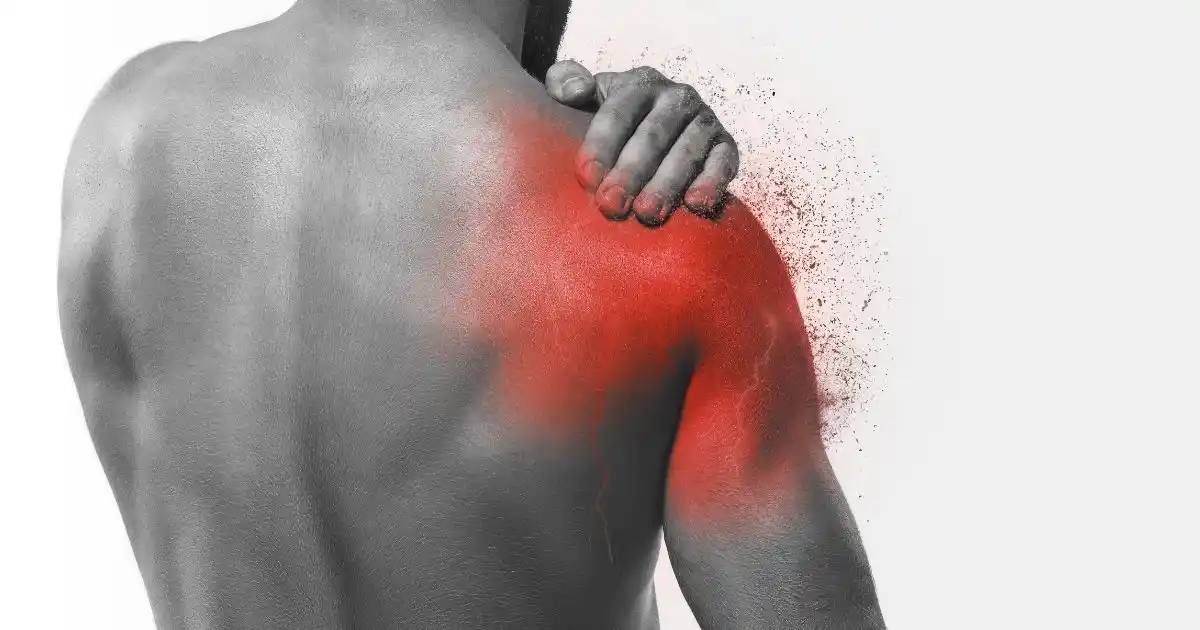
Shoulder pain is one of the fastest ways to stall your progress in the gym. Pressing feels unstable, pull-ups start to pinch, and even basic upper-body work can become frustrating. For many athletes, the root problem is the rotator cuff: a small but essential group of muscles that stabilizes the shoulder joint through every press, raise, throw, and pull.
The good news is that most rotator cuff injuries do not require surgery. In the majority of cases, the winning formula is an early diagnosis, specialized physical therapy, progressive rehab, and smarter programming once training resumes.
This guide breaks down the anatomy, symptoms, diagnosis, conservative treatment options, a phase-by-phase rehab plan, and the key habits that reduce your risk of relapse. If you also want to better understand how training errors accumulate around the shoulder complex, our guide to connective tissue pain causes and solutions is a useful companion read.
What the rotator cuff actually does
The rotator cuff is not one muscle. It is a group of four muscles working together to stabilize and move the glenohumeral joint:
- Supraspinatus
- Infraspinatus
- Subscapularis
- Teres minor
Because the shoulder is the most mobile joint in the body, it is also one of the least inherently stable. That makes the rotator cuff crucial for keeping the humeral head centered while the arm moves under load.
In athletes, the most common overload patterns are:
- Heavy overhead pressing with poor scapular control
- Bench pressing with an excessively wide grip
- High-volume swimming or throwing sports
- Pull-ups or pulldowns performed with painful mechanics
- Too much pushing volume and not enough rowing or rear-delt work
Rotator cuff injuries usually fall into three broad categories: tendinitis, partial tears, and full-thickness tears. Distinguishing between them matters because treatment intensity, timelines, and return-to-sport decisions are not the same.
Warning signs that deserve prompt medical assessment: sudden sharp pain, major strength loss when raising the arm, severe night pain, or an inability to lift the arm past 90°.
Symptoms and diagnosis
Rotator cuff pain is not always dramatic. Often it starts as a recurring irritation that only appears in specific movements. Common signs include:
- Pain when raising the arm between 60° and 120°
- Night pain, especially when lying on the affected side
- Clicking, crepitation, or a catching sensation
- Loss of strength in external or internal rotation
- Morning stiffness that improves as the shoulder warms up
Here is a simple way to think about the main presentations:
| Symptom | Tendinitis | Partial tear | Full-thickness tear |
|---|---|---|---|
| Pain when raising the arm | Mild to moderate | Moderate to intense | Severe, or sometimes oddly reduced |
| Strength loss | Minimal | Moderate | Significant |
| Night pain | Possible | Frequent | Very frequent |
| Typical next step | Load reduction + physical therapy | Urgent physical therapy | Surgical evaluation |
A clinician will usually combine movement testing with orthopedic tests such as Neer or Hawkins-Kennedy, then confirm the picture with imaging when needed. Ultrasound is fast and practical. MRI is more precise for full tears or more complex cases.
Conservative treatment: the first-line option in most cases
For most lifters and recreational athletes, treatment begins without surgery. Current practice and the source material you shared align on one key point: roughly 70 to 80 percent of rotator cuff injuries improve with conservative care.
First 48 to 72 hours
Use a PRICE-style approach:
- Protection from clearly painful movements
- Relative rest rather than complete inactivity
- Ice for short sessions if it helps symptom control
- Compression and elevation when swelling is present
Total rest for weeks is usually a mistake. Tendons recover better when pain is calmed down and load is then reintroduced progressively.
Specialized physical therapy
A good shoulder rehab plan often combines:
- Eccentric exercises for tendon remodeling
- Range-of-motion work for glenohumeral mobility
- Scapular control drills
- Load management across the whole training week
- Manual therapy or pain-modulation tools when relevant
Some clinics may also use options such as electrotherapy, PRP, or EPI in selected cases. These are not magic bullets, but they can complement a structured program when the diagnosis and timing are right.
Conservative treatment vs surgery
| Criteria | Conservative treatment | Surgery |
|---|---|---|
| Best candidates | Tendinitis, partial tears, early cases | Full tears, failed rehab, elite-demand cases |
| Recovery duration | 6 weeks to 6 months | 4 to 12 months |
| Return to sport | 2 to 4 months | 6 to 12 months |
| Main risks | Relapse if rehab is rushed | Stiffness, infection, recurrence |
Surgery becomes more relevant when there is a full-thickness tear, a true failure of well-applied rehab after several months, or a high-demand athlete who cannot perform because of a significant structural lesion.
Rotator cuff rehab: a progressive plan
One reason athletes relapse is simple: they skip steps. Rehab should move in phases.
| Phase | Main focus | Example exercises | Sets and reps | Frequency |
|---|---|---|---|---|
| Phase 1, Weeks 1 to 3 | Pain reduction and mobility | Codman pendulums, passive stick rotations, gentle mobility | 2 x 15 pain-free reps | Twice daily |
| Phase 2, Weeks 4 to 8 | Controlled strengthening | Band external rotation, band internal rotation, lateral raise to 45° | 3 x 15 slow reps | Alternate days |
| Phase 3, Weeks 9 to 12 | Strength rebuild | Light dumbbell press with reduced range, band rows, scapular control drills | 3 to 4 x 10 to 12 | 3 times per week |
| Return phase, Week 12+ | Return to sport | Progressive pressing, assisted pull-ups, sport-specific drills | Controlled progression | As tolerated |
Key Phase 2 exercises
The classic external rotation with a resistance band remains one of the most useful exercises in shoulder rehab. Stand tall, keep the elbow bent at 90° and close to the torso, then rotate the forearm outward slowly. The eccentric phase matters: control the return.
The lateral raise to 45° is another high-value movement because it trains the supraspinatus while limiting the impingement risk that often appears when people jump too early to full-range, heavy lateral raises.
What should you avoid while rehabbing?
- Heavy overhead press
- High-load lateral raises
- Wide-grip pull-ups if they reproduce pain
- Dips
- Any movement that recreates your characteristic shoulder pain
Track pain level, range of motion, and training load every session. This is exactly where a logging habit helps. If you already use GymLog, treat rehab work like real training and log it the same way.
How athletes can prevent rotator cuff injuries
The best treatment is avoiding the problem in the first place. According to the source article, active prevention can cut rotator cuff injury risk by 60 to 70 percent.
Push-pull balance
One of the most common mistakes in hypertrophy programs is too much pressing and not enough pulling. A good baseline is at least a 1:1 push-pull ratio, and many athletes benefit from 1:1.5 in favor of rowing and upper-back work.
That means if you do 4 sets of bench or overhead pressing, 4 to 6 sets of rows, pulldowns, rear-delt work, or face pulls should also appear in the plan. If your shoulders already feel beat up, review your current best shoulder exercise selection and cut the variations that flare symptoms.
Warm up before upper-body days
A simple shoulder warm-up can include:
- 10 forward and 10 backward shoulder circles
- 2 sets of 15 light band external rotations
- Face pulls for the rear delts and external rotators
- Scapular retraction drills with a brief pause
Clean technique on risky lifts
On the bench press, keep the grip roughly 1.5 to 2 times shoulder width, the elbows between 45° and 75°, and the scapulae retracted. On the overhead press, avoid using lumbar extension to fake shoulder mobility.
Progression matters too. Even a well-designed exercise becomes a problem if the weekly load jumps too fast. Use a steady progressive overload strategy instead of trying to force PRs through pain.
Returning to training after a shoulder injury
Coming back too soon is the most common return-to-sport mistake. But waiting forever is not the answer either. The goal is to return when objective criteria are met:
- Full pain-free range of motion that matches the healthy side
- Around 90 percent of the strength of the opposite shoulder in internal and external rotation
- No pain during or after late-stage rehab work
- No night pain for at least two weeks
A practical return ramp can look like this:
- Week 1: 50 percent of normal training volume and no more than 60 percent of previous load
- Week 2: 70 percent of normal volume and about 75 percent of previous load
- Week 3: reassess and progress only if symptoms remain calm
When reintroducing upper-body work, start with pulls before presses. Rows and pulldowns usually return earlier than bench press and overhead press.
If you read Spanish, this article on specialized treatment for shoulder injuries offers additional context from a shoulder-focused clinic.
Conclusion
Rotator cuff syndrome is common, frustrating, and very manageable when you address it early. Most athletes can recover without surgery if they stop treating shoulder pain like background noise and start using a real rehab process.
The essentials are simple:
- Get an accurate diagnosis early
- Follow the rehab phases in order
- Respect push-pull balance and exercise technique
- Progress gradually when you return to full training
The smartest athlete is not the one who trains through everything. It is the one who knows when to adapt, recover, and rebuild better.