Machine Shoulder Press vs Dumbbell Press: Which Builds More Muscle?
2026-10-05
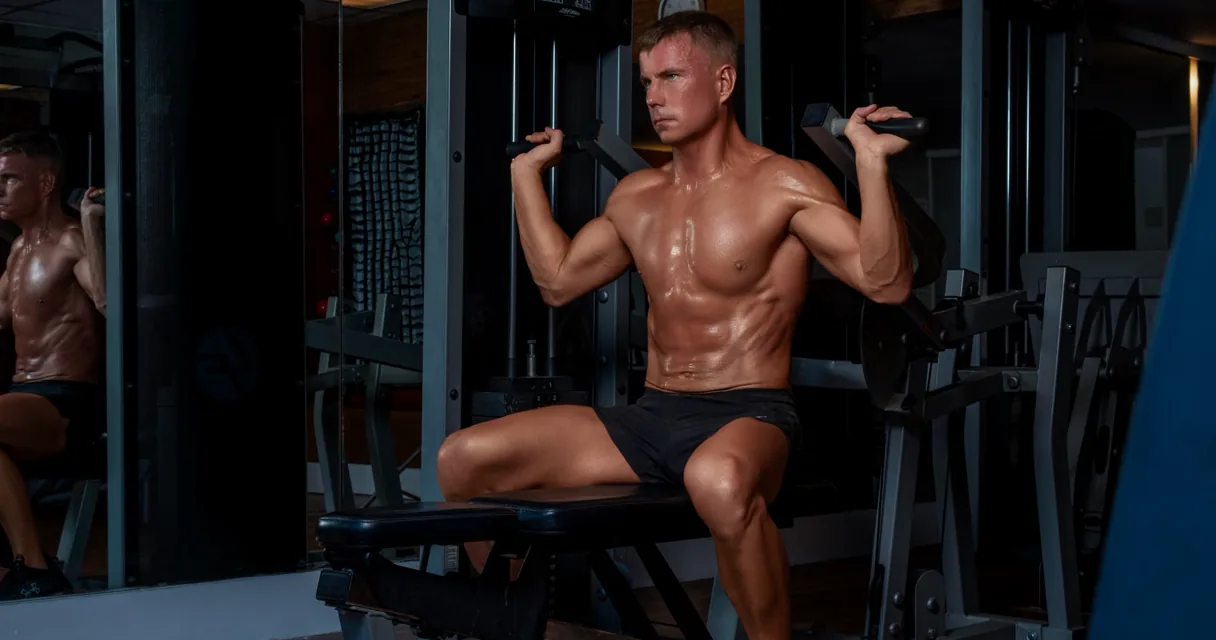
Machine shoulder presses and dumbbell presses can both build strong, muscular shoulders. The debate is not about whether a guided machine counts as real training. It is about which option lets your front delts and triceps receive challenging, repeatable work while your shoulders stay comfortable enough to progress.
A machine supports the load on a fixed lever path. Dumbbells give each arm its own handle and more freedom to find a comfortable route. Those differences affect setup, balance, fatigue, and strength skill. They do not automatically decide which exercise produces more hypertrophy.
The short answer
Choose a machine shoulder press when you want stable sets, simple setup, and a practical way to train close to technical failure. Choose a dumbbell shoulder press when each arm benefits from an independent path, a neutral grip feels better, or you want to see side to side differences clearly.
For muscle growth, neither wins by name alone. The best pressing variation is usually the one that lets you use a controlled range, keep tension on the target muscles, add repetitions or load over time, and avoid persistent joint irritation.
| Your priority | Start with | Why |
|---|---|---|
| Stable shoulder volume near failure | Machine shoulder press | The seat and lever reduce balance demands |
| Independent arm path | Dumbbell press | Each arm can move and contribute separately |
| Easy logging and repeatable setup | Machine shoulder press | Seat, back pad, and handle position can be standardized |
| Identify a large left to right difference | Dumbbell press | One arm cannot quietly take over |
| Heavy pressing after tiring compound work | Machine shoulder press | Less setup and stabilization fatigue |
| A machine path feels restricted | Dumbbell press | The hands can follow a more individual path |
What changes between a machine and dumbbells
A machine shoulder press reduces the coordination cost
On a shoulder press machine, the seat, back pad, and lever guide the resistance. You still need to control the rep, but you do not need to balance two separate dumbbells while keeping them in position. That can make it easier to bring the front delts and triceps close to technical failure, especially late in an upper body session.
The machine is not automatically a better isolation exercise. Many machines also involve the upper chest and triceps, and the exact feel changes between designs. Some have converging handles, others have a fixed grip and some use a plate loaded lever. The useful machine is the one whose seat height, handles, and back support let you press without a pinch or an exaggerated rib flare.
Write down the seat setting, back pad angle, handle grip, load, repetitions, and RPE. A machine becomes especially valuable when the setup is identical from week to week. That consistency makes the principles in our progressive overload guide much easier to apply.
Dumbbells give each shoulder more freedom
Dumbbells let the hands move independently. Many lifters can use a slightly angled grip, keep the elbows in a more comfortable plane, or make small path adjustments during the press. This freedom can be useful when one shoulder needs a different trajectory from the other.
The tradeoff is that each rep asks for more control. Getting heavy dumbbells into place can cost energy before the working set begins, and the stabilizers may limit the set before the front delts do. That does not make dumbbells inferior. It means you should judge them by quality repetitions, not by whether the number on the handle matches a machine stack.
Use the same bench angle, starting position, and grip for a full training block. If one arm finishes early, stop the stronger arm at the same number of repetitions. That gives the weaker side useful practice without turning every session into a test of fatigue.
What the evidence can and cannot tell you
Research comparing machines and free weights broadly suggests that similar muscle growth is possible when the training is matched for effort and volume. Strength gains, however, tend to be more specific to the equipment used. Practice a machine press and you improve most at that machine. Practice dumbbells and your dumbbell coordination improves most there.
Direct long term trials that compare a specific shoulder press machine with dumbbells under perfectly matched conditions are limited. That is why a single EMG chart cannot settle the question. EMG shows electrical activity during one task. It does not measure the muscle you will build after months of consistent training.
A practical conclusion follows: use the tool that gives you productive hard sets, then track the result. Compare your own performance using the same setup, range, effort, and recovery rather than comparing pounds between a selectorized stack and dumbbell handles.
Setup and range of motion matter more than the label
Find the correct seat height on the machine
Set the seat so the handles begin around chin to ear height and your forearms can stay roughly under the handles. Keep your feet planted and your upper back supported. A small natural arch is normal, but pressing should not require the rib cage to lift dramatically away from the pad.
Lower only as far as you can keep control and shoulder comfort. The deepest possible position is not always the most productive position. A sharp pinch, a sudden loss of shoulder position, or a painful stretch is a signal to adjust the seat, grip, range, or exercise rather than force another centimeter.
Build a repeatable dumbbell start
For a seated dumbbell press, set the bench high enough to support the torso without making it a steep incline chest press. Begin with the dumbbells over the upper arms and wrists stacked over the forearms. A neutral or slightly angled grip is fine when it feels stable and comfortable.
Keep the elbows somewhat in front of the torso rather than forcing them directly sideways. Press smoothly until the dumbbells are balanced over the shoulders, then lower with control. You do not need to clash the dumbbells together at the top, and you do not need to chase a range that changes your torso position every rep.
For a broader discussion of free weight pressing choices, read our dumbbell vs barbell overhead press guide.
How to program machine and dumbbell shoulder presses
A press mainly trains the front delts and triceps. Complete shoulder development also needs lateral delt work, rear delt work, and pulling volume. The shoulder exercise guide can help you build that balance instead of endlessly adding more front delt sets.
Option one: dumbbells first, machine volume second
- Seated dumbbell shoulder press: 3 sets of 6 to 10 repetitions at about 1 to 3 repetitions in reserve
- Machine shoulder press: 2 sets of 10 to 15 repetitions at about 1 to 2 repetitions in reserve
- Lateral raise: 3 sets of 12 to 20 repetitions
- Rear delt movement: 2 to 3 sets of 12 to 20 repetitions
This option fits a lifter who wants to practice independent pressing while still accumulating stable machine volume.
Option two: machine as the main hypertrophy press
- Machine shoulder press: 3 to 4 sets of 8 to 12 repetitions
- Dumbbell shoulder press: 2 sets of 8 to 12 repetitions only if it adds useful volume
- Lateral raise: 3 to 4 sets of 12 to 20 repetitions
- Row or rear delt movement: 2 to 4 sets of 10 to 20 repetitions
This option suits lifters who want clear progression with less setup fatigue. It can fit well into a four day upper lower split, where pressing volume is distributed across two upper sessions.
Use double progression with either press. Pick a rep range and keep the load until you reach its upper end on all work sets with the same range and similar technique. Then add the smallest practical increase and build the repetitions again. Rest about two to three minutes after hard compound pressing sets. Shorter rest can turn the next set into a cardio test rather than a useful shoulder set.
Common mistakes
Treating every machine as identical
A machine path that feels excellent in one gym can feel poor in another. Do not copy a seat setting from a video. Test a conservative setup, make one adjustment at a time, and keep the version that allows a stable, pain free range.
Letting the lower back create the last repetitions
Whether you use dumbbells or a machine, a large rib flare can change the exercise into a high incline press. Keep the pelvis and rib cage organized. Reduce the load when the torso starts doing work that the shoulders and triceps should perform.
Adding presses while neglecting lateral and rear delts
More pressing is not always the fastest way to build rounder shoulders. The press has a strong front delt and triceps bias. Keep direct lateral raise work and rear delt training in the program, then use your logbook to decide whether total volume is recoverable.
Final verdict
The machine shoulder press offers stability, fast setup, and an efficient route to hard shoulder sets. The dumbbell press offers independent arms and more freedom to find a comfortable path. Both can build muscle when the range is controlled and progression is real.
Choose one as your main press for six to eight weeks, log the exact setup and effort in GymLog, and then review your repetitions, load, comfort, and recovery. Your training data will tell you more than an equipment argument.