Hack Squat vs. Leg Press: Which Is Better for Quadriceps Growth?
2026-09-21
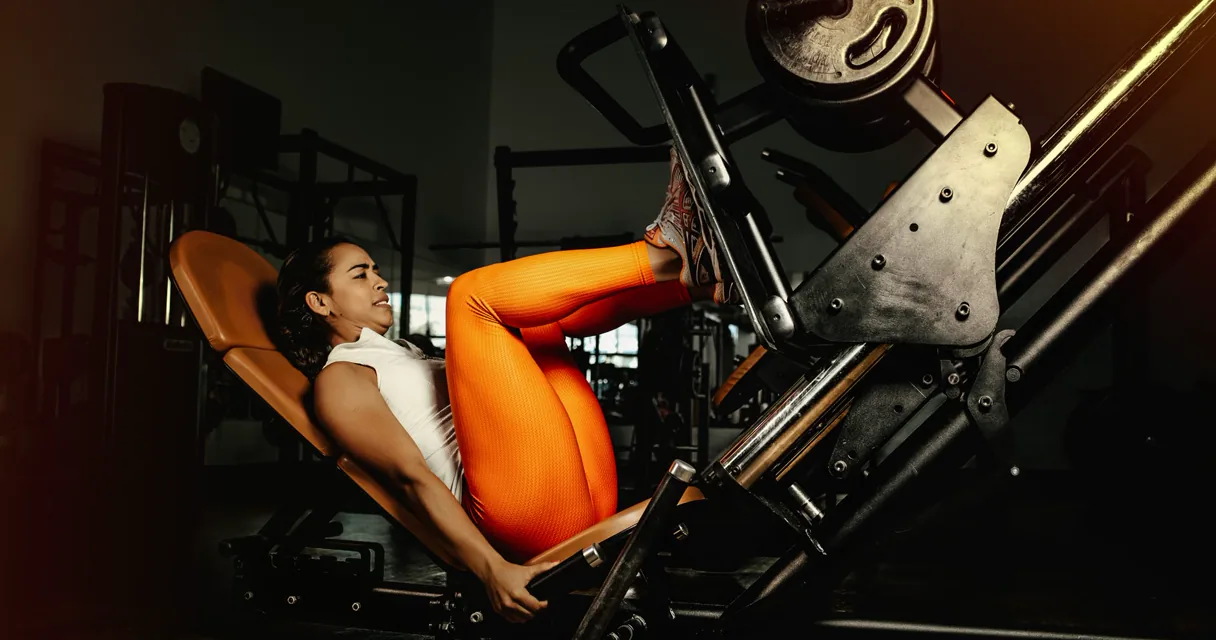
Hack squats and leg presses are two of the most useful machine patterns for building legs. Both can load knee extension hard, both reduce the balance demands of a free barbell squat, and both can be progressed for years. Yet the usual comparison quickly becomes too simple: hack squat for quads, leg press for heavy weight.
That shortcut misses what actually determines muscle growth. A machine is productive when its path fits your body, you can use a meaningful range without losing position, and hard sets remain repeatable from week to week. A hack squat may be outstanding for one lifter and awkward for another. The same is true of every leg press sled.
This guide compares hack squats and leg presses for quadriceps hypertrophy, separates reasonable cues from machine myths, and gives you a practical way to program either exercise.
The short answer
For most people, neither exercise has a universal hypertrophy advantage. Both train the quadriceps, glutes, and adductors through a supported multi joint pattern. Pick the machine that lets you accumulate hard, controlled repetitions with a stable pelvis and a comfortable knee path.
A hack squat is often easier to standardize because your torso and shoulders are fixed against pads. A leg press can be easier to use when you want less upper body bracing or when its seat angle fits your hips better. Those are useful tendencies, not anatomical guarantees.
The important distinction is not the logo on the machine. It is whether the setup allows enough knee flexion for your goal, keeps your lower back and hips under control, and lets you increase reps or load without quietly shortening every set.
What each machine asks your body to do
Hack squat: a supported squat pattern
On a hack squat, your shoulders and back press into pads while your feet push a moving platform. The torso is usually more upright than on a 45 degree leg press, and the machine can make knee travel feel more direct. That often makes the quadriceps the limiting muscle when the machine fits well.
The fixed path is helpful because it removes balance as a reason to stop. It can also be restrictive. A narrow footplate, a short sled track, or a poorly placed shoulder pad can force a position that your hips or knees dislike. Do not assume that discomfort proves the exercise is especially effective.
Leg press: a supported sled pattern
A leg press fixes the back against a seat while you move the sled away with the feet. The exact feel changes dramatically between 45 degree, horizontal, vertical, and plate loaded designs. Two leg presses in the same gym can behave like different exercises.
Because the seat supports the torso, many people can produce hard quad work without the upper back fatigue that a hack squat sometimes creates. The tradeoff is that some lifters chase plate numbers, lower until the pelvis tucks under, and call the resulting short or unstable repetitions a full range.
Do not confuse EMG, plate weight, and muscle growth
Search results often claim that one machine produces a specific percentage more activation. That is a weak basis for choosing a primary lift. Surface EMG reflects electrical activity under a particular test condition. It does not directly tell you which movement will add more muscle after months of matched, well executed training.
The direct long term evidence comparing hack squats with leg presses is limited. A study comparing a Smith machine squat and leg press shows that similar muscle activity can require very different nominal loads, which is one reason plate weight is a poor comparison between exercises. A study on leg press stance and movement velocity also found no meaningful activation difference between the tested foot stances and encouraged a preferred stance.
Use research to avoid exaggerated claims, then use your training log to make the personal decision. The exercise that allows clean hard sets and measurable progression deserves the leading role.
Range of motion: use the depth you can own
A deep repetition is not simply the deepest position the sled can reach. It is the deepest position you can reach while maintaining contact with the pads, controlling the load, and reversing without a painful or unstable compensation.
On the leg press, the practical limit is often the point where the pelvis rolls under and the low back loses its position against the seat. On the hack squat, it may be a hip pinch, heel lift, or a machine geometry that pushes the knees or shoulders into an uncomfortable path. Stop slightly before the first consistent loss of position, then make that depth your standard.
A systematic review on range of motion in resistance training generally supports full, controlled ranges for lower body adaptations. But a recent leg press study in trained people found similar quadriceps growth across the tested knee flexion ranges. The useful conclusion is not that depth never matters. It is that a controlled, repeatable range is more valuable than forcing an arbitrary depth that you cannot train hard.
A simple depth test
Use your phone to film one working set from the side. Ask three questions:
- Does the pelvis stay supported rather than suddenly rolling under?
- Do the knees track smoothly in the same direction as the toes?
- Can you pause briefly near the bottom without changing your position?
If the answer is no, reduce the depth slightly, lower the load, or adjust the setup. If the answer is yes, you have a useful range to progress.
Foot placement: a setup tool, not a muscle switch
Foot placement changes joint angles, comfort, and the available range. It does not turn one exercise into a precise muscle isolation machine. Lower foot positions can often allow more forward knee travel, while higher positions can change the hip angle. The exact effect depends on the machine, limb lengths, and how deeply you descend.
Start around shoulder width with the whole foot secure. On a hack squat, place the feet where the heel stays planted and the knee can travel comfortably. On a leg press, choose a position that lets you lower under control without the pelvis lifting or rolling away from the back pad.
Avoid spending weeks searching for a secret foot placement. Keep one stance for a training block, log it, and change it only if a clear problem appears: pain, an inconsistent range, poor balance on the platform, or no workable progression.
Which machine should be your main quadriceps lift?
Choose the hack squat first when you can use a stable full range, your shoulders tolerate the pads, and the machine lets your knees travel comfortably. It is a strong option for lifters who want a supported squat pattern with a very clear repetition standard.
Choose the leg press first when its seat and sled path fit your hips better, when hack squat pads limit your setup, or when you need a lower bracing cost after demanding free weight work. It is also a practical choice for beginners who need to learn hard leg training without coordinating a standing squat immediately.
If both work well, choose the one you can progress most confidently for the next six to eight weeks. There is no prize for rotating whenever one machine feels unfamiliar. As our progressive overload guide explains, progress only means something when the movement standard stays comparable.
Can you do both in the same program?
Yes. They overlap substantially, so use them with intention rather than treating both as mandatory main lifts.
Option A: one main lift and one support lift
- Hack squat: 3 to 4 sets of 6 to 10 reps
- Leg press: 2 to 3 sets of 10 to 15 reps
- Leg curl: 3 sets of 8 to 15 reps
Run the hack squat as the progression target. Keep the leg press slightly lighter and use it for extra quad volume after the main work.
Option B: alternate by lower body day
- Lower day one: hack squat, 3 sets of 6 to 10 reps
- Lower day two: leg press, 3 sets of 8 to 15 reps
This works well in a four day upper lower split, especially if your sessions already include Romanian deadlifts or another demanding hip hinge. Each machine gets enough exposure to improve without making one day needlessly long.
Effort, rest, and progression
Keep most compound machine sets about one to three repetitions in reserve. A final hard set closer to technical failure can be useful when the setup is stable, but stop if depth changes, the pelvis loses contact, or knee tracking becomes erratic.
Rest long enough to make the next set productive. Two to three minutes is a sensible starting point for hard hack squats and leg presses. Short rests are not automatically better for hypertrophy if they cut your later repetitions. See our guide to rest between hypertrophy sets for a practical way to match rest to the exercise.
Use double progression: select a rep range, reach its top with the same depth on every set, then add the smallest available load. Log seat setting, foot position, range standard, load, reps, and RPE in GymLog. Those details make a real trend visible.
Mistakes that make both exercises less useful
Loading plates before earning range
More plates do not equal more productive tension if the range becomes shorter every week. Make the bottom position and knee path part of the repetition. Then load it.
Treating discomfort as a badge of honor
Hard quadriceps work is uncomfortable. Sharp pain, numbness, a persistent joint pinch, or a machine position that forces compensation is different. Adjust the setup, choose the other machine, or speak with a qualified clinician when symptoms persist.
Adding duplicate fatigue without a reason
Four difficult hack squat sets followed by four equally hard leg press sets may be appropriate for an advanced lifter with a clear volume target. For many people, it only reduces quality. Start with a manageable dose, track recovery, and add volume only when performance remains stable.
Final verdict
Hack squats and leg presses can both build serious quadriceps. The better choice is the machine that fits your body, lets you use a controlled repeatable range, and supports steady progression without joint irritation or hidden technique changes.
Make one pattern your main lift for a block. Add the other only when it provides useful volume or a different setup that you can recover from. Download GymLog to track your exact machine settings, range standard, reps, load, and RPE so your decision is based on training data, not on plate count or gym folklore.