Reverse Pec Deck vs Dumbbell Reverse Fly for Rear Delts
2026-11-16
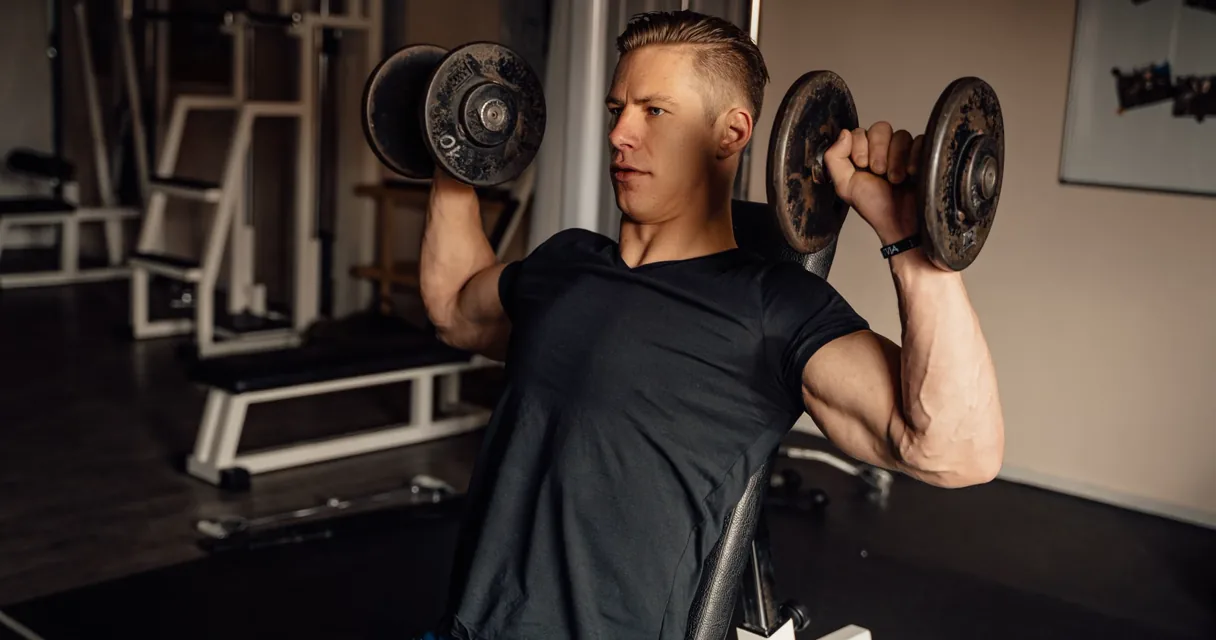
The reverse pec deck and dumbbell reverse fly train the same broad job: horizontal movement of the upper arm for the posterior deltoid, usually called the rear delt. Both can belong in a hypertrophy program. The more useful question is not which exercise has a universal winner, but which one lets you produce hard, repeatable sets without turning every repetition into a shrug or lower back endurance test.
Rear delts already contribute to rows and some vertical pulls, yet direct work can help balance a program dominated by pressing. A reverse fly is not a posture cure or a guarantee of pain free shoulders. It is simply an accessory exercise that can add targeted shoulder volume when it is comfortable and progressively loaded.
This guide compares the reverse pec deck with the dumbbell reverse fly, explains the form details that matter most, and gives you a simple way to program both in GymLog.
Reverse pec deck vs dumbbell reverse fly: the practical difference
A reverse pec deck places your chest against a pad and guides the handles through a fixed path. A dumbbell reverse fly lets your arms move freely, but it also asks your torso, hips, and grip to keep the position stable. That difference changes which muscle becomes the limiting factor.
| Feature | Reverse pec deck | Dumbbell reverse fly |
|---|---|---|
| Stability | High because the chest is supported | Depends on the bench or bent over position |
| Loading | Small stack increases are easy to repeat | Dumbbell jumps can be large |
| Range control | Guided path makes consistency simple | You control the arc and depth |
| Best use | Stable hard sets near the end of a session | Home gyms, variety, or chest supported work |
Neither option isolates only the rear delts. Mid traps, rhomboids, rotator cuff muscles, and other upper back tissues assist. Rather than chasing a perfect sensation, use the version where your shoulders stay comfortable and your repetitions look similar from set to set.
Why the reverse pec deck is often the easier hypertrophy choice
The reverse pec deck removes most of the balance demand. You can sit facing the pad, set the seat so the handles begin close to shoulder height, and focus on a smooth wide arc. That makes it easier to compare today’s set with last week’s set.
Set up the machine before adding load
Set the seat so your hands and upper arms are not forced far above shoulder level. Keep the chest in contact with the pad and feet firmly planted. Start with a light load, because an excessive stack often leads to the shoulders rising toward the ears or the torso lifting away from the pad.
Open the handles until the upper arms are roughly in line with the torso. Pulling much farther back is rarely necessary for rear delt training and often replaces a controlled fly with a chest lift and shrug.
Use the handles that fit your shoulder
Many reverse pec deck machines offer neutral handles, straight handles, or pads for the forearms. There is no mandatory grip. Choose the option that lets the upper arm move comfortably and that you can repeat without wrist or shoulder irritation. A slightly bent elbow is normal; keep that bend almost unchanged rather than curling the handles behind you.
How to make dumbbell reverse flyes more useful
A standing bent over dumbbell reverse fly can work, but the lower back and balance often fatigue before the rear delts. For most lifters, a chest supported incline bench is a better default. Set a low to moderate incline, place the chest on the pad, and let the dumbbells hang beneath the shoulders.
Raise in a wide arc, not a rowing path
Move the arms out and slightly back with a stable elbow bend. Think about spreading the dumbbells apart instead of pulling them toward the ribs. A row with the elbows tucked close to the body shifts more work toward the lats and upper back. A reverse fly needs a wider arm path, but it does not require violently flaring the elbows or forcing the shoulders into an uncomfortable position.
Dumbbells feel hardest near the top of the arc and easier at the bottom. That is not a flaw. Use a load you can lower slowly, pause briefly in the contracted position if that helps control, and return to the same stretched start position each time.
Form mistakes that shift work away from the rear delts
Choosing a load that demands momentum
Rear delts are small muscles. A heavy dumbbell may look impressive but often causes swinging, elbow bending, and shoulder elevation. Select a load that allows roughly 10 to 20 controlled repetitions. If the final repetitions need a small effort increase, keep it consistent rather than changing the whole movement.
Shrugging through every repetition
Some scapular movement is normal, but repeatedly driving the shoulders toward the ears tends to make the upper traps dominate. Keep the neck long, lower the load, and stop the range when the shoulder begins to rise.
Treating every rear delt exercise as a medical fix
Rear delt training can be part of well rounded shoulder work, alongside rows, presses, and sensible total volume. It does not diagnose or rehabilitate an injury. If a reverse fly produces sharp pain, persistent symptoms, or loss of strength, stop and seek qualified clinical guidance.
Programming rear delt work for muscle growth
Use the reverse pec deck or a chest supported dumbbell reverse fly after your main presses and rows. Two to four sets of 10 to 20 repetitions is a practical starting point. Keep one to three repetitions in reserve on most sets, especially while you are learning the pattern.
| Situation | Exercise choice | Sets and repetitions | Main cue |
|---|---|---|---|
| Commercial gym | Reverse pec deck | 3 × 12 to 20 | Chest stays on the pad |
| Home gym | Chest supported dumbbell reverse fly | 3 × 10 to 18 | Wide controlled arc |
| Limited time | One stable variation | 2 hard sets of 12 to 20 | Same range each set |
Start near the bottom of the range and add repetitions while form stays stable. When every set reaches the top of the range, increase the stack by a small increment or use the next available dumbbells, then build the repetitions again. This double progression method works only when you log the load, repetitions, and variation. Our progressive overload guide explains how those small, measurable changes add up.
Rear delt isolation complements rather than replaces pulling. Keep a horizontal row in your program, such as the one arm dumbbell row, and choose your main press with a plan. The dumbbell versus barbell overhead press guide can help with that decision.
Choose the exercise you can improve
The reverse pec deck is usually the simplest option when a machine is available: it is supported, easy to standardize, and easy to progress. A chest supported dumbbell reverse fly is an excellent alternative when you train at home or prefer free weights. Both can build the rear delts when you control the arc, avoid turning the movement into a shrug, and give the exercise enough time to progress.
Log your reverse fly variation, load, repetitions, and effort in GymLog. A clear record makes it easier to see whether the rear delts are actually receiving productive work and to make the next small improvement.