One Arm Dumbbell Row: Form for Lats and Upper Back
2026-11-12
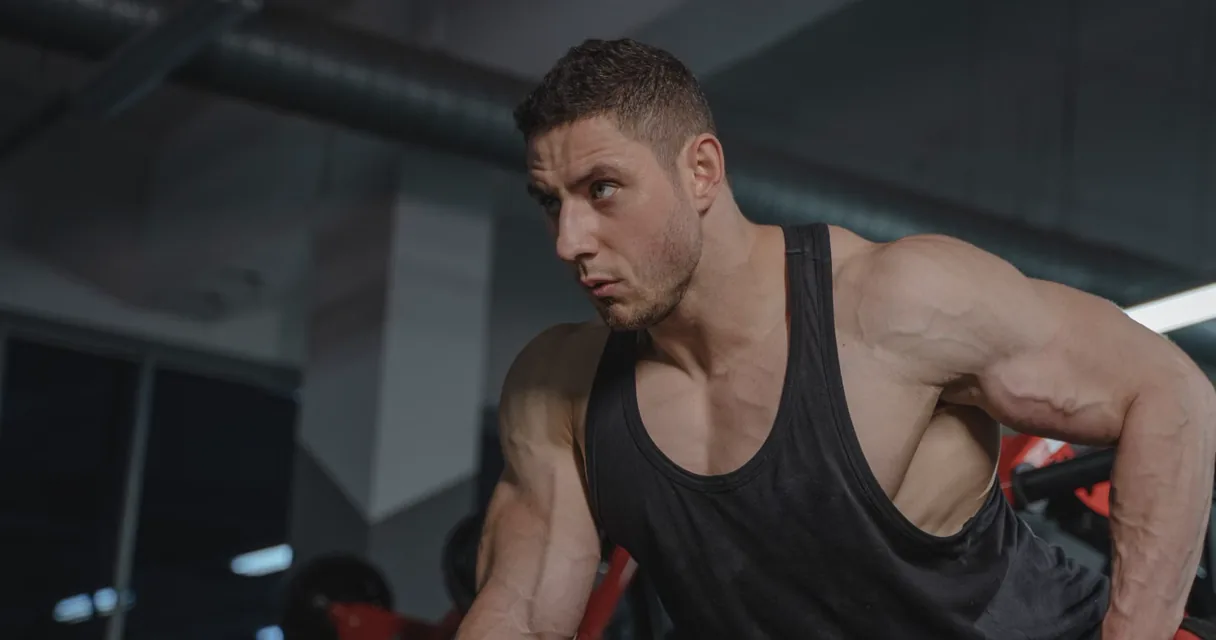
The one arm dumbbell row is one of the most useful back exercises in a gym, yet it is also easy to turn into a heavy, twisting biceps curl. A dumbbell and a bench make the exercise accessible, but the freedom of the setup means that elbow path, torso position, and range can change from repetition to repetition.
A good row does not require a perfectly frozen body. It requires a stable enough body that the back can produce the movement and that you can repeat the same pattern next week. The goal is not to pull the dumbbell as high as possible. The goal is to create a hard, controlled set for the lats and upper back.
This guide explains a practical one arm dumbbell row setup, how to bias the lats or upper back without claiming total isolation, and how to progress the exercise in GymLog.
What does the one arm dumbbell row train?
The one arm dumbbell row trains the latissimus dorsi, with meaningful work from the mid back, rear delts, biceps, forearms, and trunk muscles that keep the torso in position. Your exact emphasis depends on the line of pull, grip, torso angle, and how much you allow the shoulder blade to move.
The useful takeaway is simple: do not chase a magical hand position. Choose a path that feels stable, produces a strong contraction in the intended area, and can be loaded over time. The row becomes more valuable when it is a measurable exercise rather than a different improvisation every session.
Set up a supported one arm dumbbell row
A bench supported version is an excellent default because it reduces the balance demand and makes the working side easier to load. Place one hand and the same side knee on a flat bench, then place the outside foot firmly on the floor. Hinge until your torso is roughly parallel to the floor or at a comfortable angle that keeps the lower back neutral.
Build tension before the first repetition
Let the dumbbell hang beneath the shoulder with the arm almost straight. Reach only as far as your shoulder remains comfortable. Brace the abdominals as if preparing for a light punch, keep the ribcage stacked, and use the bench contact points to stop the pelvis from rotating open.
A small natural shift is normal on a hard set. Repeatedly rotating the chest toward the ceiling is not a way to make the lat work harder. It is usually a sign that the load exceeds the range you can control.
One arm dumbbell row form: the step by step method
- Hold the dumbbell with a neutral grip and set the torso before lifting it.
- Start from a controlled stretch with the shoulder relaxed, not aggressively yanked forward.
- Drive the elbow back in the path that matches your target area.
- Pause briefly when the elbow reaches its comfortable end point without rolling the shoulder forward.
- Lower the dumbbell steadily until you recover the same start position.
Think about moving the elbow rather than curling the hand toward the shoulder. This cue will not remove the biceps from the exercise, nor should it. It simply keeps elbow flexion from becoming the entire movement.
Elbow toward the hip for a lat biased row
For a lat biased one arm row, keep the elbow fairly close to the torso and guide it down and back toward the hip. The dumbbell usually finishes near the lower ribs or hip rather than beside the chest. Keep the shoulder from shrugging toward the ear as you pull.
This path often feels more direct for lifters who want a horizontal pull to complement pull ups and lat pulldowns. It is still a compound back exercise, not an isolation movement for one narrow section of the lat.
A wider path for the upper back
To put relatively more attention on the upper back and rear delts, allow the elbow to travel a little farther from the torso and finish closer to the lower chest. The upper arm does not need to flare to ninety degrees. A modestly wider path that stays smooth is enough.
Use whichever version you can feel and log consistently. If one path causes shoulder discomfort or makes the torso twist, adjust the angle or return to the closer elbow path.
The mistakes that make rows less effective
Turning the pull into a curl
When the elbow stays in front of the torso and the forearm does most of the moving, the set often becomes a biceps dominant curl. Reduce the load, set the shoulder before each repetition, and lead with the elbow moving behind the body.
Shrugging at the top
A shrug can happen when you pull the dumbbell upward instead of backward. Let the shoulder blade move naturally, but keep the neck long and avoid chasing height. The end of the range is where the back can contract without the shoulder rising toward the ear.
Using rotation to finish every repetition
A slight torso adjustment near failure is not automatically dangerous, but it makes progression difficult to judge. If every repetition ends with a large twist, the dumbbell is too heavy for the target range. Lower the load until the first and last repetitions look similar.
Cutting the stretch short
Stopping the dumbbell high above the bottom reduces the range you can repeat and hides fatigue. Lower with control until the arm is nearly straight and the shoulder is comfortable, then use that same depth in every set.
How to program the one arm dumbbell row for hypertrophy
The one arm dumbbell row works well after a vertical pull or as the main horizontal pull in a simple back session. Start with two to four hard sets per side. A range of 8 to 15 repetitions is practical because it leaves room for controlled progression without forcing very heavy, unstable dumbbells.
| Goal | Sets and repetitions | Effort | Technique priority |
|---|---|---|---|
| General back growth | 2 to 4 sets of 8 to 15 | 1 to 3 repetitions in reserve | Same torso angle each set |
| Lat focused work | 2 to 3 sets of 10 to 15 | 1 to 2 repetitions in reserve | Elbow close and toward hip |
| Upper back emphasis | 2 to 3 sets of 8 to 12 | 1 to 3 repetitions in reserve | Slightly wider elbow path |
Use double progression: keep the same dumbbell until you reach the top of the rep range on every set with the same range and little torso rotation. Then increase the load by the smallest practical increment and build the repetitions again. Our progressive overload guide explains why stable technique makes this kind of logbook progression useful.
If both sides differ, start with the side that feels less coordinated and match its repetitions on the other side. Do not add extra work to the stronger side simply because it can do more today.
Braced row or free standing row?
A free standing one arm dumbbell row can be a valid variation, but it asks more from the trunk and makes the working angle harder to standardize. For many lifters, the bench supported row is the better place to build strength and muscle because it makes the back, not balance, the limiting factor.
Choose the free standing version only when you can maintain a stable hinge and record comparable repetitions. If your goal is a strict horizontal pull with less lower back demand, a chest supported row is another useful option.
Make every dumbbell row count
The best one arm dumbbell row is not the heaviest version that reaches your hip. It is the version you can brace, control through a comfortable range, and improve for several weeks. Set the torso, let the elbow lead, and pick a row path that matches your goal without forcing your shoulder.
Log the dumbbell, repetitions, side, and effort in GymLog. Those simple details reveal whether your back training is genuinely progressing and make it easier to choose the next small improvement.