EZ Bar Curl vs Straight Bar Curl: The Better Choice for Your Biceps
2026-11-09
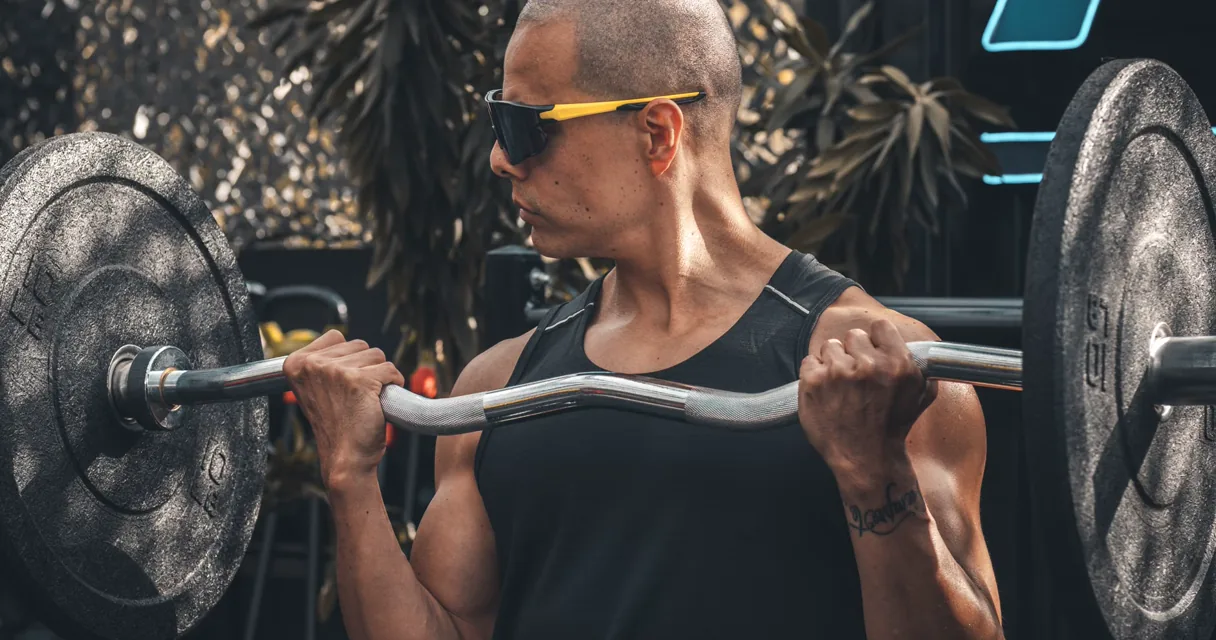
The EZ bar curl versus straight bar curl debate often becomes a hunt for the single best biceps exercise. It is a less dramatic decision than that. Both variations train elbow flexion, both can load the biceps effectively, and neither bar can replace consistent progression. The meaningful difference is the grip angle: it changes wrist comfort, forearm contribution, and how repeatable the movement feels in your program.
A straight bar keeps the hands fully supinated, with palms facing up. An EZ curl bar uses angled sections so the hands sit between fully supinated and neutral. If one bar lets you train hard with a stable wrist and the other leaves your elbows irritated, the comfortable option is not a compromise. It is the option that gives you more productive weeks of training.
This guide helps you choose the right curl bar for your anatomy and goal without overstating small differences in muscle activation.
EZ bar versus straight bar curl: the practical differences
| Feature | EZ bar curl | Straight bar curl |
|---|---|---|
| Hand position | Semi supinated and angled | Fully supinated |
| Wrist comfort | Often friendlier for wrists and elbows | Can feel restrictive for some lifters |
| Forearm demand | Often easier to keep wrists neutral | More demand to hold full supination |
| Loading | Easy to load and control | Easy to standardize, but not always comfortable |
| Best use | High quality volume with a joint friendly grip | Lifters who tolerate full supination well |
The biceps have two heads, but a bar shape does not isolate one head with precision. Shoulder position, range of motion, effort, and total weekly hard sets matter much more than claims that one bar reaches a secret part of the arm. Use grip angle to solve a comfort or stability problem, not to chase a magic activation number.
What changes when you change the bar?
The biceps flex the elbow and help supinate the forearm. A straight bar requires a fully supinated grip throughout the curl. That can feel strong and natural for some lifters, especially when their wrists and elbows tolerate it well. For others, forcing both hands into that fixed position creates discomfort before the biceps are challenged enough.
An EZ bar reduces the amount of forearm rotation required. Its angled handles can make it easier to keep the wrist aligned with the forearm. This does not turn an EZ curl into a different category of exercise. It simply changes the path to a hard set.
Comfort is a programming variable
A pain free grip lets you accumulate better repetitions. If the straight bar causes wrist extension, elbow soreness, or a need to cut every set short, it is not producing superior training just because the hands are more supinated. Choose the grip that lets you keep a controlled range and recover for the next session.
If pain is sharp, persistent, or worsening, do not try to fix it by forcing more curls. Reduce the aggravating variation and consult a qualified health professional when needed.
Which bar is better for biceps hypertrophy?
For most lifters, the answer is whichever bar supports consistent progressive overload. Research and coaching practice both point toward the basics: enough challenging sets, a stable technique, appropriate effort, and a progression plan. The small mechanical difference between bars is unlikely to overcome poor recovery or random exercise changes.
Use an EZ bar when you want to build biceps with a comfortable grip and repeatable loading. It is especially useful for higher repetition work, for lifters whose wrists dislike a straight bar, or for a final biceps exercise after rows and pull downs have already taxed the forearms.
Use a straight bar when it feels natural, you can keep the wrists stacked over the forearms, and you enjoy the fully supinated position. A straight bar also makes it simple to repeat the same grip width and track performance. It is not inherently harsher, but it is less forgiving when the fixed wrist position does not fit you.
For a broader arm program, pair either bar curl with a neutral or pronated variation. Our comparison of the hammer curl and reverse curl shows how those grips can add brachialis and forearm work without replacing your primary biceps curl.
How to perform an EZ bar curl
- Choose an outer or inner angled grip that lets the wrists stay in line with the forearms.
- Stand tall with the bar close to the thighs and the ribcage stacked over the pelvis.
- Keep the elbows near the sides as you curl the bar upward.
- Finish when the forearms approach the biceps without driving the elbows far forward.
- Lower slowly until the elbows are nearly straight, then begin the next controlled repetition.
The exact angle of each EZ bar varies. Test the two common grip sections with a light load. The useful grip is the one that feels secure, keeps the wrists quiet, and lets you use the same setup every week.
How to perform a straight bar curl
- Hold the bar with an underhand grip around shoulder width.
- Set the wrists straight rather than letting them fold backward under the bar.
- Brace the torso and curl by bending the elbows, not by throwing the shoulders forward.
- Use a smooth ascent and a controlled descent through a comfortable range.
- Stop or change the variation if wrist or elbow discomfort increases from set to set.
A shoulder width grip is a useful starting point, not a law. A slightly narrower or wider grip may feel more natural, but extreme grip changes rarely create a reason to sacrifice control.
Common curl mistakes with both bars
Turning the curl into a hip swing
A small amount of body movement can happen on a hard final repetition. Repeatedly driving the hips forward moves the load away from the elbow flexors and makes progress difficult to measure. Lower the weight until the first repetitions look the same from week to week.
Cutting the bottom range short
Stopping high above the bottom can make a load look impressive while reducing the repeatable range. Lower under control until the elbows are nearly straight, provided that position feels comfortable. Then use that same depth when you log the exercise.
Chasing discomfort as proof of effort
A biceps pump and local fatigue are normal. Joint pain is not a signal to earn more repetitions. Adjust grip, load, range, or exercise order before adding more intensity techniques.
A simple way to program barbell curls
Use one primary bar curl for four to eight weeks. Keep the grip, order, and rep range stable so your logbook can tell you whether you are progressing.
| Goal | Exercise choice | Sets and repetitions | Effort target |
|---|---|---|---|
| General biceps size | EZ bar or straight bar curl | 2 to 4 sets of 8 to 15 | Finish with 1 to 3 reps in reserve |
| Wrist sensitive training | EZ bar curl | 2 to 3 sets of 10 to 15 | Smooth repetitions, no joint pain |
| Balanced arm development | Bar curl plus hammer curl | 2 to 3 sets each of 8 to 15 | Progress one exercise at a time |
Start with the lower end of the set range if you already perform a lot of pulling. Add repetitions while form stays consistent. Once you reach the top of the range on every set, add a small amount of load and repeat. This is the same practical method described in our progressive overload guide.
The verdict: choose the bar you can own
An EZ bar curl is often the better default because its angled grip makes wrist and elbow comfort easier for many lifters. A straight bar curl remains an excellent biceps exercise if full supination feels stable and pain free. Neither wins by name alone.
Choose one bar, use a controlled range, and progress it for several weeks before judging it. Record the weight, repetitions, and effort in GymLog so your biceps training is based on evidence from your own sessions, not on a single workout feeling.