Belt Squat vs Leg Press for Quads: Which Fits Your Leg Day?
2026-11-23
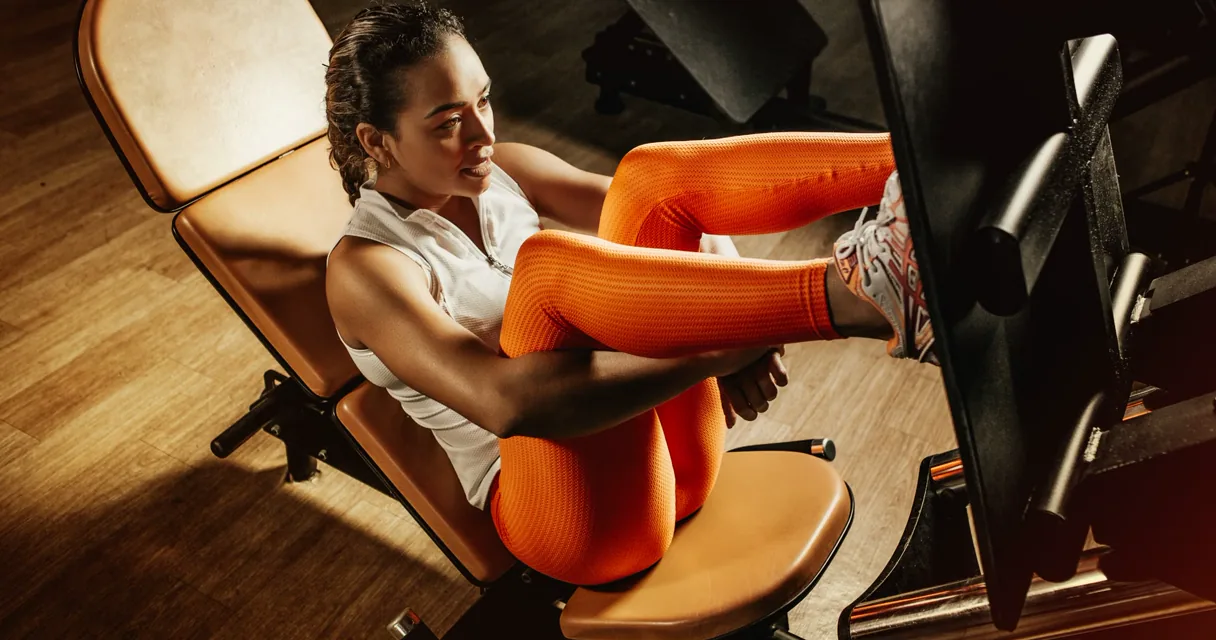
The belt squat and the leg press can both make a productive quad exercise. Both allow heavy lower-body training without balancing a barbell on the back, and both can be progressed with a clear logbook. That overlap makes the usual question less useful: which movement is universally best?
There is no direct long-term hypertrophy trial showing that belt squats build more quadriceps than leg presses, or the reverse. The better question is which exercise lets you accumulate hard, well-controlled sets while your knees, hips, back, equipment, and recovery cooperate.
This comparison separates what is known from what is assumed. You will learn how the loading differs, how to set up each movement for quad-focused work, and how to include one or both in a hypertrophy plan.
The main difference: where the resistance acts
A belt squat attaches the resistance to a belt around the hips. The load pulls downward from the pelvis while the torso remains relatively free. A leg press supports the torso against a back pad while the feet push a platform away.
That difference changes the experience more than it changes the goal. Both exercises involve knee and hip extension and can challenge the quadriceps, glutes, and adductors. Neither is an isolation exercise, even when the quads are the limiting muscle.
Belt squat: lower external spinal loading
With no bar pressing down through the shoulders, a belt squat can reduce external spinal loading compared with a barbell squat. Small biomechanics studies have found similar lower-extremity loading or activation alongside lower trunk demand than a back squat. That does not mean a belt squat treats or prevents back pain. It means the loading pathway is different.
For a lifter whose lower back becomes the limiter during squat patterns, that difference can make high-quality leg work easier to recover from. Machine design matters, though. A pendulum, cable, lever, or platform belt squat can feel substantially different from another station.
Leg press: a supported path with adjustable depth
On a leg press, the seat and back pad provide support while the sled moves along a fixed path. That stability often makes it easy to push close to failure, especially after a demanding free-weight or belt-squat movement.
The important limitation is position. Going deeper is only productive while the pelvis stays controlled against the pad and the knees track comfortably. Chasing depth after the hips roll under the body can turn a quad set into a lower-back tolerance test.
Which movement is better for quad hypertrophy?
For muscle growth, a stable movement that you can load through a useful range of motion and take close to failure is usually a good candidate. Belt squats and leg presses can both meet that standard.
The available research does not establish a direct winner for long-term quadriceps growth. Avoid choosing from claims about a magical muscle activation number. Instead, compare these practical signals for several weeks:
- Do your quads become the main limiting tissue?
- Can you use a repeatable depth and foot position?
- Can you add repetitions or load with clean form?
- Does the exercise leave enough recovery for the rest of your training?
- Does the setup feel comfortable at challenging effort?
If the answers favor one movement, it is the better primary choice for your current block. You can still rotate later if progress, comfort, or access changes.
How to make each exercise more quad focused
Foot placement changes leverage, but it does not eliminate the contribution of the hips. Start with a setup that is repeatable, then adjust only one variable at a time.
Belt squat setup cues
Use a belt that sits securely at the hips and a stance that allows the knees to travel forward without collapsing inward. Keep the whole foot connected to the floor or platform. Descend under control until you reach a depth you can repeat without losing balance or being pulled out of position by the machine.
A moderate stance and an upright torso commonly make the knees travel further forward, which can make the quads work hard. Do not force an exaggerated knee position. Your ankle mobility, femur length, and machine geometry all influence what feels natural.
Leg press setup cues
Set the seat so that you can reach a controlled bottom position without the pelvis lifting from the pad. Place the feet around shoulder width as a baseline. A lower placement may increase knee flexion, but only use it if your heels remain planted and your knees feel good.
Lower the sled smoothly, pause only if you can keep position, then press through the full foot. Do not lock the knees violently at the top. Treat each repetition as the same repetition: same depth, same foot pressure, and no shortened range as fatigue rises.
For another quad-focused option, see our comparison of the hack squat and leg press.
Programming belt squats and leg presses
Choose the movement that best fits your session as the primary compound exercise. Then use a simple progression rule rather than changing exercises every week.
Option 1: choose one primary movement
Use either belt squats or leg presses for 3 to 4 hard sets of 6 to 12 repetitions. Leave roughly 1 to 3 repetitions in reserve for most sets, then track load, reps, depth, and effort. When all planned sets reach the top of the range with the same standard, add the smallest available load increase.
This approach works well in an upper-lower split, where two lower sessions may each have a different emphasis.
Option 2: use both without duplicating fatigue
If you enjoy both movements, assign them different jobs. For example:
| Exercise | Sets × reps | Purpose |
|---|---|---|
| Belt squat | 3 × 6–10 | Heavier, stable squat pattern |
| Leg press | 2 × 10–15 | Additional quad volume with controlled depth |
| Leg extension | 2 × 12–20 | Knee-extension work with low skill demand |
Keep the total workload realistic. Adding two similar compounds because neither feels like a barbell squat can create fatigue without improving the stimulus. Progress one priority movement first, then add the second only if recovery and performance remain solid.
Rest enough to keep the set comparable
Heavy belt squats and leg presses can both create a large local and cardiovascular demand. Rest long enough to reproduce a focused effort, often around two to three minutes for challenging compound sets. Our guide to rest between hypertrophy sets explains how to adjust rest without confusing the logbook.
When to favor the belt squat
A belt squat may be the practical choice when:
- You want a squat-like pattern without a bar on the shoulders.
- Your torso or lower back limits your useful leg volume before your quads do.
- You have access to a well-designed station that feels stable at depth.
- You want a movement that is easier to exit safely near failure.
None of these points makes it obligatory. A poor belt-squat setup is not automatically better than a comfortable leg press simply because the loading is different.
When to favor the leg press
A leg press may be the practical choice when:
- You can maintain pelvic position and a pain-free range of motion.
- You want an accessible, stable movement for moderate to high repetitions.
- The belt-squat station is unavailable or its geometry feels awkward.
- You want to add quad work after a more demanding squat pattern.
The leg press is not automatically easy on every body. Adjust the seat, depth, and foot placement until the repetitions are repeatable, rather than copying a position that works for someone else.
Common mistakes in both movements
The biggest error is treating an exercise name as a result. A belt squat can become a shallow bounce; a leg press can turn into shortened repetitions with the pelvis sliding off the pad. In either case, the displayed load does not tell the full story.
Use these guardrails:
- Keep the same range of motion before comparing sessions.
- Stop a set when position changes enough that the target changes.
- Record reps in reserve, especially on the final set.
- Add load only after you can complete the top of your chosen rep range with control.
- Change a setup variable only when you can explain why you changed it.
The same progression logic applies across your program. Read double progression for hypertrophy to make the next loading decision objective.
Conclusion: choose the machine you can progress
Belt squats and leg presses are not rivals that need one permanent winner. Both can contribute to quad growth when the range of motion is controlled, the effort is challenging, and the progression is measurable. The belt squat may be useful when upper-body or spinal loading is a limiting factor. The leg press may be the easier way to build stable, repeatable volume.
Pick one as the priority for four to six weeks, log every work set, and evaluate performance before changing course. Download GymLog to record your belt-squat or leg-press loads, repetitions, range-of-motion notes, and effort targets in one place.