BCAA vs Whey for Muscle Growth: Which Supplement Actually Makes Sense?
2026-07-09
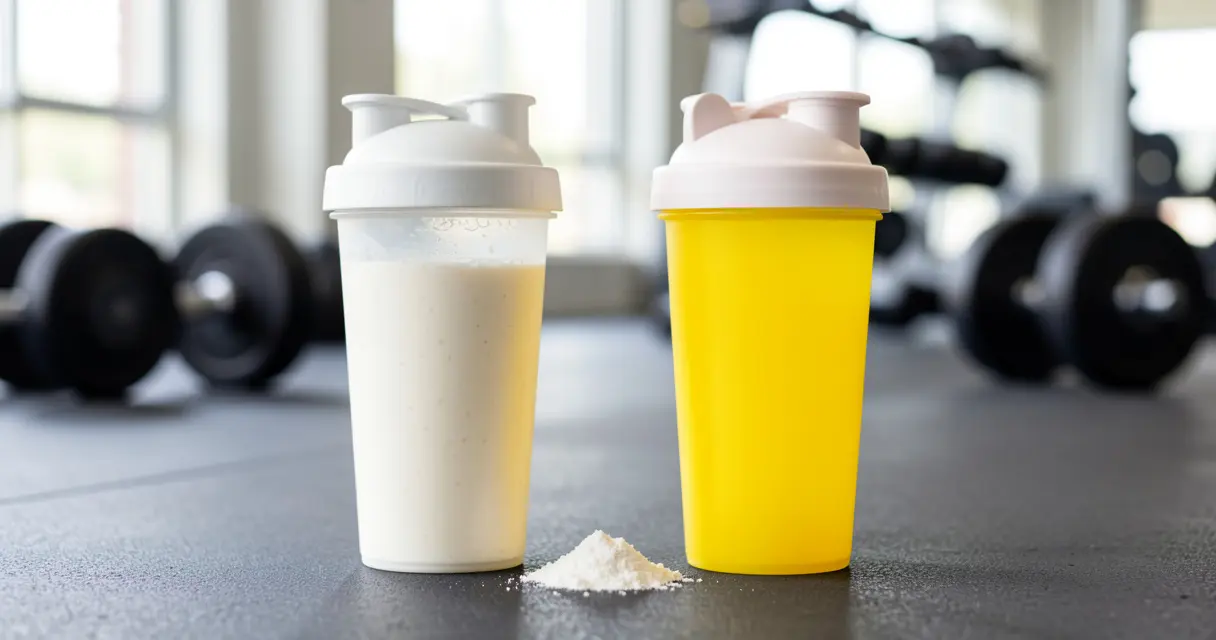
Search BCAA vs whey for muscle growth and you will usually find the same shallow conclusion: whey builds muscle, BCAAs help recovery, end of story. That is directionally correct, but it still misses the real decision most lifters need to make.
The better question is not only which supplement sounds stronger on paper. It is which option gives your muscles enough building material, fits your appetite and budget, and actually improves your training routine week after week.
Many ranking pages also fail to explain the few situations where BCAAs can still be useful, even if they are not the best default for hypertrophy. This guide focuses on that gap so you can choose based on your real goal instead of supplement marketing.
The short answer
If muscle growth is your main goal, whey is the better default.
Whey contains the three branched chain amino acids plus the rest of the essential amino acids needed to actually build new muscle tissue. BCAAs can help signal muscle protein synthesis, but they do not provide the full amino acid package required to maximize that process.
That is why whey usually wins for hypertrophy, especially if you also need help reaching your daily protein target.
Why whey usually beats BCAAs for hypertrophy
Whey gives your muscles a complete protein source
BCAAs only provide leucine, isoleucine, and valine. Those amino acids matter, especially leucine, because they help trigger muscle protein synthesis.
The problem is simple: a trigger is not the same thing as raw material. Your body still needs the full set of essential amino acids to keep building new muscle proteins after that signal is turned on.
Whey already contains those BCAAs, but it also brings the rest of the amino acid profile. That is why it supports a stronger overall anabolic response than an isolated BCAA drink.
Whey helps you hit the bigger target that actually drives progress
Many lifters obsess over one scoop and ignore the full day. That is backwards.
If your daily protein intake is too low, the conversation about BCAA versus whey becomes much less important. Whey makes it easier to reach a practical daily intake, and that alone often matters more than any small difference in timing or formula.
Our guide on protein per meal for muscle growth explains why spreading enough protein across the day usually does more for hypertrophy than chasing trendy amino drinks.
Whey is often the better value per useful serving
A whey shake gives you real grams of protein. A BCAA product gives you a much narrower amino acid profile.
For many people, that makes whey the smarter purchase. If your supplement budget is limited, it is usually better to pay for complete protein first, then basics such as a daily creatine monohydrate routine, instead of buying multiple products that overlap poorly.
Why BCAAs still stay popular
Leucine creates a strong headline
BCAAs are easy to market because leucine really does matter for muscle protein synthesis. That single fact is true, but it often gets stretched too far.
A leucine signal can help start the process. It does not mean three isolated amino acids are equal to a full protein feeding. That is the key distinction many comparison pages gloss over.
Some lifters notice a small recovery or fatigue benefit
BCAA supplements may modestly reduce soreness or perceived fatigue in some situations, especially during hard training blocks, low calorie phases, or long sessions with limited food intake.
That does not automatically make them a muscle building supplement. It means they may have a narrow support role, even though they are still usually weaker than complete protein for growth.
When BCAAs can still make sense
You train fasted and cannot tolerate a full shake
If you lift very early and a whey shake feels too heavy before training, BCAAs can be a lighter option than going in with nothing at all.
Even here, they are more of a compromise than a winner. If you can handle whey before or after training, our whey timing guide is usually the stronger solution.
You are in a calorie deficit and want a very light intra workout option
During a cut, appetite, digestion, and energy can all get harder to manage. Some lifters like BCAAs because they are easy to sip and add very few calories.
That can make sense if the alternative is no amino support at all, but do not confuse it with a full protein serving. If muscle retention is the priority, total daily protein and smart training still do most of the work. Our guide to building muscle in a calorie deficit covers that bigger picture.
Your regular diet is weak in high quality protein
This is the situation where many people think BCAAs are the answer, but whey or another complete protein is usually the better fix.
If your breakfast has almost no protein, your lunch is inconsistent, and your total daily intake is low, adding BCAAs will not solve the real bottleneck. You need better meals, better distribution, or a complete protein supplement.
Best choice by goal
For pure muscle gain
Choose whey.
It helps you hit total protein, supports muscle protein synthesis with the full amino acid profile, and fits well after training or between meals.
For a light recovery drink with minimal calories
BCAAs can have a role, but only if you specifically want something lighter than a full shake.
This is more about convenience than superiority. If calories allow, whey is still more complete.
For late training and stomach comfort
Some people tolerate an amino drink better than a thick shake before training. In that narrow case, BCAAs may be easier to use.
Just remember that stomach comfort and muscle building power are not the same metric. An easier drink is not automatically the better anabolic tool.
For plant based or low dairy lifters
If dairy does not work for you, the main alternative is not automatically BCAAs. A complete plant protein such as soy isolate, or even a better designed EAA product, usually makes more sense for hypertrophy than relying on BCAAs alone.
Common mistakes with BCAAs and whey
Mistake 1: Counting a BCAA drink as a protein serving
This is the biggest error.
A BCAA scoop is not the same as a 20 to 30 gram protein feeding. If you log it like a meal replacement, your nutrition plan can look much stronger on paper than it really is.
Mistake 2: Buying BCAAs before fixing the basics
If sleep is poor, total protein is low, and your program has no clear progressive overload structure, no amino drink will rescue the result.
Supplements should support the system, not replace it.
Mistake 3: Assuming more products means better results
Whey plus BCAAs plus a flashy pre workout stack can make you feel serious while still failing to address the basics.
Start with enough food, enough protein, and enough recovery. Our sleep and muscle growth guide explains why poor recovery can erase a good nutrition setup very quickly.
A simple decision tree
Use this quick rule:
- Need the best default for muscle growth? Choose whey.
- Already hit enough protein from food and whey? Extra BCAAs are usually unnecessary.
- Need a very light drink for fasted or low appetite training? BCAAs can be acceptable, but they are still a compromise.
- Want the most complete recovery support with minimal guesswork? Choose complete protein first.
Final verdict
For muscle growth, whey beats BCAAs in most real world situations because it gives you the full amino acid profile and helps you reach the daily protein intake that actually drives hypertrophy.
BCAAs are not useless, but they are usually a niche tool for very specific situations such as fasted training, low appetite sessions, or lifters who want a very light intra workout drink. Even then, they are rarely the best overall option.
If you want to see whether your supplement choices are actually improving your workouts, log your protein intake, sessions, and recovery trends inside GymLog. Real tracking makes it easier to tell whether the product is helping or whether the basics still need work.