Glutamine and Sports Performance: Science, Dosage, and Real Effectiveness
2025-12-26
Glutamine for athletes sparks a fascinating debate in the world of sports nutrition. On one side, supplement sellers market it as a miracle product. On the other, scientific studies show results that are... let's say mixed.
Honestly, after combing through more than 80 scientific studies on the subject, I can tell you one thing: the truth lies somewhere in between. Glutamine is neither a disguised performance-enhancing drug nor a magic powder to gain 10 pounds of muscle. But it definitely has its place in specific situations.
In this article, we'll see why glutamine works for some athletes and not others, when it's truly worth the investment, and most importantly, how to use it intelligently if you decide to supplement.
🎧 Listen to the Exclusive Podcast
Prefer audio? Listen to our complete guide on glutamine:
What is Glutamine? The Physiological Basics
Before talking about supplementation, let's understand what glutamine is. It is an amino acid that makes up 60% of your muscle mass. Yes, you read that right: more than half of your muscles are made of glutamine.
Your body naturally produces it from glutamate and ammonia. It is called a "non-essential" amino acid – which absolutely does not mean it isn't important. Quite the opposite. It simply means your body can produce it itself, unlike essential amino acids that must come from food.
Multiple Roles of Glutamine in Your Body
Glutamine is not just a passive muscle component. It plays active and critical roles:
- Energy Fuel — Your muscles use it as an energy source during intense and prolonged efforts.
- Building Material — It serves as a building block for muscle protein synthesis.
- Immune Support — It is the preferred energy source for your lymphocytes and immune cells.
- Intestinal Fuel — Your intestinal cells consume a massive amount of glutamine to function.
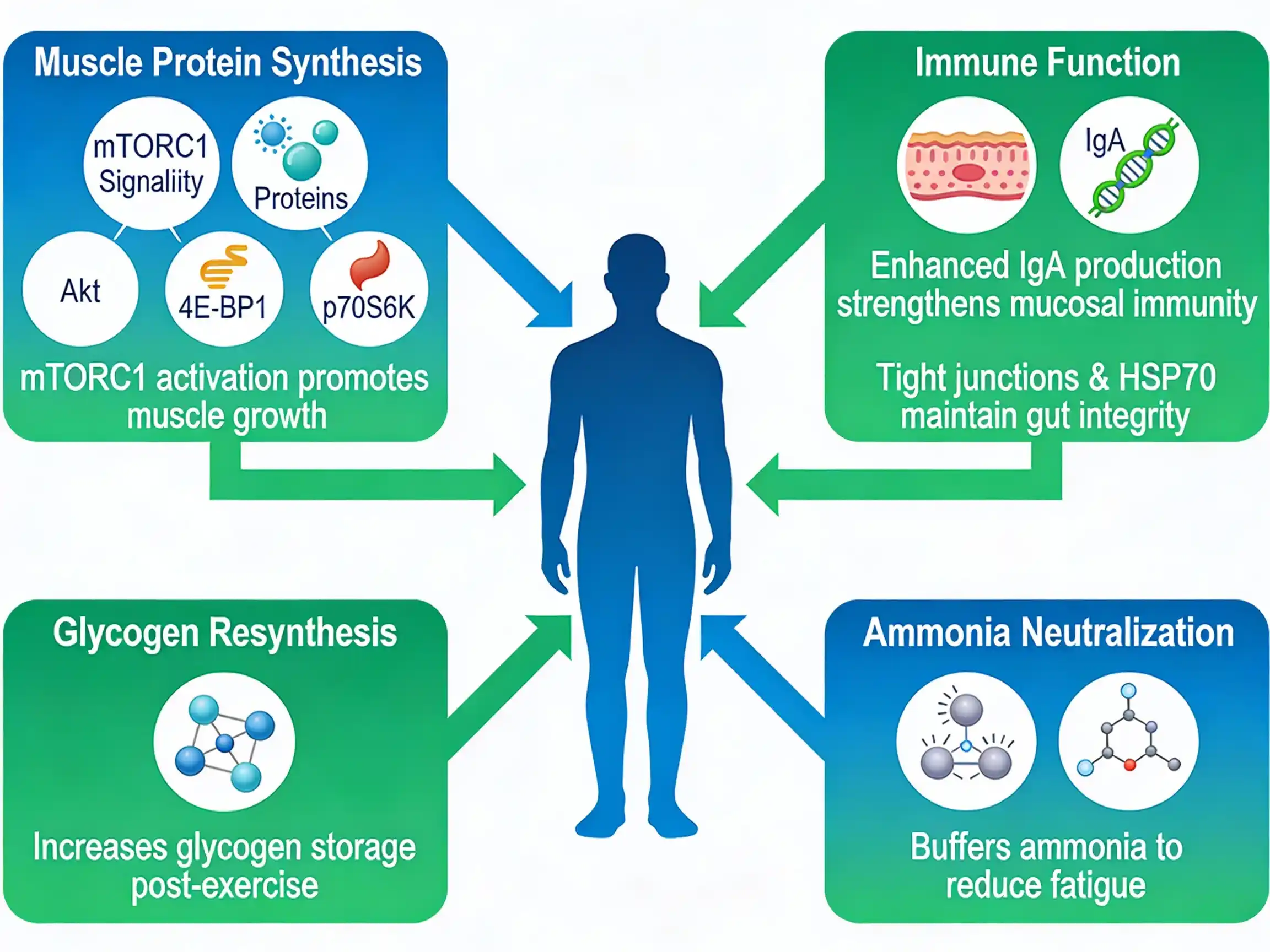
- Metabolic Regulator — It participates in glycogen synthesis and ammonia neutralization.
By the way, here is a fact that often surprises people: during intense weight training, glutamine levels in your muscles can drop by 50%. And after exhaustive exercise, plasma concentrations remain low for several hours.
Key Point: In overtrained athletes, glutamine levels can remain chronically low for months, or even years. It is a biological marker of overtraining syndrome.
How Glutamine Affects Muscle Recovery
Now that we know what glutamine is, let's see concretely how it influences your recovery. Because that's where it gets really interesting.
Activating the mTORC1 Pathway: The Anabolic Switch
Glutamine activates a cellular signaling pathway called mTORC1. Simply put, it's the switch that tells your muscles: "OK, it's time to build tissue."
Studies on rats show that glutamine supplementation increases the phosphorylation of critical proteins (Akt, 4E-BP1, p70S6K). Result: a measurable increase in muscle fiber surface area. Basically, it's like giving a boost to natural repair and muscle growth mechanisms.
Reducing Protein Breakdown
Beyond stimulating construction, glutamine also curbs destruction. It reduces the activity of the 26S proteasome – the cellular machine that degrades damaged proteins. This anti-catabolic effect is particularly valuable in the post-exercise window, when your body hesitates between "repairing" and "destroying to recycle."
Protecting the Intestinal Barrier: The Unexpected Effect
Here is an aspect often overlooked but crucial. Intense exercise increases your gut permeability – it's proven. Concretely, your intestinal wall becomes more "porous," letting substances pass through that shouldn't.
A fascinating study shows that 7 days of glutamine supplementation completely eliminated this increase in permeability induced by exercise. The mechanism? Glutamine activates heat shock proteins (HSP70) that stabilize the tight junctions between your intestinal cells.
Glutamine and Immunity: The Strongest Evidence
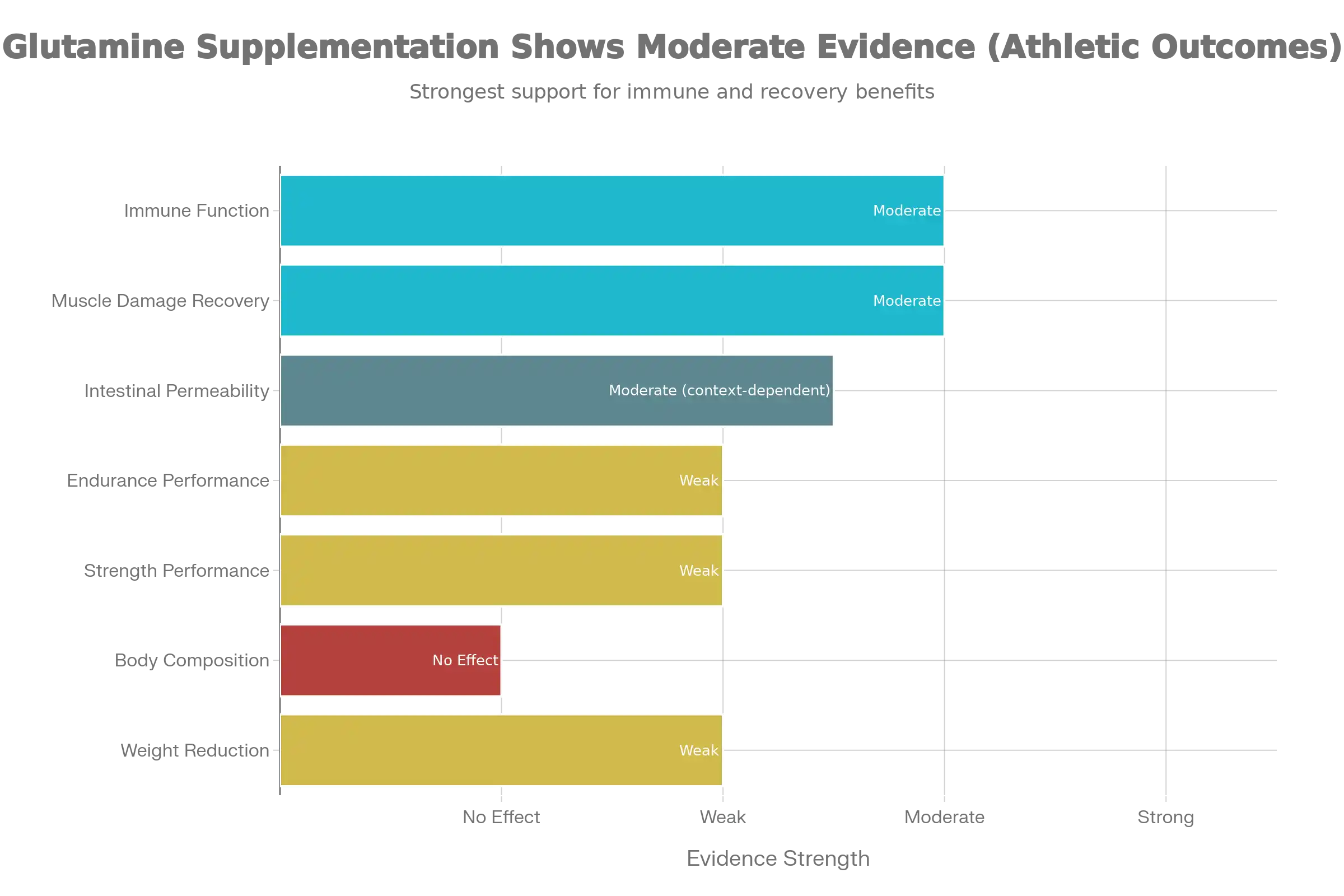
Frankly, if I had to summarize in one sentence where glutamine has the most scientifically proven impact, it would be: immune function in athletes undergoing intensive training.
The Reference Study on Combat Sports
A randomized prospective study conducted on combat sports athletes (martial arts, boxing, MMA) tested the effect of 0.3 g of glutamine per kg of body weight for 3 weeks. For a 70 kg athlete, that's about 21 grams per day – a significant dose.
The results are impressive:
- Increase in salivary IgA — These mucosal antibodies are your first line of defense against respiratory infections.
- Rise in Nitric Oxide (NO) — A marker of immune activity and endothelial function.
- Significant reduction in Upper Respiratory Tract Infections (URTI) — Fewer colds, sore throats, bronchitis.
- Improvement in general well-being — Perceived recovery quality was superior.
The Mechanism: Why It Works
Your immune cells – lymphocytes, macrophages, neutrophils – consume glutamine at a frantic pace. In fact, they use it as much as glucose for fuel. During intense exercise, your muscle needs for glutamine explode, creating competition with your immune system.
Result: your immune cells end up in an energy deficit, their function is compromised, and you become vulnerable to infections. This is called the post-exercise immune "open window."
Pro Tip: Glutamine supplementation is particularly relevant during seasonal changes (autumn-winter) and during intensive training camps, when infection risk is naturally higher.
Performance and Strength: Where Results Disappoint
Okay, let's be honest. If you are looking to directly increase your strength, power, or muscle mass with glutamine, you will be disappointed.
A meta-analysis grouping 25 randomized controlled trials is categorical: glutamine does not significantly improve aerobic capacity, VO2max, or endurance power.
However, it has a permissive and protective role – it maintains optimal physiological conditions for other processes to work well. Don't count on glutamine to "build muscle" directly, but count on it to allow you to train hard without getting sick.
Recommended Dosages According to Your Athlete Profile
Now, the concrete question: how much glutamine should you take, and when?
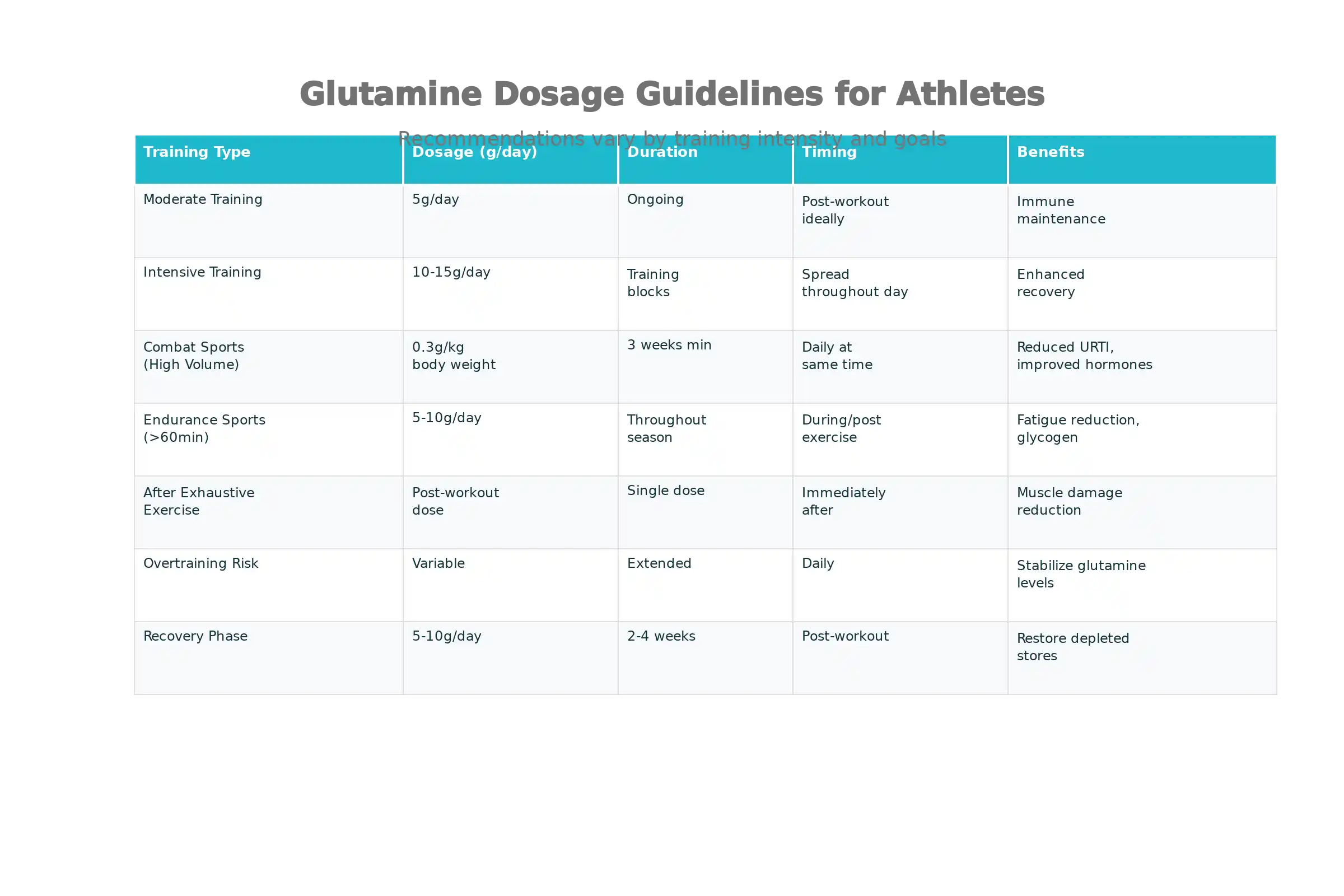
Moderate Training (3-5 sessions/week)
- Dosage: 5 g/day
- Timing: Post-workout preferably.
Intensive Training (5-6 sessions/week)
- Dosage: 10-15 g/day
- Timing: Split throughout the day, with a priority dose post-exercise.
Combat Sports (Boxing, MMA, Judo)
- Dosage: 0.3 g/kg body weight/day.
- Timing: Daily, for maximum immune support.
Overtrained Athletes
- Dosage: 10-15 g/day.
- Goal: Restore chronically low levels.
Free Glutamine vs Alanyl-Glutamine Dipeptide
Not all supplements are equal.
- Free Glutamine: The classic form, cheaper, but average absorption.
- Alanyl-Glutamine Dipeptide: Better absorption (+30-50%), more stable, but more expensive.
If your budget allows, the dipeptide is superior. Otherwise, the free form remains effective by slightly increasing the doses.
Conclusion: Should You Take Glutamine?
Glutamine is neither a miracle supplement nor a scam. It is a specialized tool.
- YES if you are in intensive training, competition period, or prone to frequent infections.
- NO if you are a recreational lifter just looking to get bigger biceps quickly (prioritize creatine and whey).
To go further in your progression and track your training sessions, don't forget to download the GymLog app. It's the best way to validate that your nutritional strategy is bearing fruit on the field!